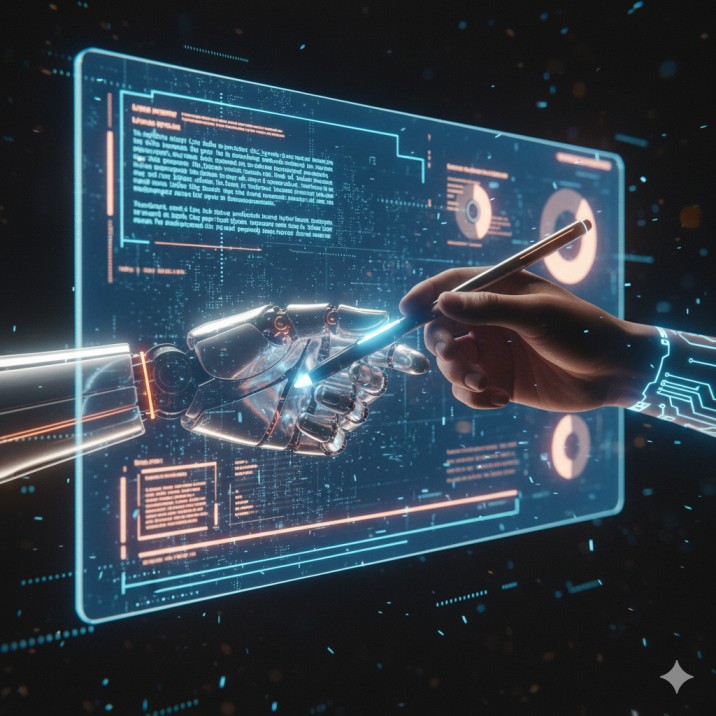

Artificial Intelligence in 2026: Beyond the Hype – A Global Reality Check
Three years ago, ChatGPT burst onto the scene, and the world held its breath. Headlines screamed about the “End of Jobs,” “Skynet,” and a utopian (or dystopian) future.
Fast forward to 2026, and the dust has settled. Artificial Intelligence isn’t just a buzzword anymore; it is the invisible electricity running through our laptops, phones, and cities. It is no longer a question of if you use AI, but how you use it.
From the regulatory halls of Brussels to the tech hubs of Silicon Valley, the AI landscape has shifted from “Experimentation” to “Integration.” In this post, we explore the state of AI in 2026, the cost of living in an AI-powered world, and the growing divide between the US and Europe.
1. Generative AI: From Text to Reality
The era of “hallucinating” chatbots (chatbots that make things up) is largely behind us. The leading models in 2026—GPT-5, Claude 4, and Google Gemini Ultra—have achieved a level of reasoning that feels startlingly human.
-
Video is the New Text: The biggest leap in 2026 has been in AI Video. Tools like OpenAI’s Sora and Runway Gen-4 can now generate full Hollywood-quality clips from a simple text prompt. Marketing agencies in London and New York are creating entire commercials without ever picking up a camera.
-
Personalization: AI doesn’t just write generic emails anymore. It learns your tone, your slang, and your history. Your “AI Personal Assistant” knows your calendar better than you do.
2. The Hardware Shift: AI on the Edge
For years, AI lived in the “Cloud” (massive server farms). In 2026, AI has moved to your pocket.
-
The Rise of NPUs: Every major device, from the iPhone 17 to the Samsung Galaxy S25, now ships with dedicated Neural Processing Units (NPUs).
-
Why this matters: It means your phone can translate languages, edit photos, and summarize meetings without an internet connection. This is a massive win for privacy, especially for European users concerned about their data leaving the EU.
-
Wearables: We are seeing the second generation of “AI Pins” and smart glasses. While they haven’t replaced smartphones, glasses from Meta and Apple can now identify objects and translate signs in real-time as you walk down the streets of Paris or Tokyo.
3. The Workforce: Copilots, Not Replacements
The fear that “AI will take all our jobs” has morphed into a more nuanced reality: “A human using AI will replace a human who doesn’t.”
-
Coding: Software engineering has changed forever. AI writes 60-70% of the boilerplate code, allowing developers to focus on architecture and problem-solving.
-
Office Work: Microsoft 365 Copilot is now as standard as Excel. It summarizes confusing email threads, drafts PowerPoint slides from Word documents, and attends Teams meetings for you.
-
The Creative Tension: The battle between human artists and AI continues. While tools like Midjourney are standard for brainstorming, there is a premium value placed on “Human-Made” art and writing. We are seeing a “Digital Artisan” movement emerge in Europe.
4. The Great Divide: USA vs. Europe (Regulation)
This is the most critical topic for global businesses in 2026.
-
The USA (Innovation First): The US has taken a “light-touch” approach. Companies are racing to build the most powerful models with fewer restrictions. If you want the absolute latest, unrestricted AI features, the US is the testing ground.
-
Europe (Safety First): The EU AI Act is now fully enforced. It categorizes AI based on risk.
-
High Risk: AI in hiring, healthcare, or policing is strictly regulated.
-
Transparency: If you interact with a bot in Germany or France, it must declare it is an AI. Deepfakes must be watermarked.
-
Impact: Some American features launch in Europe months later (or never) due to these strict privacy laws (GDPR).
-
5. The Cost of Intelligence: Subscription Fatigue
AI isn’t free. The “Freemium” era is ending. To get the best models in 2026, you have to pay.
-
The “Pro” Standard: A subscription to ChatGPT Plus or Claude Pro costs around $20 – $25 / €23 per month.
-
Enterprise Costs: For businesses, enabling AI features in software like Salesforce or Adobe Creative Cloud adds an extra
30−50 per user/month.
-
The Divide: This is creating a “Digital Class Divide.” Professionals who can afford these $100/month stacks of AI tools have a massive productivity advantage over those who cannot.
6. Trust and Deepfakes: The 2026 Crisis
With AI video and voice becoming indistinguishable from reality, “Trust” is the currency of 2026.
-
Phishing 2.0: Scammers now use AI voice clones of bosses or family members to steal money.
-
Verification: Platforms like LinkedIn and X (Twitter) now rely heavily on biometric ID verification to prove you are a real human. “Proof of Personhood” is a major trend.
7. Final Verdict: Tool or Master?
In 2026, Artificial Intelligence is no longer a futuristic concept—it is a utility, like water or the internet.
It has made us faster, more creative, and more efficient. But it has also made the digital world noisier and harder to trust. The winners of this era aren’t just the people who know how to prompt a chatbot; they are the people who know when to turn the AI off and apply critical human thinking.
If you are running a business or building a career in Europe or the US today, ignoring AI is no longer an option. It is your co-pilot, whether you like it or not.