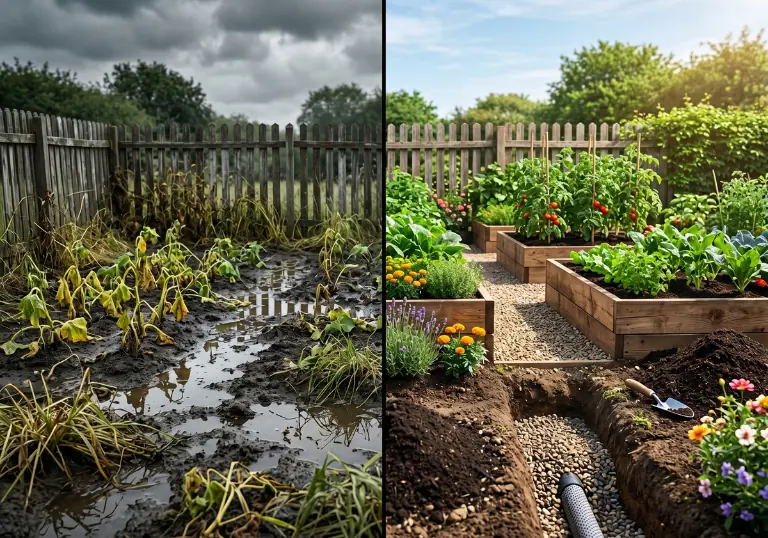
How Far Apart to Plant Tomatoes: Spacing for Healthier Harvests
Spacing depends on the type and support method, but as a simple rule: plant compact determinate varieties about 18–30 inches apart, stake or cage indeterminate types 30–36 inches apart, and allow 4 feet or more if you let indeterminates sprawl. Give each plant room to breathe and receive sun: correct spacing reduces disease, improves yield, and makes harvesting easier.
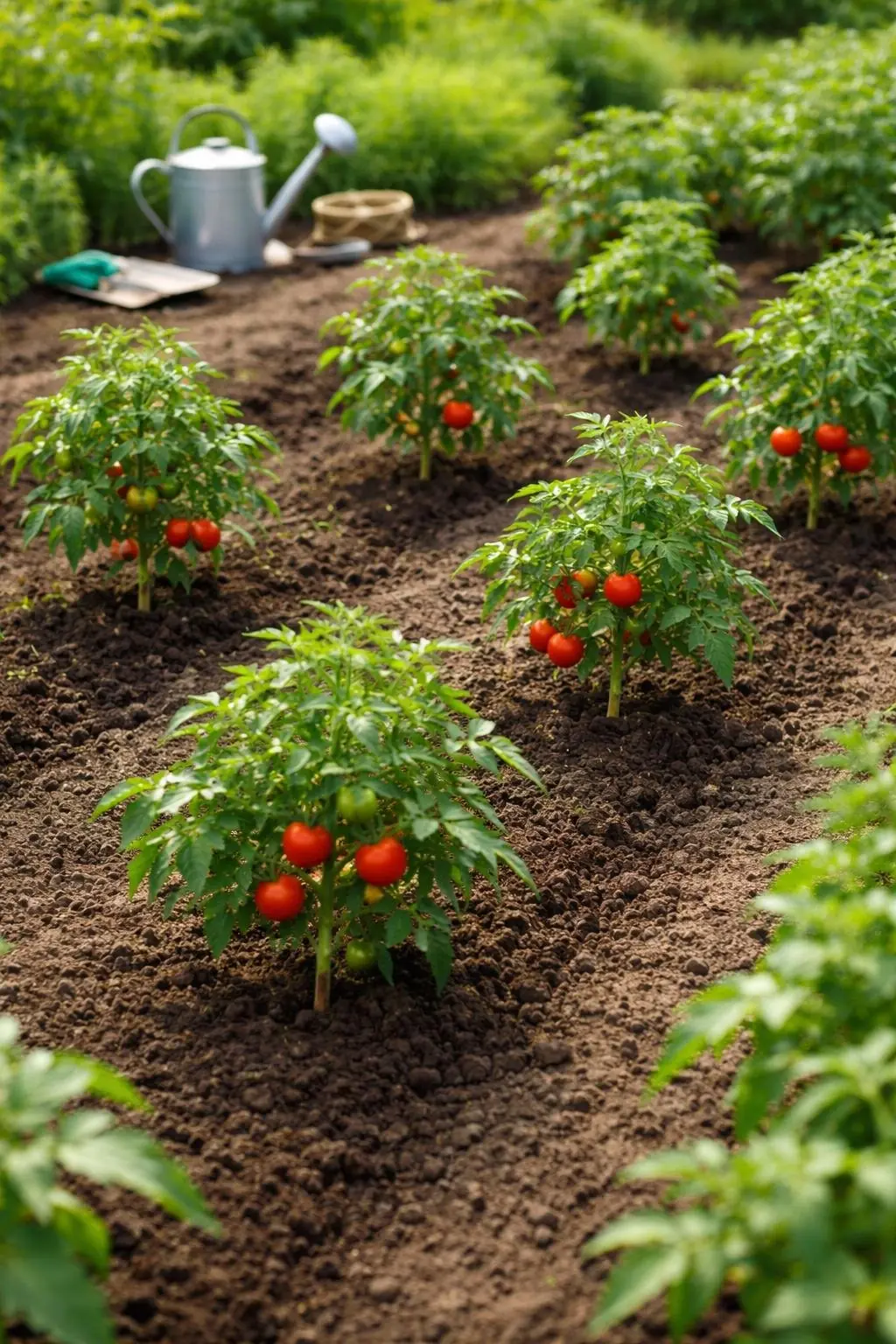
You’ll learn which varieties need tight spacing and which demand extra elbow room, how row spacing and supports change layout, and quick space-saving options for small gardens. Follow practical spacing guidelines and you’ll turn crowded seedlings into healthier, more productive tomato plants.
Contents
Understanding Tomato Plant Types
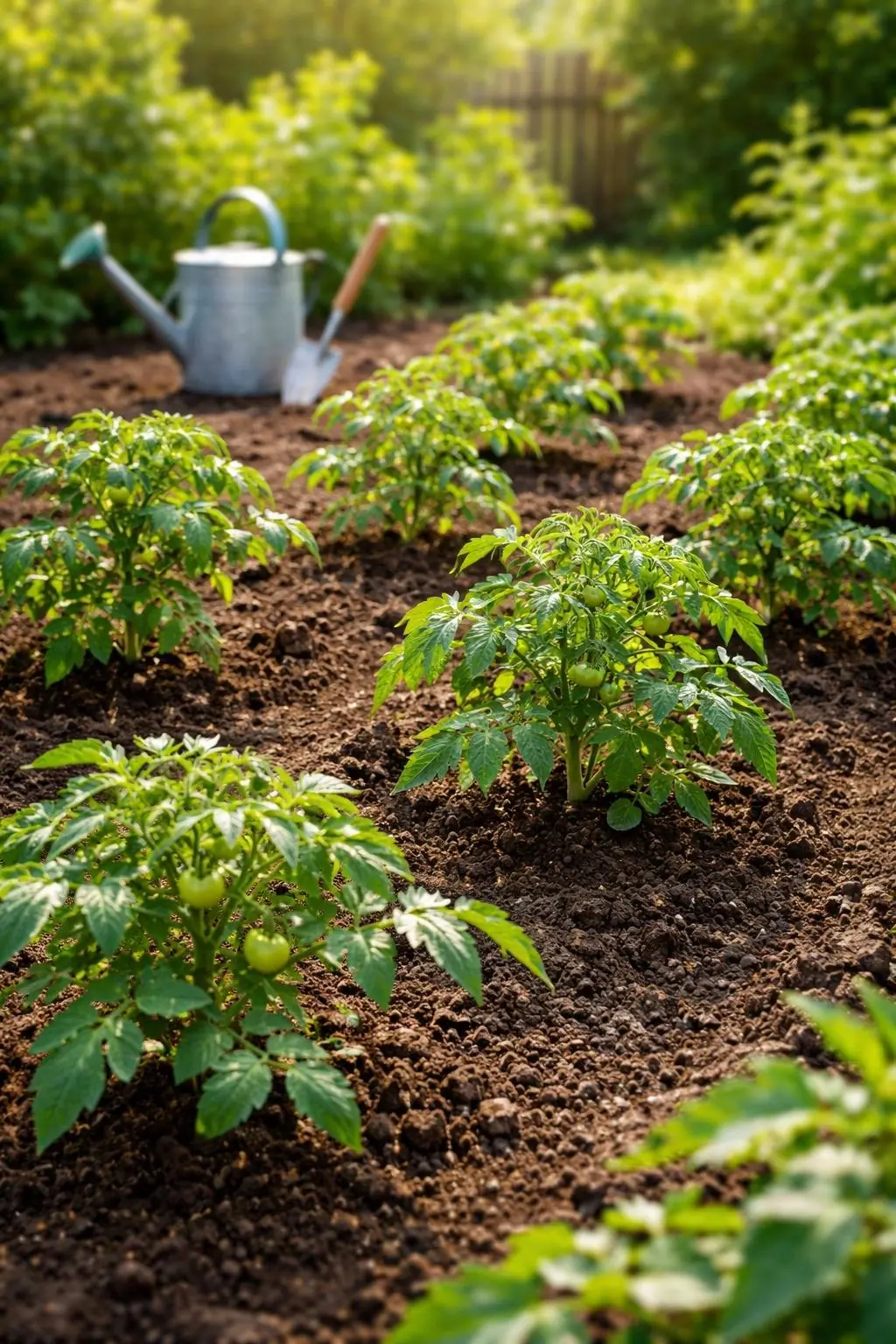
You need to know how a tomato’s growth habit and variety affect space needs, support, and pruning. These factors determine whether you plant 18 inches apart or give each plant several feet and add stakes or cages.
Determinate vs. Indeterminate Growth Habits
Determinate tomatoes stop growing at a set height and set most of their fruit in a short window. You can plant these closer together—often 18–24 inches—because they stay compact and don’t require heavy staking or continual pruning. They suit containers, raised beds, and gardeners who want a concentrated harvest for canning.
Indeterminate tomatoes grow continuously until frost and produce fruit over the season. They need more room—commonly 3–4 feet between plants—and strong support like tall stakes, cages, or trellises. You’ll prune suckers to manage vigor and improve air flow. If you don’t give indeterminate types adequate space, foliage becomes dense and disease risk rises.
Common Tomato Varieties and Their Growth Patterns
Many heirloom tomatoes are indeterminate; varieties such as Brandywine and Cherokee Purple develop large vines and benefit from 3+ feet spacing and sturdy staking. Compact heirlooms exist, but always check the variety’s habit on the seed packet or label before planning spacing.
Determinate varieties include many paste and processing tomatoes like Roma and some bush-type hybrids. These often perform well in rows 3–4 feet apart with plants 18–24 inches apart, or in containers if the cultivar is labeled compact. When selecting plants, note whether the tag lists “determinate,” “indeterminate,” or terms like “bush” or “vining” to match spacing and support to that variety.
Optimal Tomato Plant Spacing Guidelines
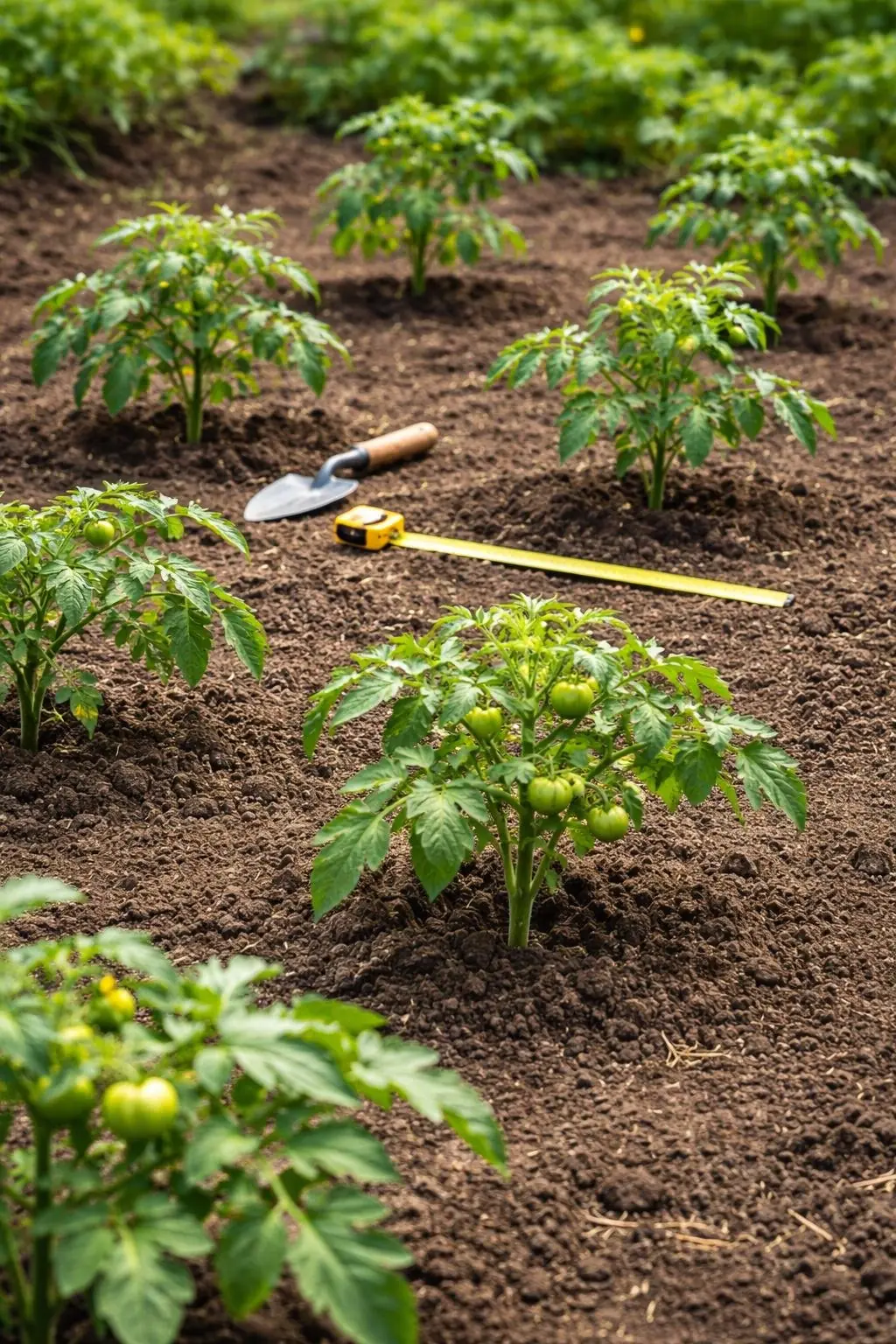
Give each plant space to access sun, air, and soil nutrients. Proper spacing reduces disease, eases staking or caging, and makes harvesting simpler.
Spacing for Determinate Tomato Varieties
Determinate (bush) tomatoes stop growing after a set height and produce most fruit in a short window. Space these varieties 18–30 inches (45–75 cm) apart in rows. Compact patio types can be planted toward the lower end of that range; larger determinate slicers need the upper end.
Set rows 3–4 feet (0.9–1.2 m) apart to allow walking and to improve airflow. Use cages sized at least 18 inches wide for each plant, or plant in hills of two plants per cage if space is tight. Keep pruning minimal; over-pruning can reduce the concentrated harvest that determinate types provide.
Spacing for Indeterminate Tomato Varieties
Indeterminate tomatoes keep growing and fruiting all season, so they require more room. Cage or stake each plant and place them 30–36 inches (75–90 cm) apart when using cages or single stakes. This spacing supports a strong central leader and regular fruiting.
If you let indeterminate plants sprawl without supports, increase spacing to 4 feet (1.2 m) or more between plants and 6 feet (1.8 m) between rows. Maintain one main stem or a two-stem system by regular sucker pruning to preserve airflow and concentrate vigour into fruiting stems.
Spacing for Heirloom and Cherry Tomatoes
Heirlooms often have vigorous, open growth and larger foliage; cherry varieties can be either compact or rampant. For large heirloom slicers, aim for 3–4 feet (90–120 cm) between plants with 4–6 feet (1.2–1.8 m) between rows. This reduces humidity around dense foliage and lowers leaf disease risk.
For cherry tomatoes, match spacing to growth habit. Vigorously indeterminate cherries need 30–36 inches (75–90 cm) with staking, or 4 feet (1.2 m) if left to sprawl. Compact cherry cultivars and patio cherries can fit at 18–24 inches (45–60 cm) when grown in containers or small beds.
Adjusting for Semi-Determinate and Dwarf Types
Semi-determinate tomatoes sit between determinate and indeterminate habits; dwarf types remain small by design. For semi-determinate varieties, choose 24–36 inches (60–90 cm) spacing and 4-foot (1.2 m) rows. This gives their moderate vigor room to fill without overcrowding neighboring plants.
Dwarf and micro-dwarf tomatoes can be planted 12–18 inches (30–45 cm) apart, making them ideal for containers and tight beds. When using intensive planting methods (e.g., square-foot gardening), place one dwarf plant per square foot and use vertical supports to avoid canopy overlap and maintain airflow.
Spacing Strategies for Different Growing Methods
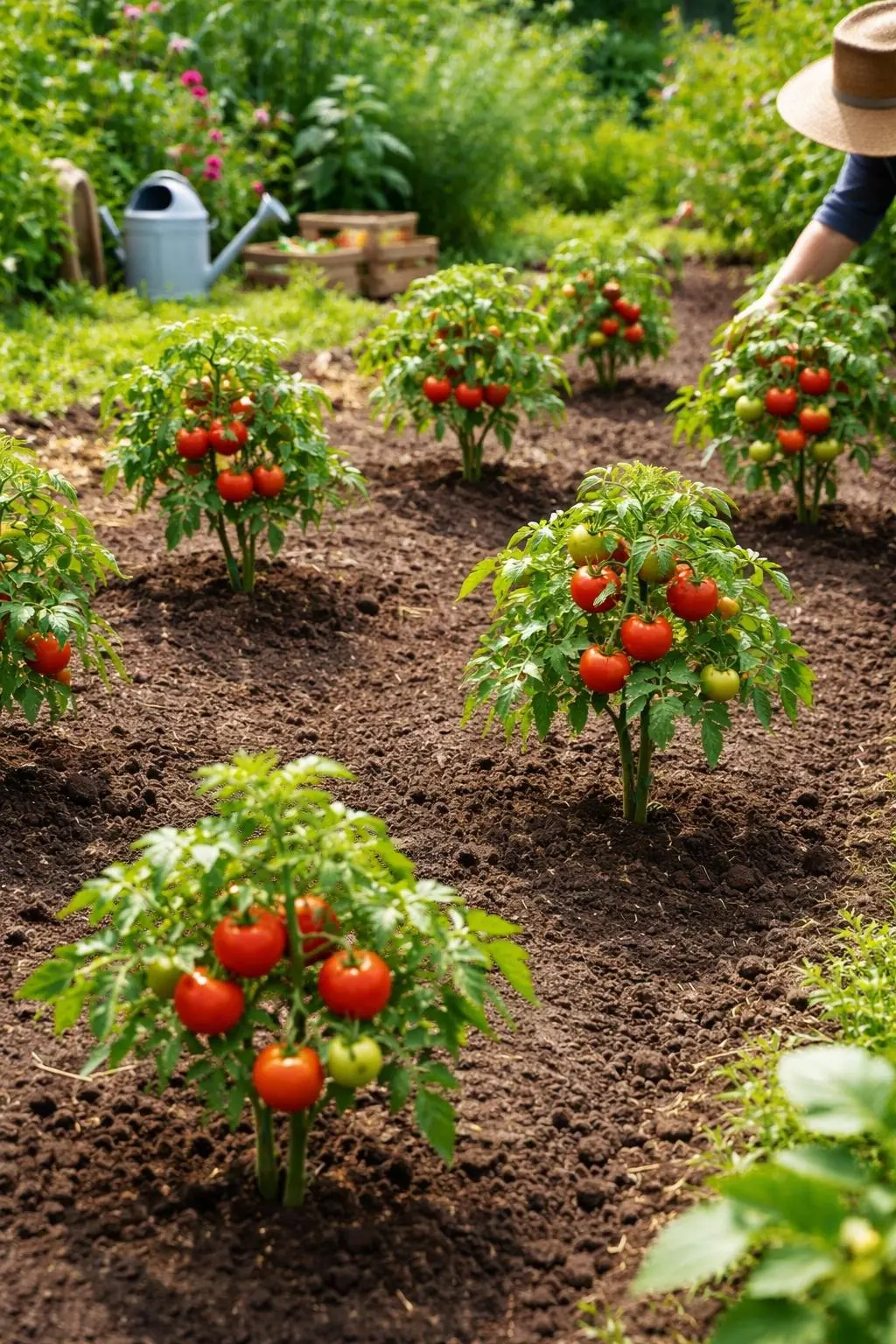
Choose spacing based on plant type, support system, and how you’ll access plants for pruning and harvest. Proper spacing improves airflow, reduces disease, and makes staking or caging effective.
Traditional In-Ground Gardens
Plant determinate (bush) varieties 24–30 inches apart in rows 3–4 feet apart to allow walking and airflow. Indeterminate (vining) varieties need 30–48 inches between plants if uncaged; reduce to 24–36 inches if you stake or trellis each plant.
Set stakes or cages at planting time to avoid root disturbance later. Mulch 2–3 inches to suppress weeds and conserve moisture. Space rows wider (4–6 feet) when plants will remain uncaged and you expect heavy foliage that blocks paths.
If soil is heavy or drainage poor, mound soil 4–6 inches and space toward the higher end of the recommendations to prevent crown rot. Use a tape measure to keep spacing consistent and avoid overcrowding.
Growing Tomatoes in Raised Beds
For 4–6 foot-wide raised beds, plant indeterminate tomatoes 24–36 inches apart along the long axis and leave a 2–3 foot access pathway between parallel bed rows. Determinate varieties can sit 18–24 inches apart when you plant double rows across a wider bed.
Use vertical supports (T-posts, cages, or trellises) to increase plant density without sacrificing airflow. Train vines upward and prune suckers selectively to keep foliage manageable and light penetration high.
Amend raised bed soil with compost and ensure it drains well; richer soil boosts vigor, so stick to wider spacing if plants respond with heavy growth. Consider companion planting: avoid crowding with other large vegetables unless you increase distances accordingly.
Spacing for Container Tomatoes
Choose container size first: 5-gallon pots suit one determinate plant; 15–20+ gallon containers work best for a single indeterminate variety. Space containers 18–36 inches apart on patios or decks to allow light to reach each plant and to make watering easier.
Use compact or patio varieties to maximize container density. Provide a sturdy stake or tomato cage anchored in the potting mix; root-bound plants need larger containers rather than closer spacing. Monitor water and nutrients closely—container tomatoes dry out faster and compete more when placed too near each other.
Group containers so you can irrigate efficiently, but avoid placing pots so close that foliage touches continuously; that contact increases humidity and disease risk.
The Importance of Row Spacing and Support Systems
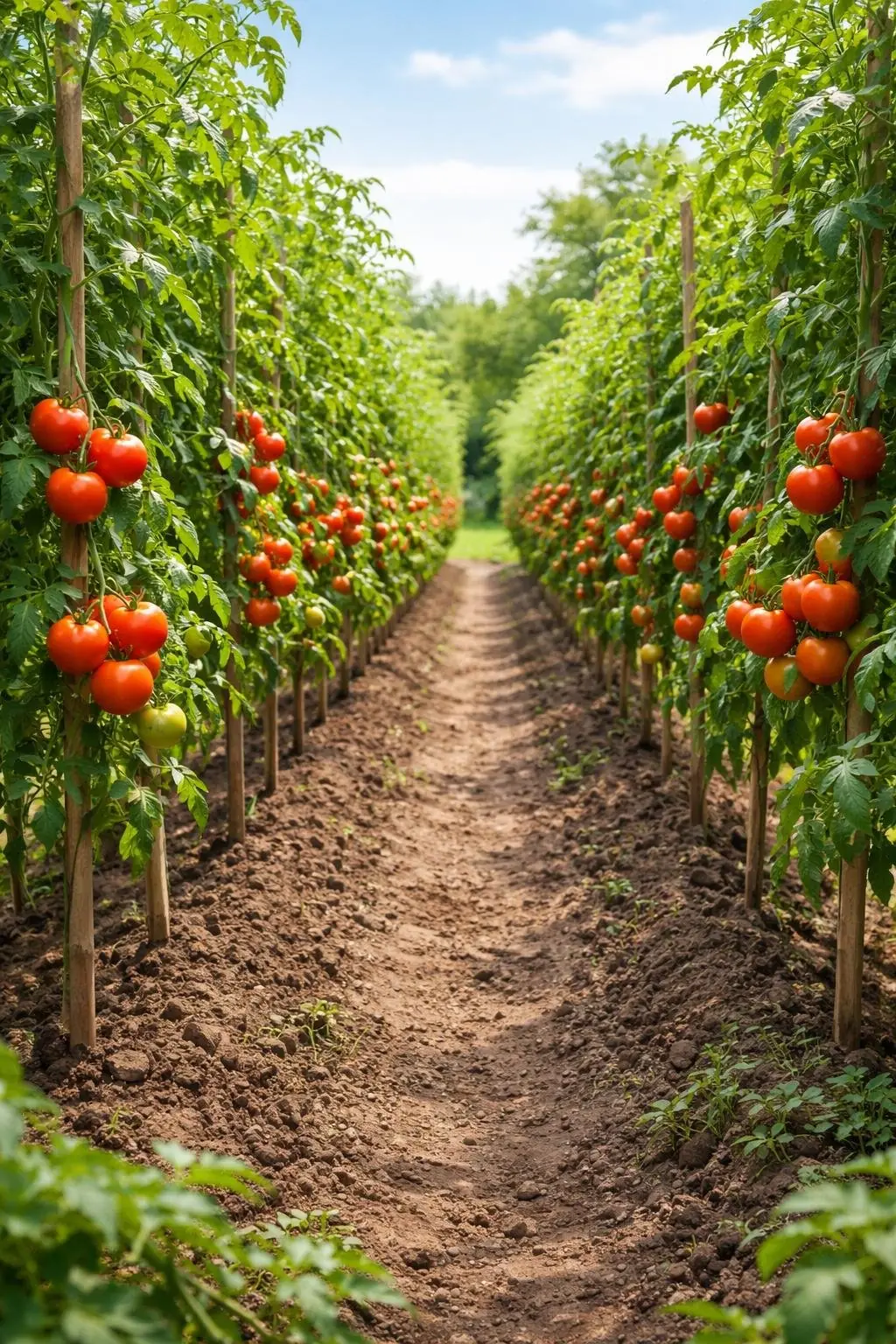
Row spacing determines how easily you can walk between plants, manage irrigation, and control disease. Choosing the right support system changes how far apart you plant and how well plants use light and air.
Proper Row Spacing for Healthy Tomato Plants
Space rows 3 to 5 feet apart depending on tomato type and access needs. For determinate, shorter varieties, 3 feet between rows works well; for indeterminate vines that grow tall and wide, use 4 to 5 feet so stems and foliage don’t crowd adjacent rows.
Wider rows let you reach plants for pruning, harvesting, and treating pests without stepping into beds. They also improve cross-ventilation; aim for at least 3 feet between plant centers across a row to reduce humidity around leaves, which lowers fungal risk. If you use drip irrigation under mulch, you can keep rows slightly closer because you won’t need wide paths for watering.
Plan row width around your tools. If you use a wheelbarrow or bed cart, match row spacing to that equipment. Mark rows before planting so you maintain consistent spacing and avoid future crowding.
Using Tomato Cages and Trellises
Choose cages or trellises based on plant vigor and space. Wire cages 4 feet tall and 18–24 inches in diameter work for determinate or bush types. For indeterminate tomatoes, install sturdier trellises or stakes 6–8 feet tall and tie plants as they grow.
Anchor cages or trellis posts firmly at planting time to prevent tipping. Use vertical systems to keep fruit off the ground, improve air flow, and simplify harvesting. Train one stem per trellis if you want maximum airflow; allow multiple stems only if you have ample horizontal and row spacing.
Use materials that resist rust and UV damage. Attach ties loosely with soft twine or cloth to avoid cutting stems. Replace or repair supports midseason when needed to prevent plant collapse under heavy fruit loads.
Effects of Support Systems on Plant Spacing
Support systems let you reduce lateral spacing but often require more headroom between rows. If you trellis vertically, you can plant 18–24 inches apart in-row for indeterminate varieties; however, keep rows 4 feet apart to allow maintenance and harvest access.
Cages permit slightly closer rows—around 3 feet—because they contain foliage horizontally. But remember crowded cages still trap moisture. If you choose densely spaced cages, prune lower shoots and suckers to maintain airflow and reduce disease pressure.
Match support spacing to your garden layout. In raised beds, prefer determinate plants and compact cages to maximize bed space. In in-ground rows, use tall trellises with wider row spacing so you can walk between and manage tall indeterminate vines.
Key Benefits of Correct Spacing
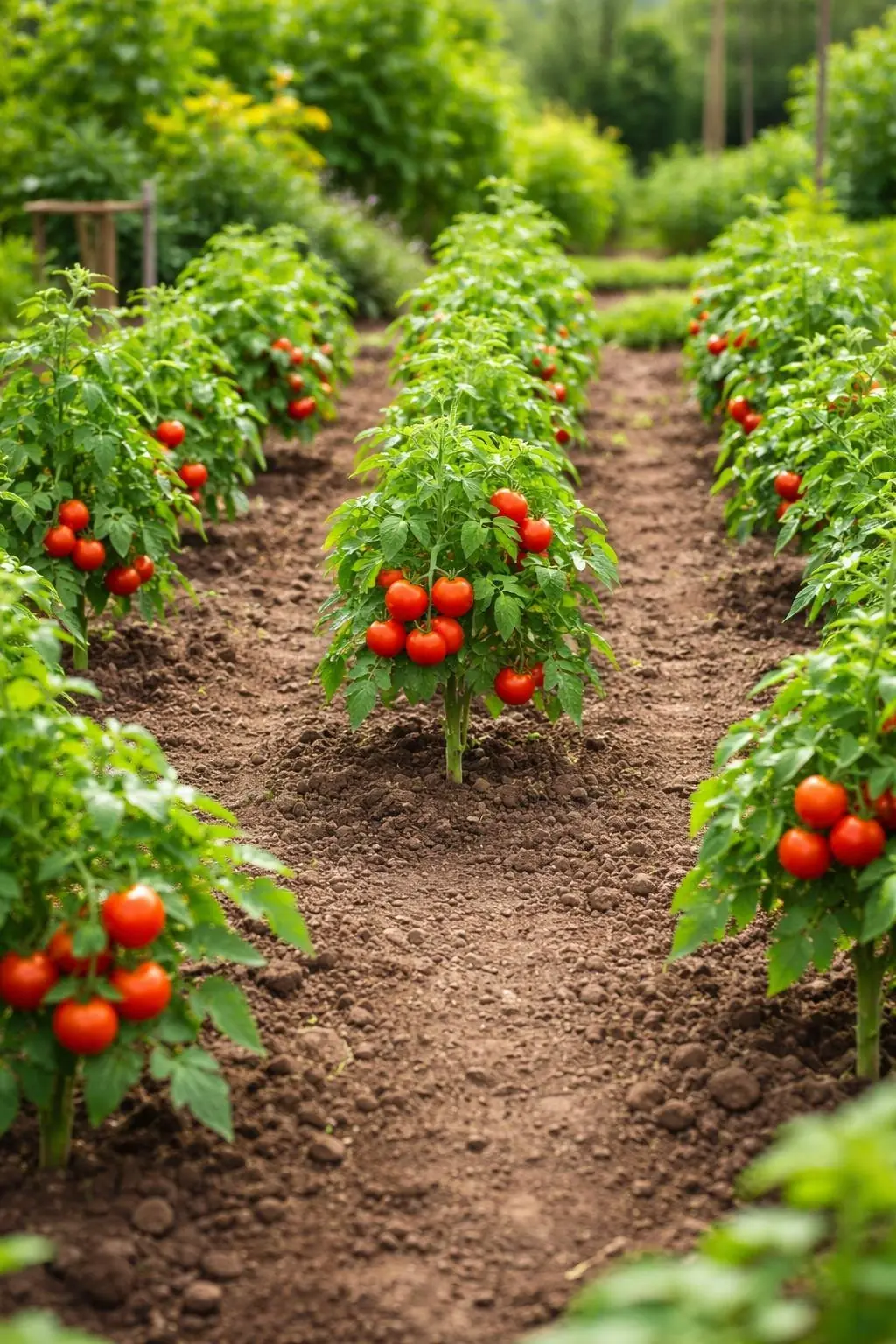
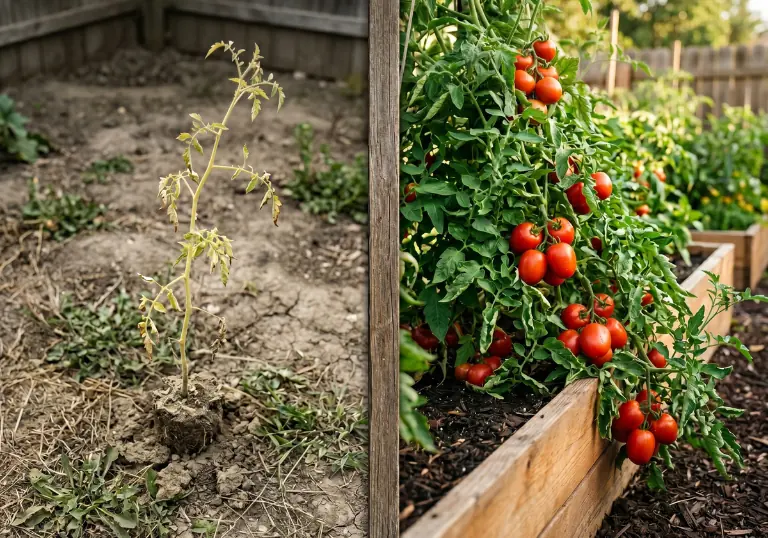
Correct spacing reduces disease risk, improves light and nutrient distribution, and makes pruning, staking, and harvest faster and safer. It lets you manage soil moisture and airflow so each plant spends energy on fruit instead of struggling for resources.
Disease Prevention and Air Circulation
Proper spacing reduces humidity around foliage, which limits conditions that favor early blight and other fungal diseases. When plants sit 2½–3 feet apart (caged indeterminate) or 18–30 inches apart (determinate and compact types), air moves between stems and leaves, drying dew and spray quickly.
Faster drying decreases the window for fungal spores to germinate, lowering incidence of leaf spots and stem lesions.
Good spacing also cuts soil splash during rain or watering. That splash often transfers soilborne pathogens that cause early blight and root rot. To further protect roots, plant in raised beds or mounds with well-draining soil and keep mulch a few inches from stems to reduce direct contact with wet soil.
Train and prune plants so inner foliage opens up. Remove lower leaves as fruit sets to improve airflow and reduce disease reservoirs. This combination of spacing, staking, and sanitation gives you a practical defense against foliar and soilborne infections.
Maximizing Light and Nutrient Access
When you space tomatoes correctly, every main stem and fruiting cluster gets more direct sun. Indeterminate vines trained on stakes spaced 2½–3 feet apart will expose upper and middle leaves to full sun, increasing photosynthesis and sugar production in fruit. That makes tomatoes ripen more uniformly and improves flavor.
Correct spacing also reduces root competition for water and nutrients. Give determinate varieties 18–30 inches between plants in a row and 24–36 inches for vigorous indeterminates to allow root systems to expand without starving neighbors. This helps maintain steady uptake of nitrogen, phosphorus, and potassium so you don’t have to compensate with excessive fertilizer.
Finally, even light and steady nutrient access reduce stress that can make plants more susceptible to pests and disease. Pair spacing with a regular feeding schedule and consistent watering to support strong root development and higher yields.
Ease of Harvest and Plant Maintenance
Spacing affects how quickly you can stake, prune, and harvest without damaging vines. If you space plants 3–4 feet apart in uncaged rows, you keep walking room at peak growth for safe harvesting and easier trellising. That prevents accidental stem breaks and fruit bruising.
Maintenance tasks like tying suckers, removing diseased leaves, and checking for root rot become faster with clear access. You can spot early signs of problems—wilting at the crown, soft brown roots, or dark leaf lesions—before they spread. That allows targeted action, such as reducing irrigation to combat root rot or removing infected foliage to slow early blight.
Use simple tools and routines: a tape measure at planting, weekly tie-ups for indeterminate vines, and a pruning schedule. Those habits make your work efficient and protect plant health, so you spend more time harvesting ripe fruit than fixing avoidable problems.
Space-Saving Tips for Small Gardens
Maximize fruit per square foot by choosing compact varieties and arranging plants to use vertical space and companion planting. Focus on containers, stakes or cages, and specific plant pairings that improve airflow and pest control.
Choosing Compact Tomato Varieties
Pick determinate or dwarf cultivars labeled “patio,” “bush,” or “compact.” Varieties such as Tiny Tim, Patio, and Bush Early Girl reach 1–3 feet and perform well in containers or tight beds. These plants need about 18–24 inches between centers when grown in the ground, and roughly 12–18 inches when grown in 5–10 gallon containers.
Use containers with at least 5 gallons for one compact plant; 10–15 gallons gives better root volume and steadier yields. Provide a 4–6 foot tall stake or small cage for indeterminate miniatures to save horizontal space. Fertilize regularly with a balanced, soluble feed and water consistently to prevent blossom end rot in confined root zones.
Efficient Layout and Companion Planting Tips
Place containers and cages along sunny walls or pathways to free central bed space. Stagger rows or use a checkerboard pattern: plant tomatoes 2–3 feet apart in one row and interplant shallow-root companions in the gaps. Good companion plants include basil (improves flavor, repels thrips), marigolds (nematode deterrent), and lettuce or spinach (harvested before tomato canopy fills out).
Avoid crowding heavy feeders like corn or potatoes next to tomatoes. When using square‑foot or raised beds, allocate 1–2 squares (1–2 ft²) for a compact tomato and surround it with two to four squares of companion greens. Train vines vertically with simple trellises to maintain airflow and make harvesting easier.
Frequently Asked Questions
Spacing depends on tomato type and support method. Compact determinate varieties need about 2–2.5 feet between plants while vining indeterminate types need 2.5–4+ feet depending on whether you cage, stake, or let them sprawl.
What is the recommended spacing between tomato plants in a garden bed?
Plant determinate (bush) varieties 24–30 inches (60–75 cm) apart.
Plant indeterminate (vining) varieties 30–36 inches (75–90 cm) apart if you stake or cage them.
If you leave indeterminate plants uncaged and allow them to sprawl, increase spacing to about 48 inches (120 cm) to reduce disease risk and crowding. Adjust slightly for large heirlooms or especially vigorous cultivars.
How much space should be left between rows when growing tomatoes?
Leave 4 feet (1.2 m) between most rows to allow easy access for maintenance and harvesting.
If you grow indeterminate varieties without trellises, widen rows to 6 feet (1.8 m) to keep paths clear as plants fill out.
For raised beds or narrow plots where you stake plants on both sides, you can reduce row spacing to 3–4 feet while still maintaining workable access.
How far apart should tomato seedlings be transplanted after starting indoors?
Transplant seedlings for determinate varieties 18–24 inches (45–60 cm) apart if you plan to use compact spacing.
Move indeterminate seedlings 24–36 inches (60–90 cm) apart if you will stake or cage them.
If seedlings are very robust, set them slightly deeper when transplanting to encourage strong root systems. If you need to correct spacing after planting, you can thin or selectively prune within the first two weeks.