15 Creative Above Ground Pool Deck Ideas on a Budget
You want a stylish, safe pool area without blowing your budget, and this article guides you through practical, cost-conscious deck ideas that make that possible. You’ll find simple DIY solutions, smart material choices, and layout options that help you build an attractive above-ground pool deck while keeping expenses low.
Expect options that suit different skill levels and yard layouts, from tiny platform decks and pallet steps to split-level and fenced designs, plus lighting and maintenance tips to stretch your investment. Use these ideas to plan a poolside space that fits your style, safety needs, and wallet.
Contents
- 1 1) Platform Deck
- 2 2) DIY Above Ground Pool With Deck
- 3 3) Above Ground Pool Steps Made Out Of Pallets
- 4 4) Elevated Deck
- 5 5) Curved Deck Around Pool
- 6 6) Simple Pool Decking
- 7 7) Add Lights To Your Pool
- 8 8) Partial Deck Around Above Ground Pool
- 9 9) Create Lounging Zone
- 10 10) Budget Friendly Tiny Deck
- 11 11) Split-Level Deck
- 12 12) Fenced Deck For Above Ground Pool
- 13 13) Encircle Pool With Wooden Deck
- 14 14) Under Deck Lattice Idea
- 15 15) Add White Fence For More Color
- 16 Key Design Considerations
- 17 Maintenance Tips for Budget-Friendly Decks
- 18 Frequently Asked Questions:
1) Platform Deck
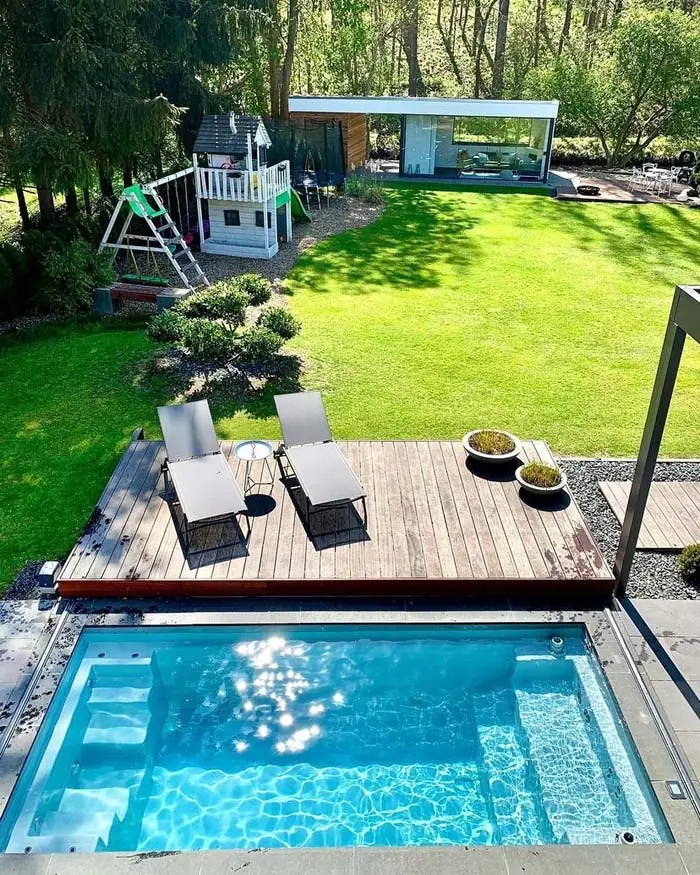
A platform deck gives your above-ground pool a simple, stable entry and a defined lounging area without surrounding the whole pool.
You can build a small platform on one side using pressure-treated lumber or low-cost composite boards for lower maintenance.
Place chairs, a small table, and non-slip decking for safety and function while keeping costs down with a partial rather than full wraparound deck.
2) DIY Above Ground Pool With Deck
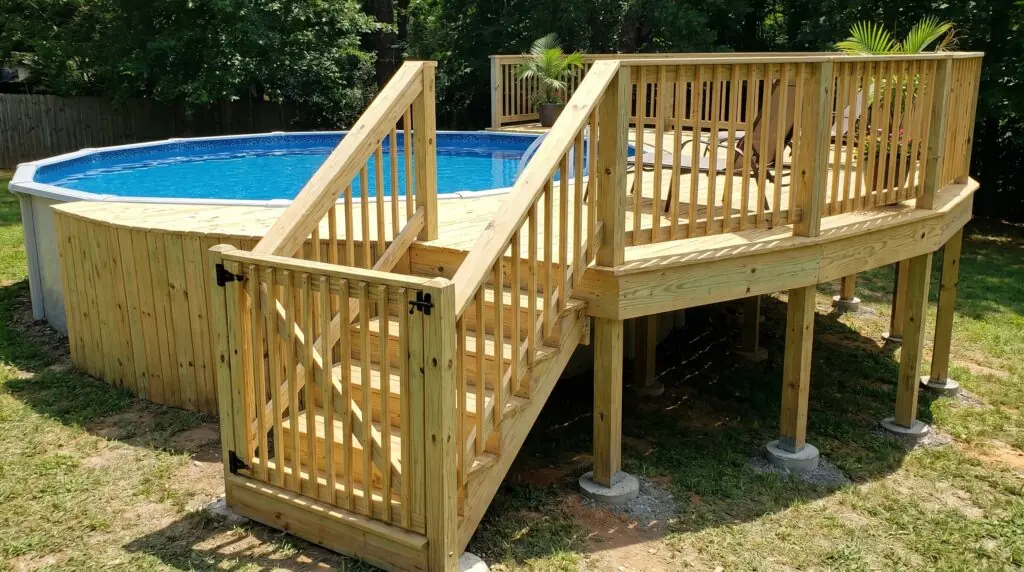
You can build a sturdy, attractive deck around an above-ground pool using basic tools and affordable materials.
Start with a simple platform design that matches your pool’s shape and height to reduce framing complexity.
Use pressure-treated lumber or composite boards for durability and low maintenance.
Plan for safe access with a gated stair or ladder, and add anchoring to meet local codes.
3) Above Ground Pool Steps Made Out Of Pallets
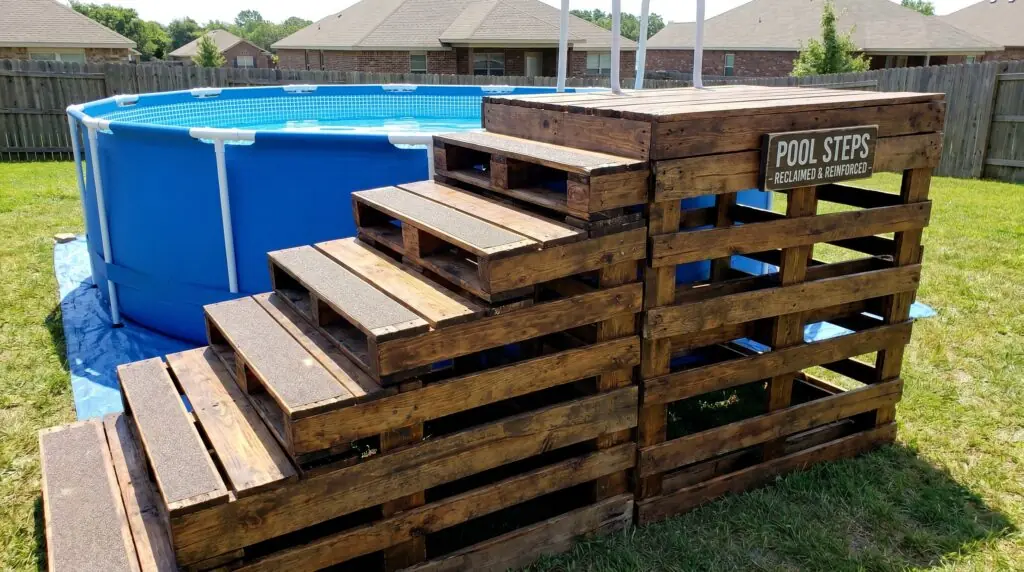
You can build sturdy, low-cost steps from reclaimed pallets to improve access to your above-ground pool. Use pressure-treated or well-sealed boards, reinforce joints with screws and blocking, and add a non-slip finish for safety.
Keep the design simple: stack or frame pallets to create risers and treads, then secure the assembly to the pool or ground. Check local codes and inspect pallets for damage or contaminants before starting.
4) Elevated Deck
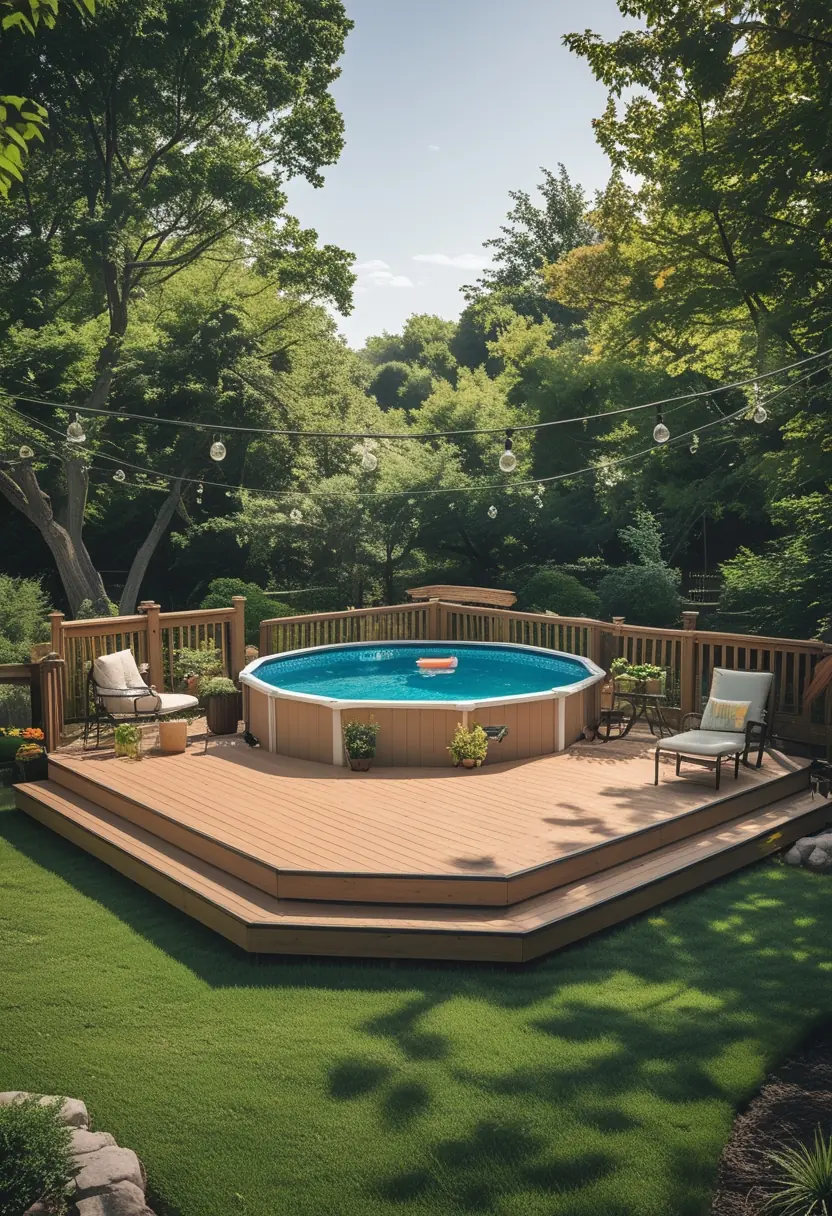
An elevated deck raises your pool to create better sightlines and a defined lounging area.
You gain storage space beneath and easier access for pumps or winterizing equipment.
Build with pressure-treated lumber or composite boards to balance cost and longevity.
Add a simple railing and wide steps for safety and comfortable entry to the pool.
5) Curved Deck Around Pool
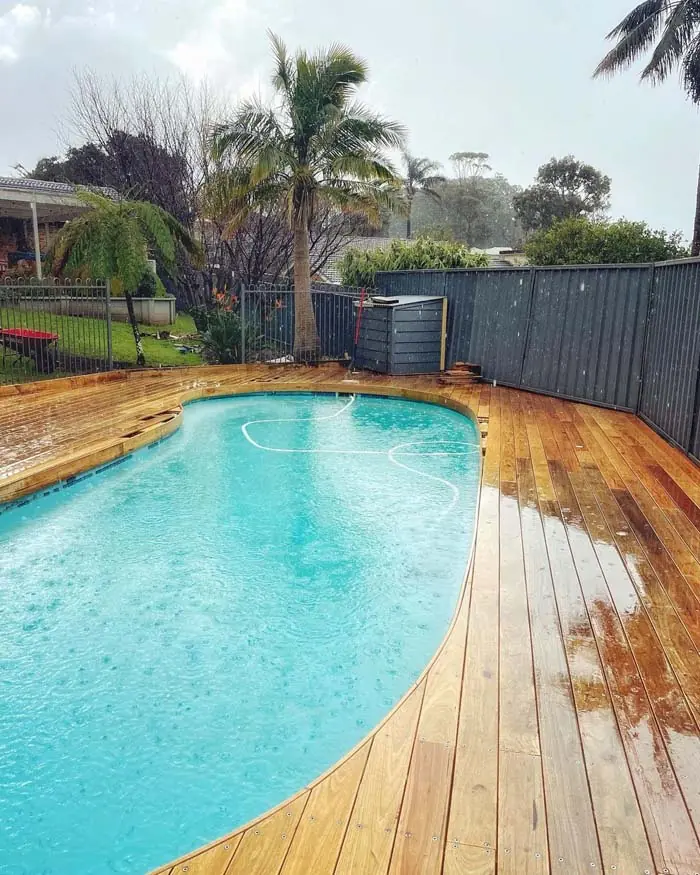
A curved deck softens the pool’s shape and creates natural circulation paths around water. You can build a simple radial frame with treated lumber or use flexible composite boards for a smoother curve.
Curved designs work well on tight budgets by minimizing cut waste and allowing smaller decking pieces. Plan supports carefully to keep the surface level and safe for regular use.
6) Simple Pool Decking
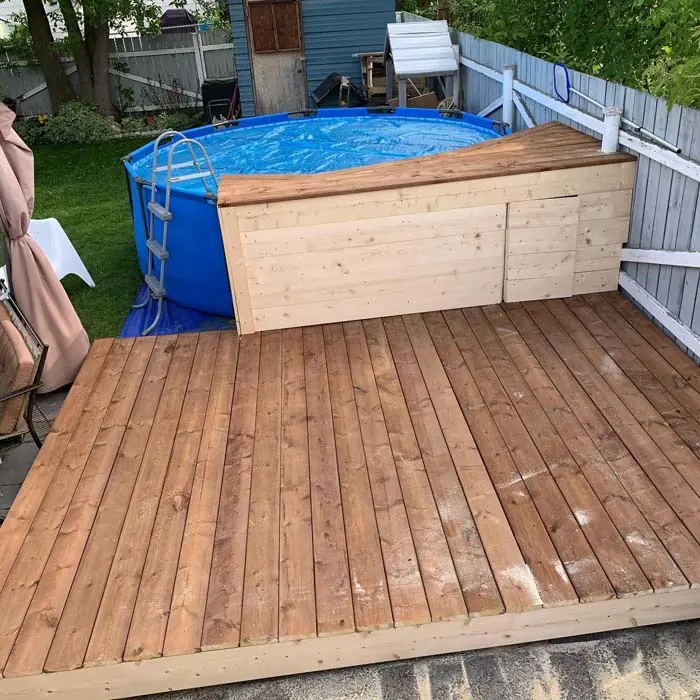
Choose a basic platform of pressure-treated lumber or affordable composite boards to give your above-ground pool safe, level access.
Keep the design rectangular or wrap one side to simplify framing and reduce material waste.
Add wide steps and a small landing for towels and drinks; these features improve safety and function without costly extras.
Seal or paint wood and add non-slip tape on steps to extend life and reduce slipping.
7) Add Lights To Your Pool
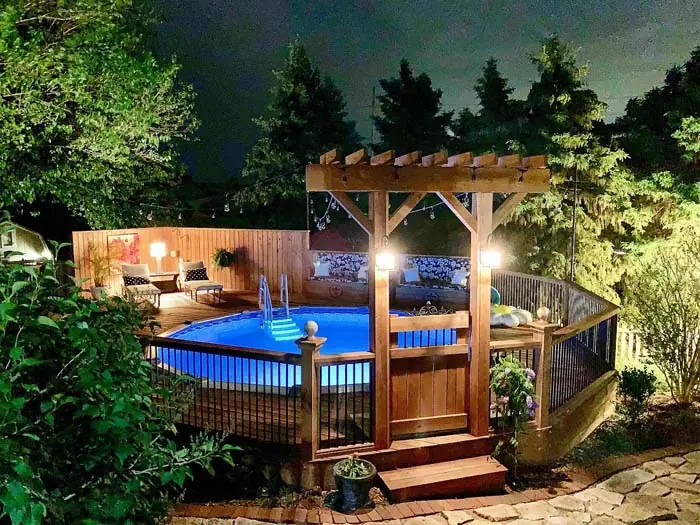
Add lighting to extend use after dark and improve safety around your deck.
Choose affordable options like floating solar or LED strip lights that install without rewiring.
Place string lights or stake lights around the deck edge to create even, low-cost illumination.
For a bolder look, use underwater LED puck lights; many plug into pool-side outlets or run on rechargeable batteries.
8) Partial Deck Around Above Ground Pool
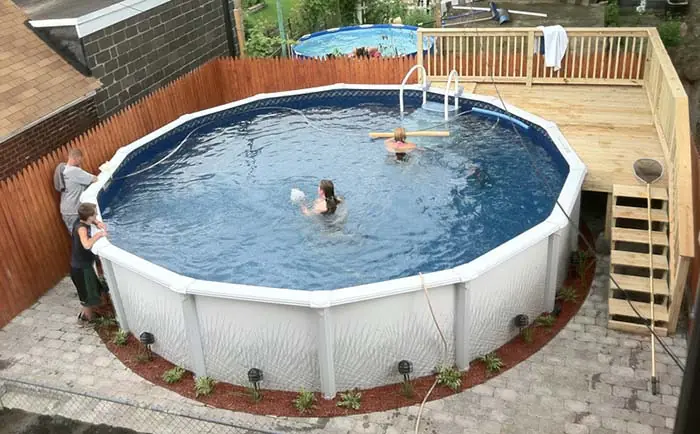
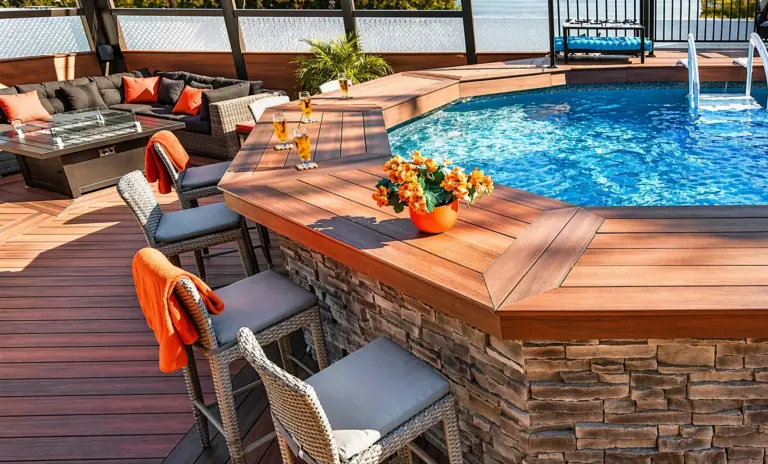
A partial deck gives you seating and entry without the cost of wrapping the whole pool. You can build a platform for the ladder, a small lounge area, or an L-shaped cutout to save materials.
Use pressure-treated lumber or budget composite boards for durability; anchor the deck to simple concrete footings. Keep the design compact to reduce decking, railing, and labor expenses.
9) Create Lounging Zone
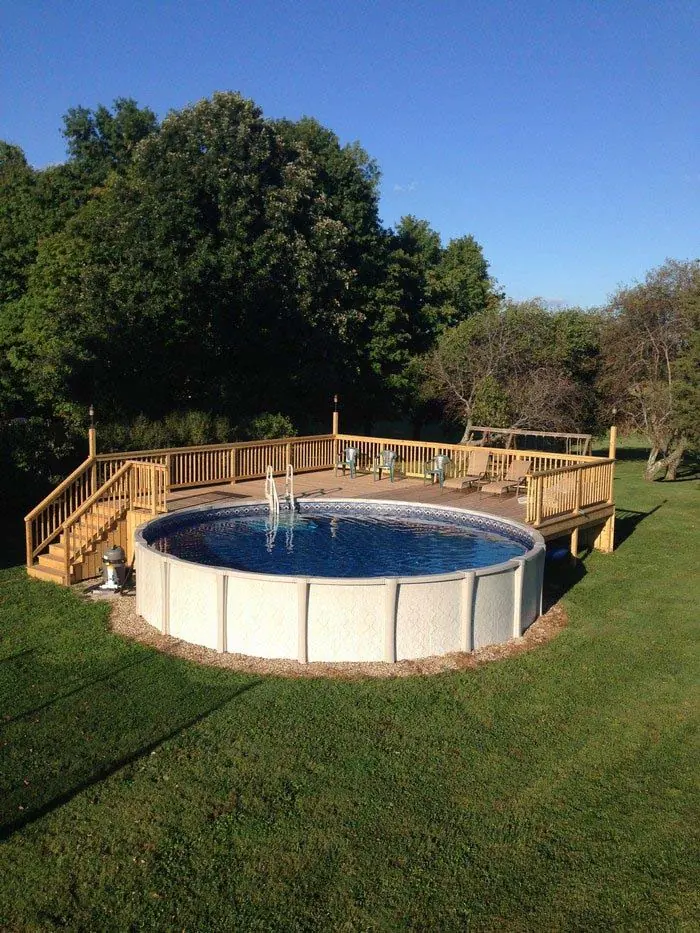
Design a dedicated lounging area next to your above-ground pool to boost comfort without a big expense. Place weather-resistant chairs, a small table, and an umbrella on a gravel pad or inexpensive pavers for a stable, low-maintenance surface.
Add portable loungers and a few shade options so you can reconfigure the space for sun or shade. Use solar lights and planters to define the zone and keep costs down.
10) Budget Friendly Tiny Deck
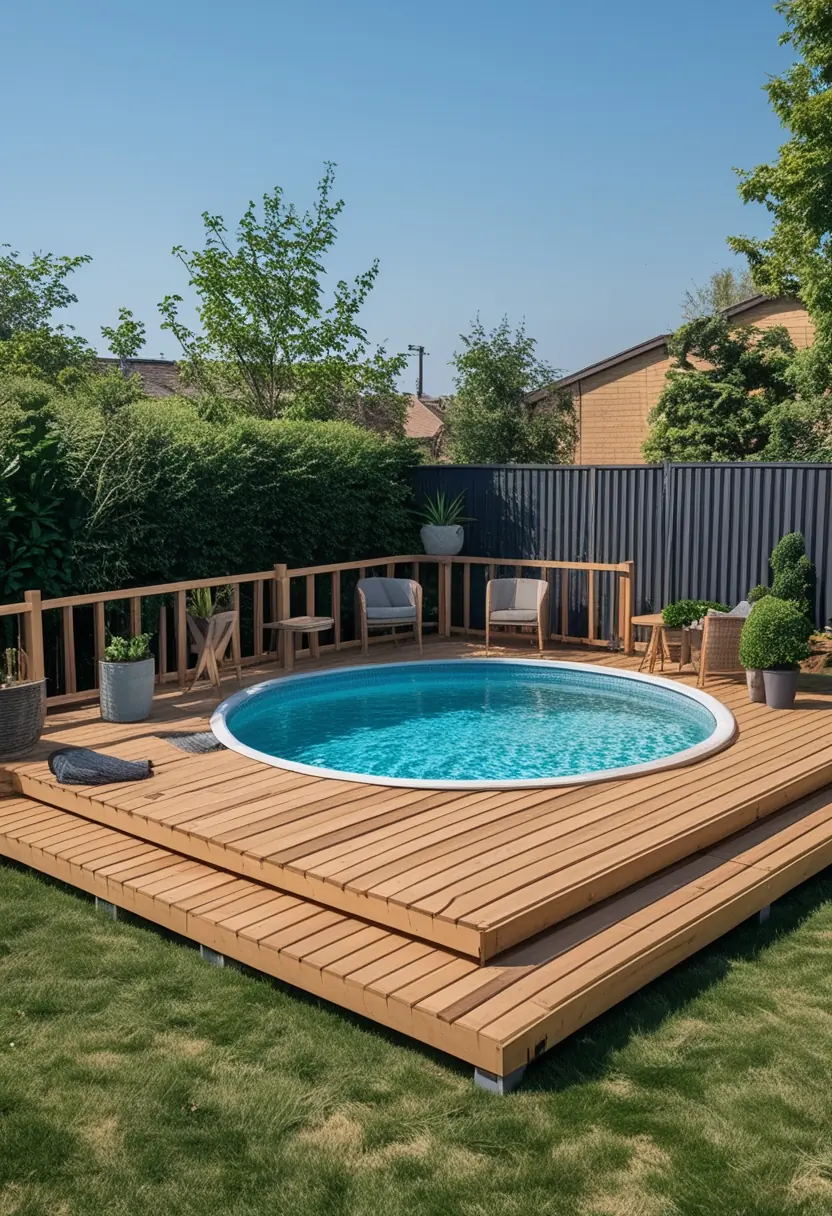
A tiny deck gives your above-ground pool a clean, safe entry without a big expense.
You can build one from pressure‑treated lumber or composite offcuts to keep costs low.
Place it opposite the ladder for smoother flow and add a simple handrail for safety.
Keep dimensions compact 4–6 feet wide so you use fewer materials and save on labor.
11) Split-Level Deck
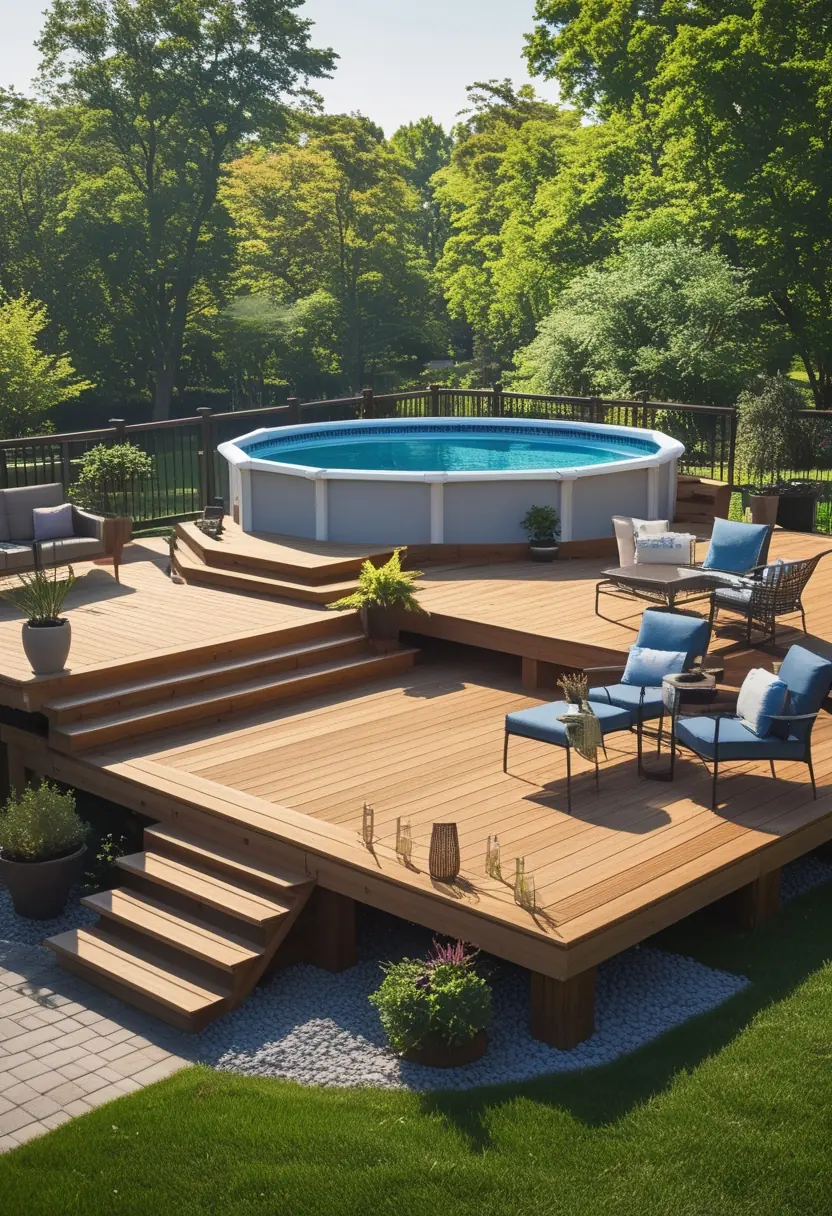
A split-level deck creates defined zones for lounging, dining, and pool access without a large budget. You can build the lower level as a simple platform for chairs and the upper level as a narrow walkway or entry point to the pool.
This layout uses fewer materials than a full wraparound deck while improving flow and safety. Staggered steps and railings help separate wet and dry areas and make the space feel more intentional.
12) Fenced Deck For Above Ground Pool
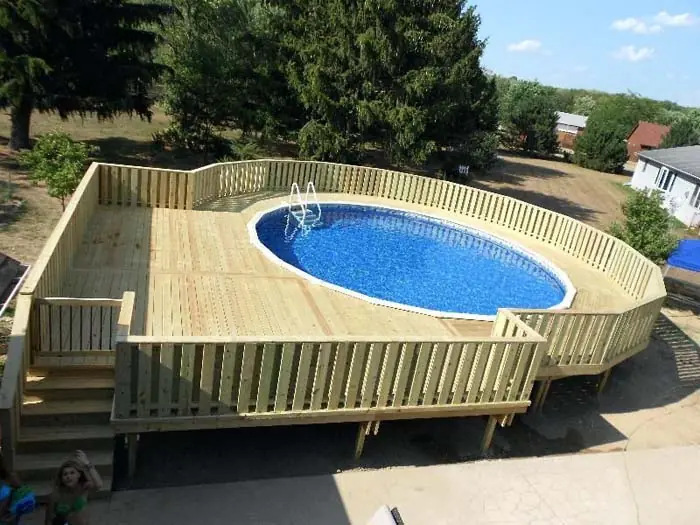
A fenced deck adds safety and privacy while keeping the design compact and budget-friendly. You can use pressure-treated wood or low-cost metal panels to build a sturdy barrier that meets local code and keeps children and pets secure.
Place a self-closing gate with a latch above reach for added protection. Paint or stain the fence to match your house or deck for a cohesive look.
13) Encircle Pool With Wooden Deck
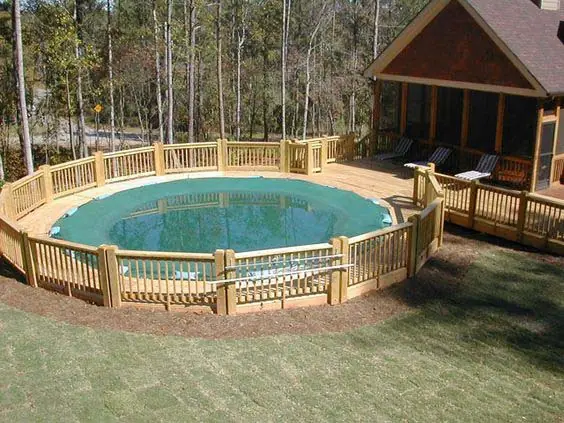
Encircle your above-ground pool with a simple wooden deck to create continuous access and a cohesive look.
Choose pressure-treated lumber or a low-maintenance composite to keep costs down and extend lifespan.
Keep the deck height even with the pool rim for easy entry, and include a short stair or gate for safety and convenience.
14) Under Deck Lattice Idea
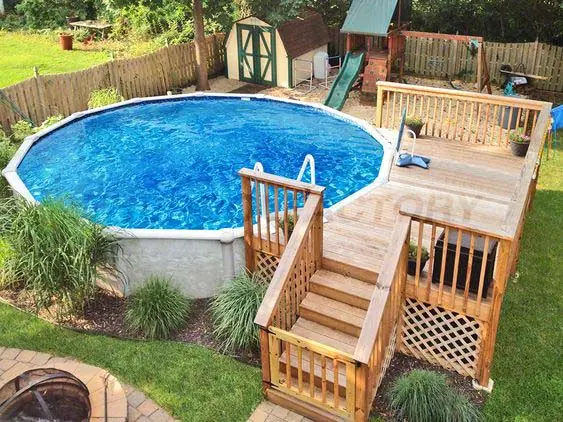
Use lattice panels beneath your pool deck to hide plumbing, storage, and the pool’s base while maintaining airflow.
Choose vinyl or pressure-treated wood lattice for durability and low maintenance in damp conditions.
You can paint or stain the lattice to match your deck and create a cohesive look.
Cut access panels into the lattice for easy maintenance without sacrificing appearance.
15) Add White Fence For More Color
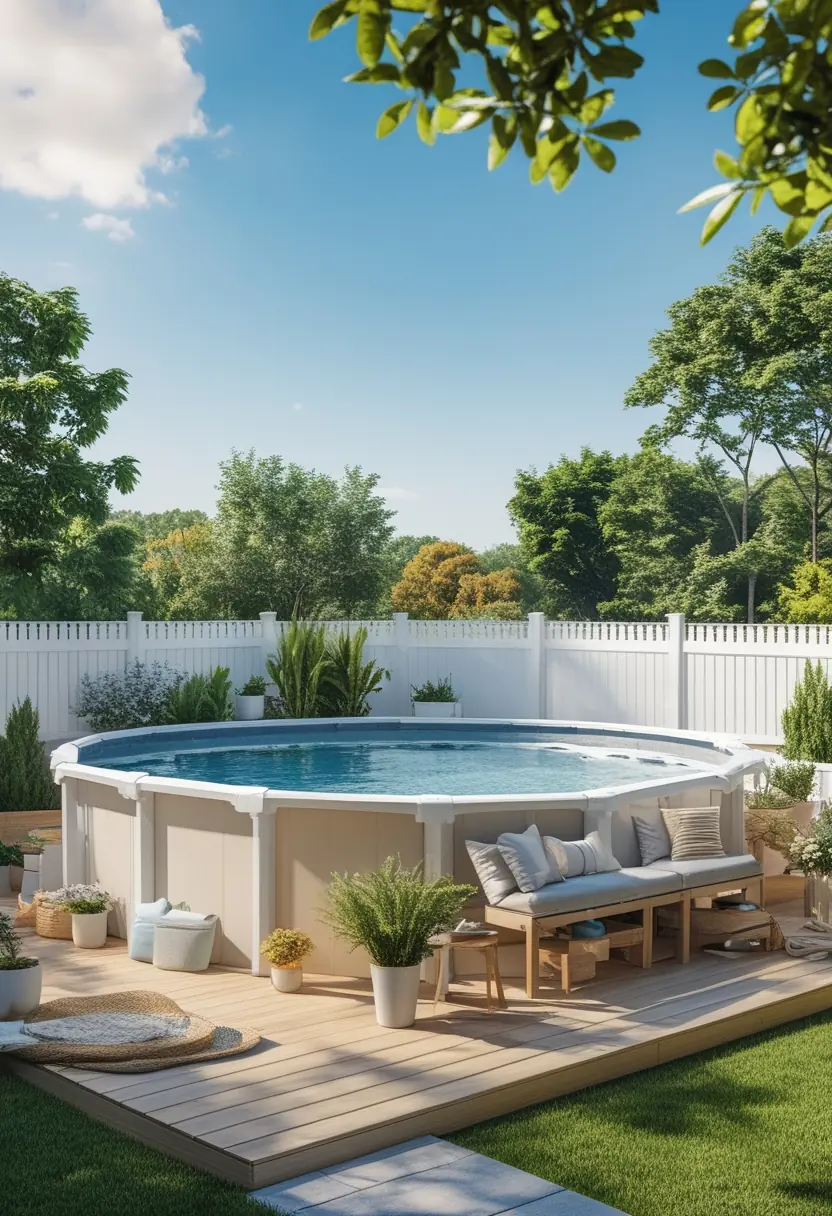
A white fence brightens your pool area and reflects sunlight, making the space feel cleaner and more open. You can pick vinyl or painted wood for a low-cost, durable option.
Install panels or picket sections to match your deck height and tie the look together. White also contrasts nicely with greenery or dark decking, giving your yard a crisp, finished appearance.
Key Design Considerations
Plan for safety, function, and cost from the start. Focus on measurements, access, load capacity, and materials to avoid costly rework.
Space Planning and Measurements
Measure the pool diameter plus at least 3–4 feet of clearance on the primary access side to allow for steps, storage, and movement. If your yard slopes, measure grade change over the deck footprint; a stepped or terraced deck often costs less than heavy site work.
Calculate live load: design for 50 psf (pounds per square foot) minimum for residential decking and increase to 100 psf where loungers or hot tubs may sit. Mark utility locations — electrical, filter plumbing, and pool skimmer — before building so you can route conduits and avoid cutting decking later.
Sketch a top-down plan with dimensions, a simple materials list, and an access path width (minimum 36 inches for comfortable entry). Use these numbers when comparing DIY kits or contractor quotes to keep the project on budget.
Maintenance Tips for Budget-Friendly Decks
Keep routine care simple and focus on preventing water damage and wear. Regular cleaning, timely sealing, and targeted repairs will extend the life of low-cost decking materials and keep the area safe.
Cleaning and Weather proofing
Clean your deck at least twice a year and after heavy storms. Sweep debris weekly to prevent mold and rot; use a stiff broom for wood and a leaf blower for gravel or composite surfaces.
For stains and mildew, scrub with a mix of warm water and mild detergent or a specialized composite cleaner. Rinse thoroughly with a garden hose; avoid pressure washers on thin wood or soft vinyl to prevent surface damage.
Apply weatherproofing according to material: seal pressure-treated wood every 1–2 years, stain and seal hardwoods annually, and use UV-protectant sprays for vinyl and composite boards. Pay attention to fastener sites and seams where water pools; a bead of exterior-grade sealant will block infiltration.
Winterize by removing standing water and covering portable furniture. Raise ladders and skimmers off the deck surface to reduce constant moisture exposure.
Long-Term Upkeep Strategies
Inspect your deck quarterly for loose boards, shifting footings, and corroded fasteners. Tighten or replace screws and bolts with stainless steel or coated deck fasteners to prevent rust and staining.
Plan small repairs promptly. Replace a single damaged board before rot spreads, and re-level posts that sink by adding compacted gravel or concrete pads under supports. These small fixes avoid costly full-deck replacement.
Budget annually for a maintenance kit: sealant, exterior screws, wood filler, a small sander, and a surface cleaner. Rotate replacement parts over several years to spread cost, and consider DIY sealing to save on labor.
Document repairs and dates to track when resealing, staining, or hardware replacement is due next. This record helps you prioritize work and keep the deck functional without overspending.
Frequently Asked Questions:
What is the cheapest way to build an above ground pool deck?
A small platform or partial deck is usually the most budget-friendly option. Using pressure-treated lumber, reclaimed pallets, or simple gravel bases can lower material costs while still improving pool access and appearance.
Can I build pool steps from pallets safely?
Yes, pallet steps can work if you use clean, undamaged pallets, reinforce them with screws, and seal the wood properly. Add non-slip treads and anchor the steps securely for better safety.
How do I reduce maintenance costs for a wood pool deck?
Seal the wood every 1–2 years, clean regularly, and inspect for loose boards or rot. Lattice skirting can also help protect framing while improving appearance.
Are tiny decks practical for above ground pools?
Yes, tiny decks are excellent for small yards and tight budgets. They provide safe entry, a place for towels or seating, and can still look stylish with thoughtful design.