10 Stunning Above Ground Pool Ideas for Your Backyard Oasis
You can turn an above-ground pool into a purposeful, stylish centerpiece that fits your yard, budget, and lifestyle. This article shows practical design directions and ideas to help you choose a look and layout that suits your space whether you want a tranquil retreat, a contemporary focal point, a compact solution, or an entertainment-ready resort vibe.
Explore options that balance form and function, covering aesthetic choices, shape variations, privacy and landscaping tips, and ways to boost usability. You’ll find straightforward inspiration to guide decisions about decking, planting, lighting, and pool type so your project feels intentional and achievable.
Contents
1) Tranquil
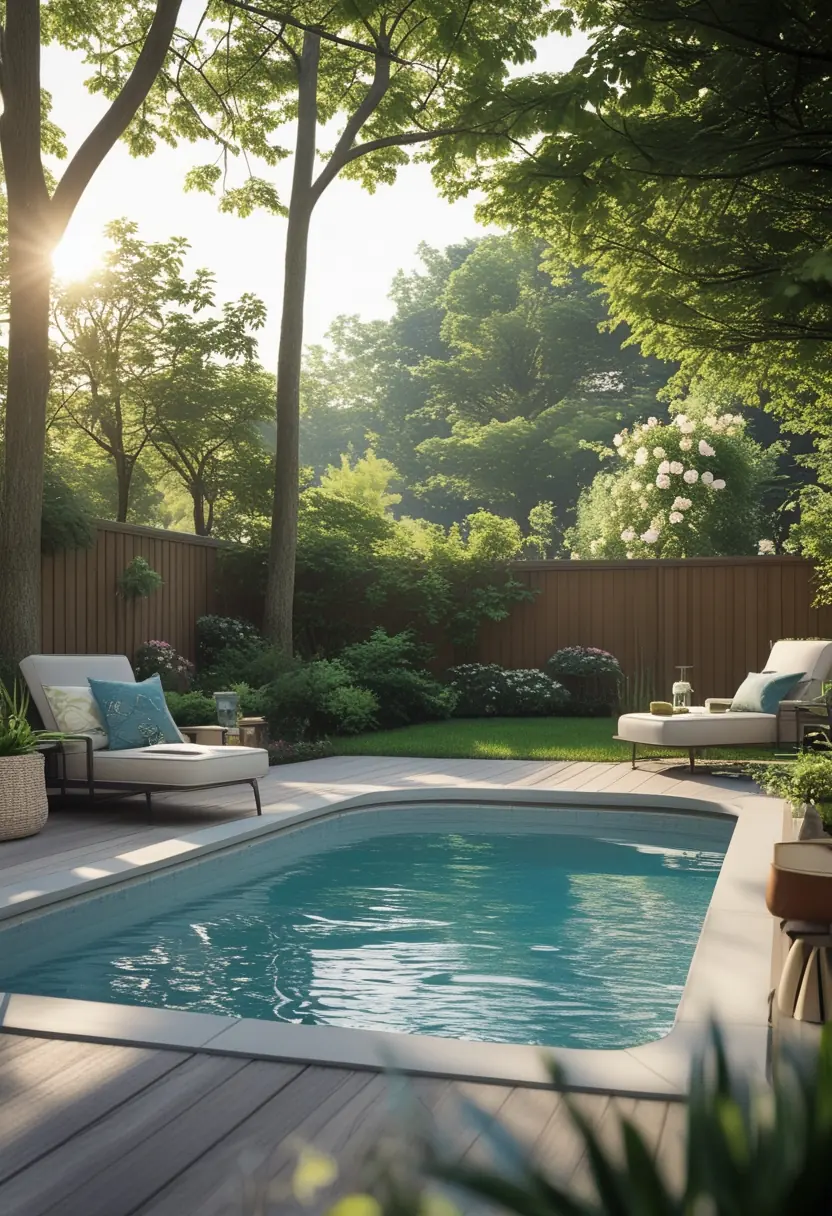
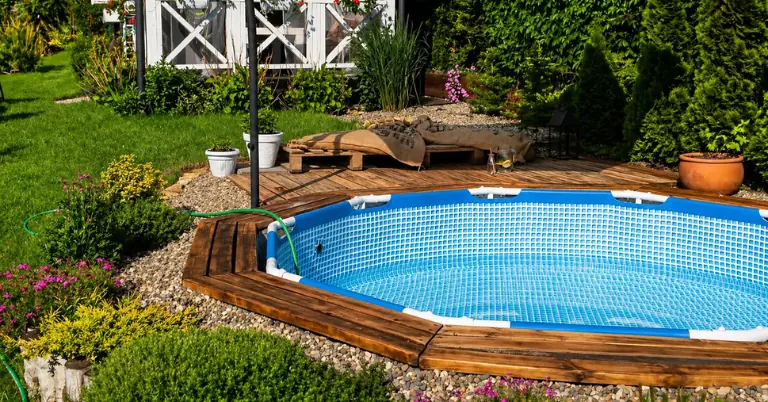
Create a calm retreat around your above-ground pool with neutral materials like stone, wood, and soft grasses. You’ll reduce visual clutter and encourage relaxation with simple lines and a limited color palette.
Add layered lighting and a small water feature to mask noise and extend use into evening. Place a few comfortable chairs and low-maintenance plants to keep the space serene without extra work.
2) Contemporary
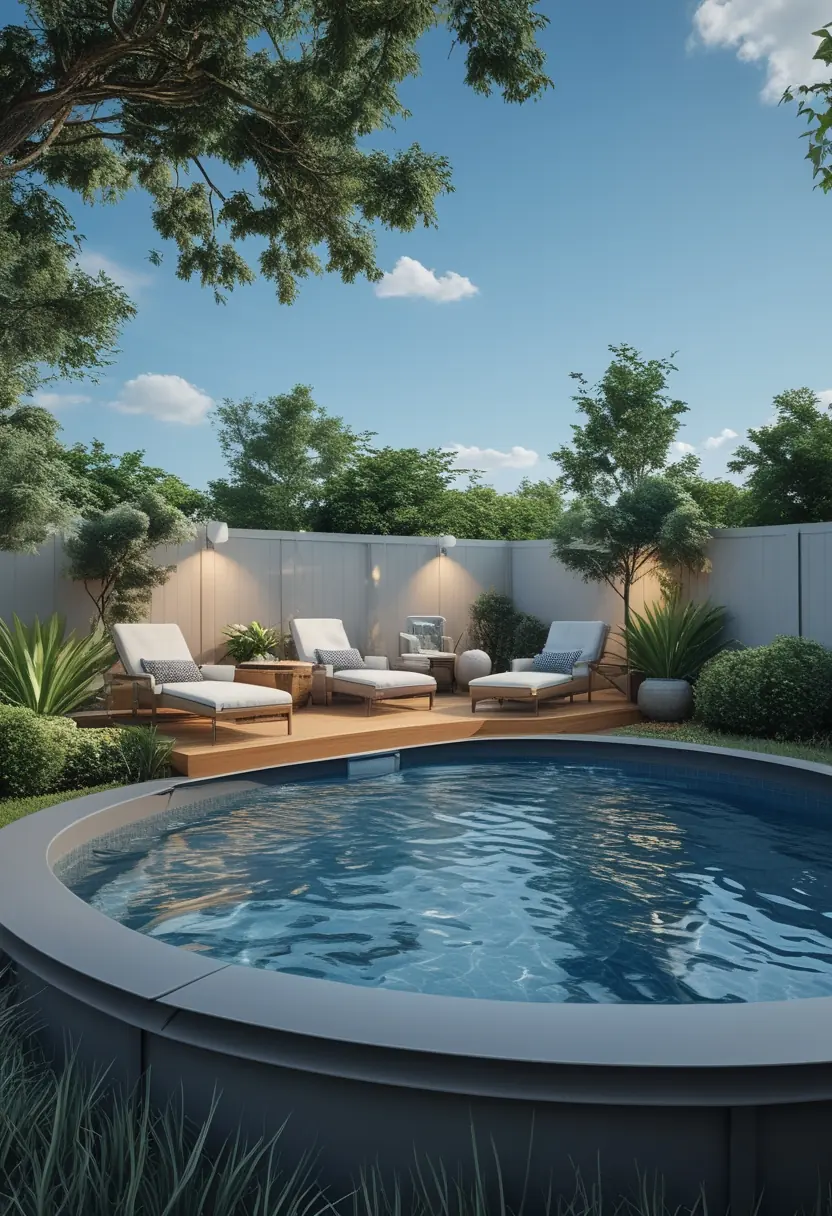
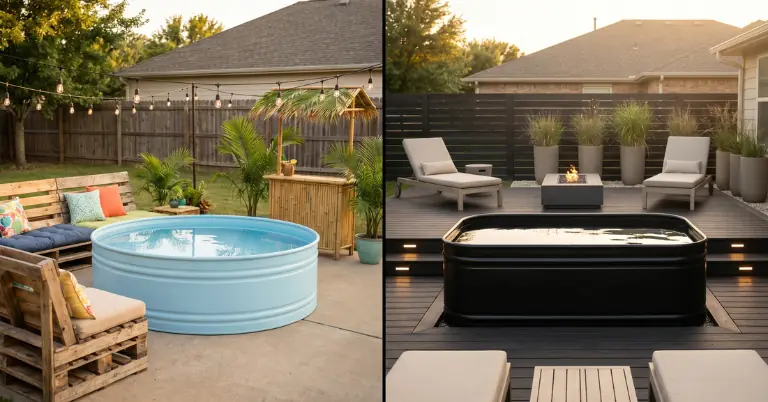
Give your above-ground pool clean lines and restrained materials for a modern look. Use dark metal panels or smooth composite cladding to create a sleek perimeter that reads like built-in architecture.
Surround the pool with a low-profile wood or concrete deck to extend usable space and keep sightlines minimal. Minimal planting and integrated LED lighting keep the aesthetic crisp while improving evening usability.
3) Entertainment Resort
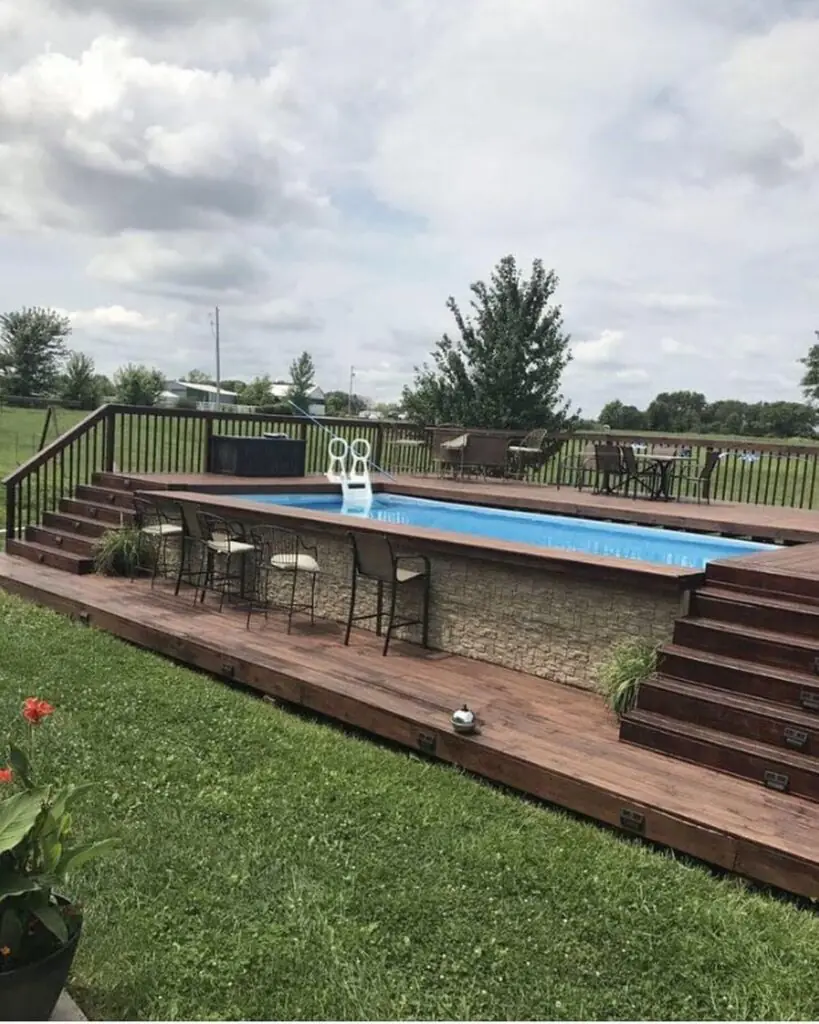
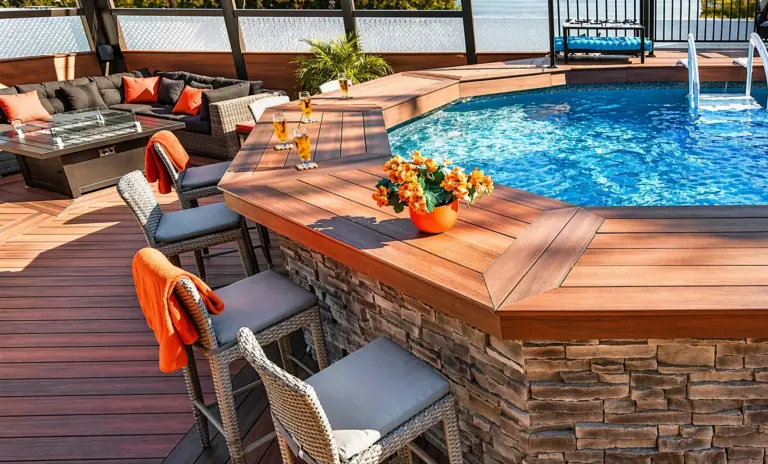
Turn your above-ground pool into an entertainment hub with a surrounding deck and integrated seating. Add a built-in bar or counter so you can serve drinks and snacks without leaving the pool area.
Install weatherproof speakers and adjustable lighting to set mood and music for gatherings. Include shade structures or a pergola to keep guests comfortable during hot afternoons.
4) Compact
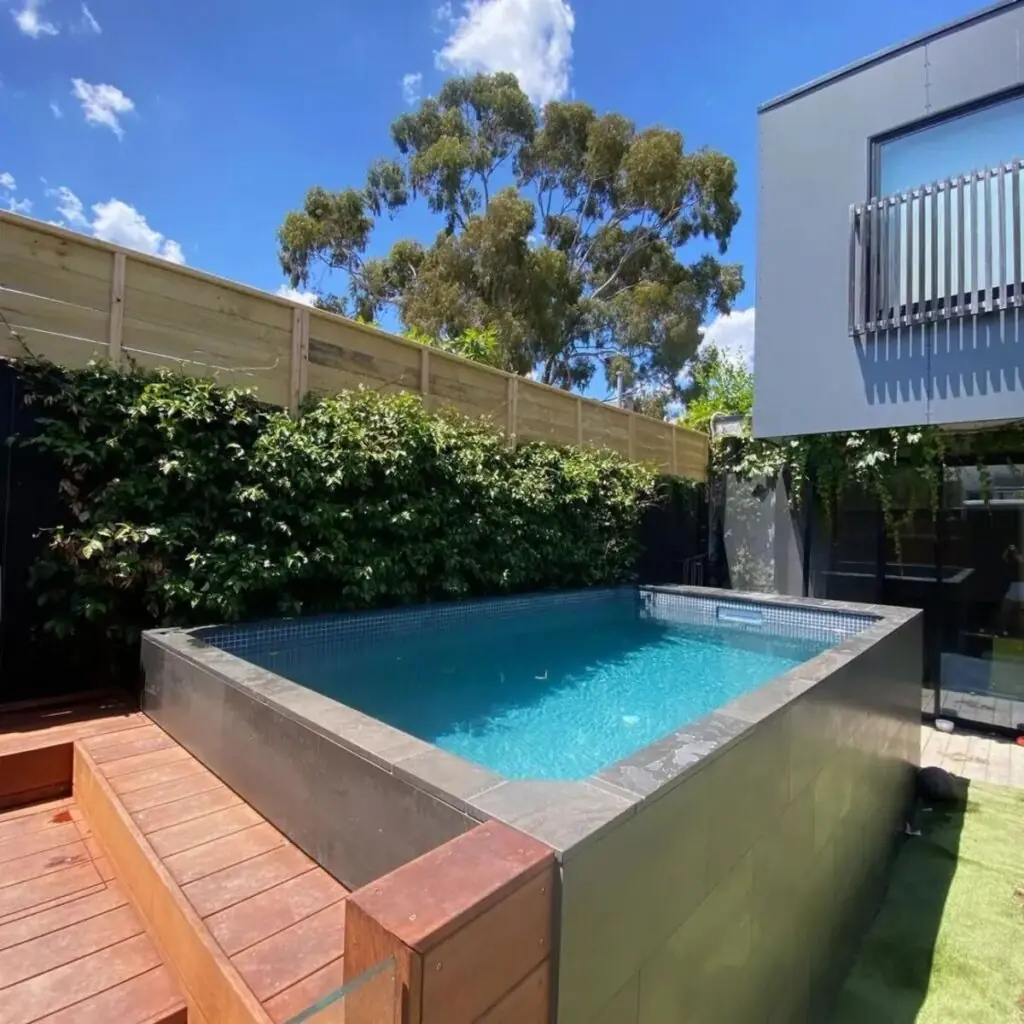
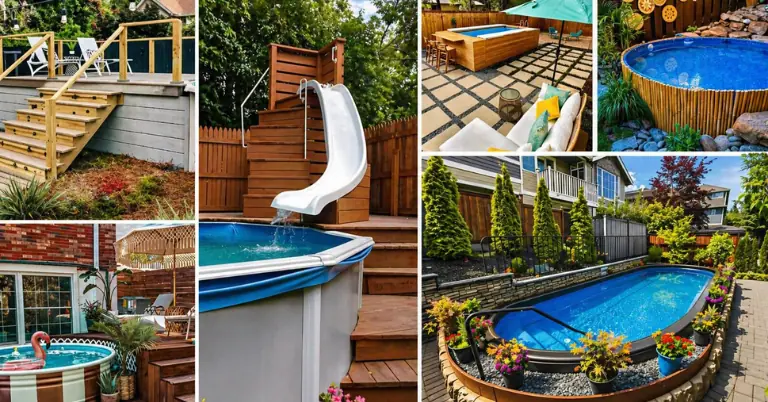
Choose a compact above-ground pool when yard space limits you but you still want regular cooling and low maintenance.
Round or small rectangular models fit into corners or narrow strips and still allow room for seating or planters.
Use a raised deck or fold-out platform to extend usable space without enlarging the pool footprint.
Select streamlined pumps and narrow-step entries to keep circulation efficient and preserve usable yard area.
5) Container Pool
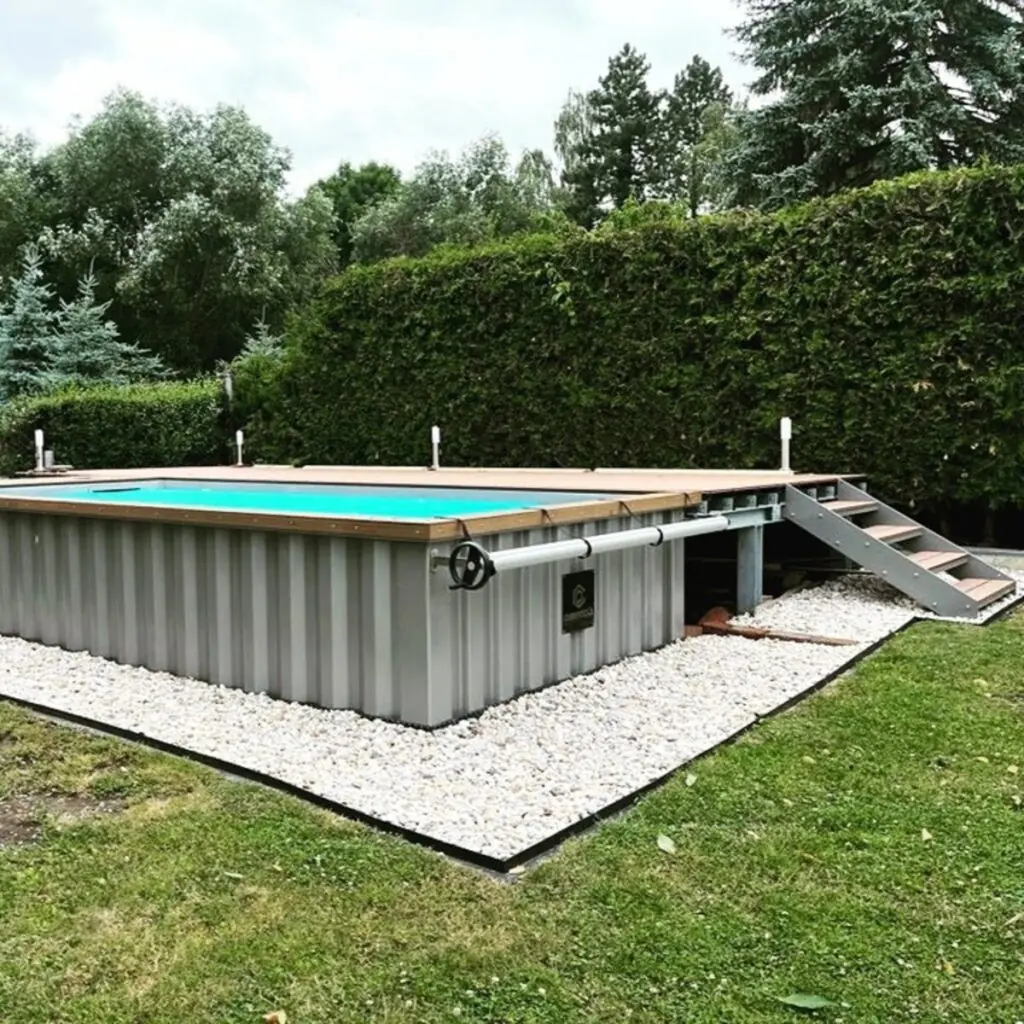
A container pool offers a durable, prefabricated option that reduces excavation and construction time. You can place it above ground, partially buried, or integrate a surrounding deck for seating and privacy.
Steel construction makes it long-lasting, but you should verify coatings and corrosion protection. Plan for filtration, pump access, and proper site leveling to keep maintenance straightforward and ensure safe use.
6) Oval
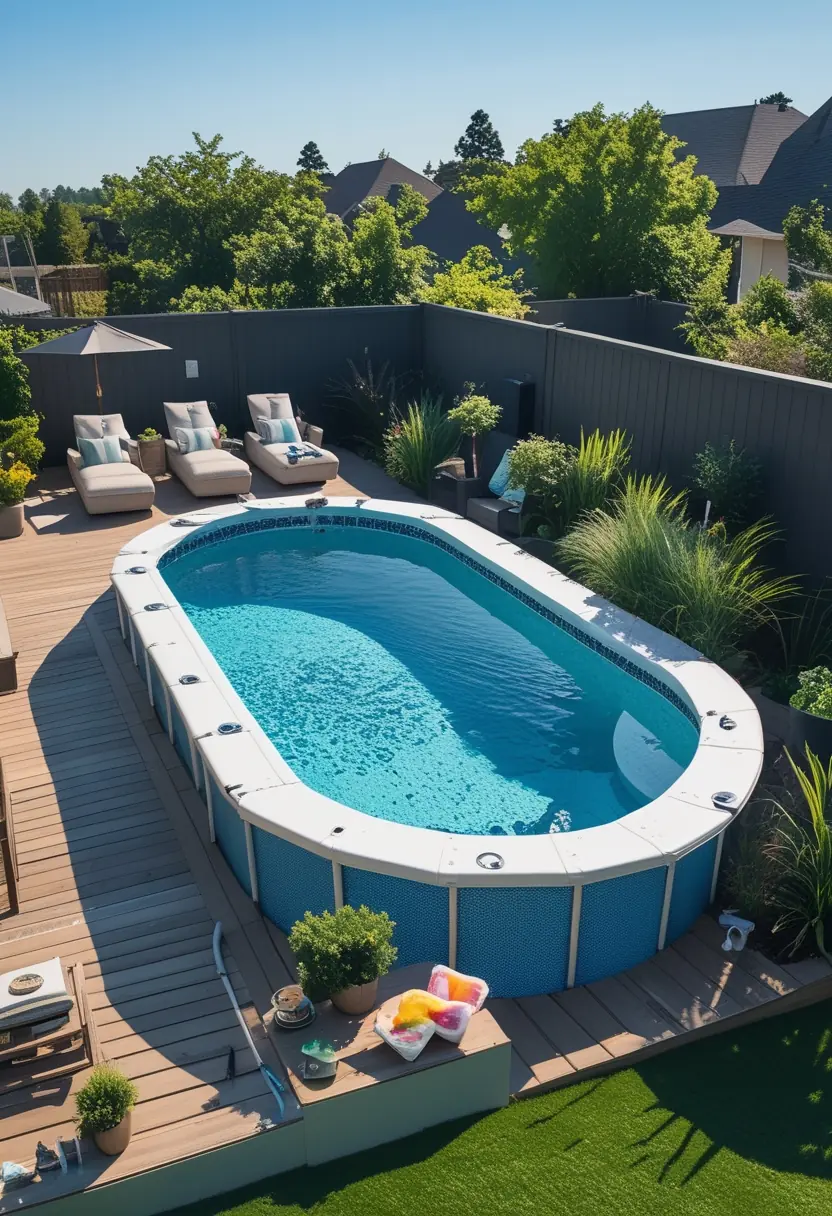
An oval above-ground pool gives your yard an elegant, elongated profile that feels more custom than round models.
You can wrap a curved wood or composite deck around it to increase lounging space and create smooth traffic flow.
The shape suits lap-style swimming and fits narrow yards better than a wide rectangle.
Use gentle curves in decking and plantings to echo the pool’s form and soften the transition to the rest of your landscape.
7) Oasis
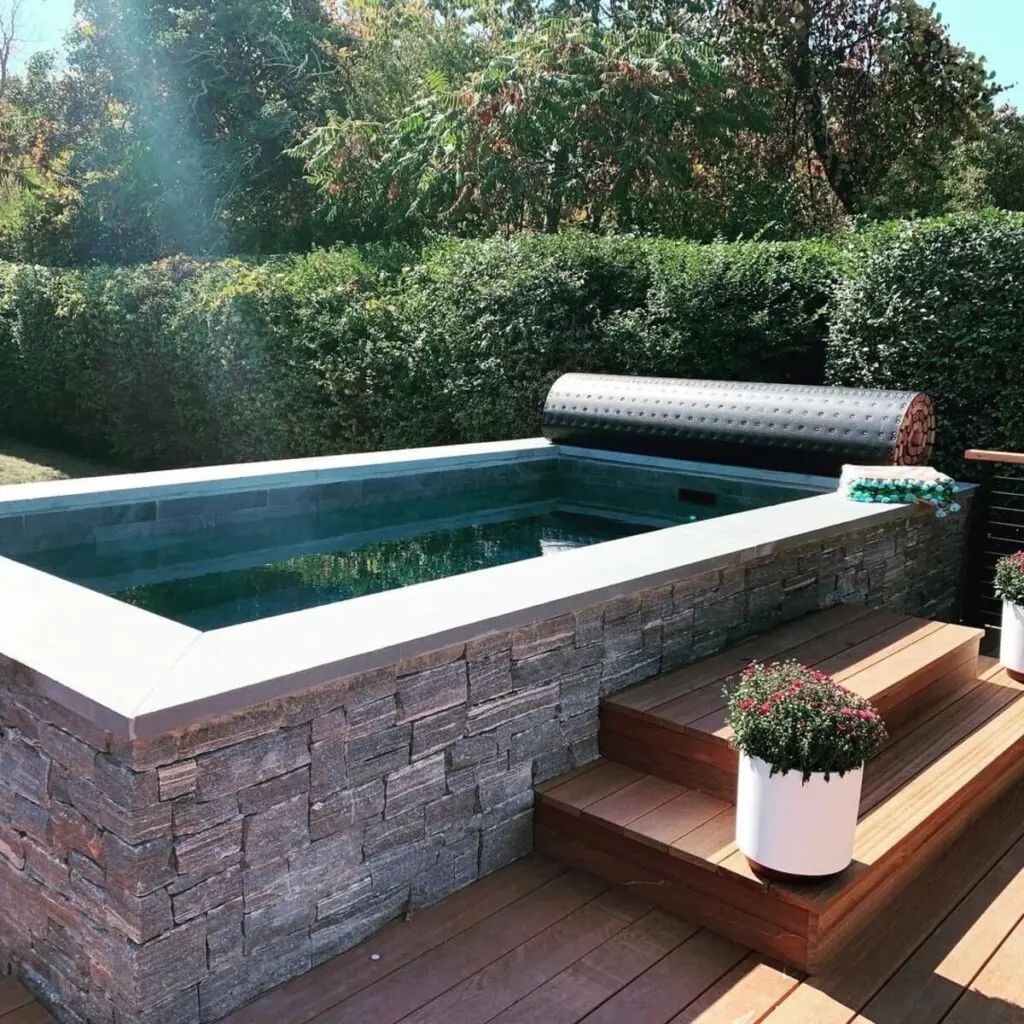
Turn your above-ground pool area into a calm oasis with layered landscaping and soft lighting.
Place tall plants and potted palms near the pool edge to create privacy and a tropical feel.
Add a simple wooden deck or stone pavers for a clean transition from yard to water.
Use warm string lights or low-profile LED fixtures to extend use into the evening while keeping the mood relaxed.
8) Private
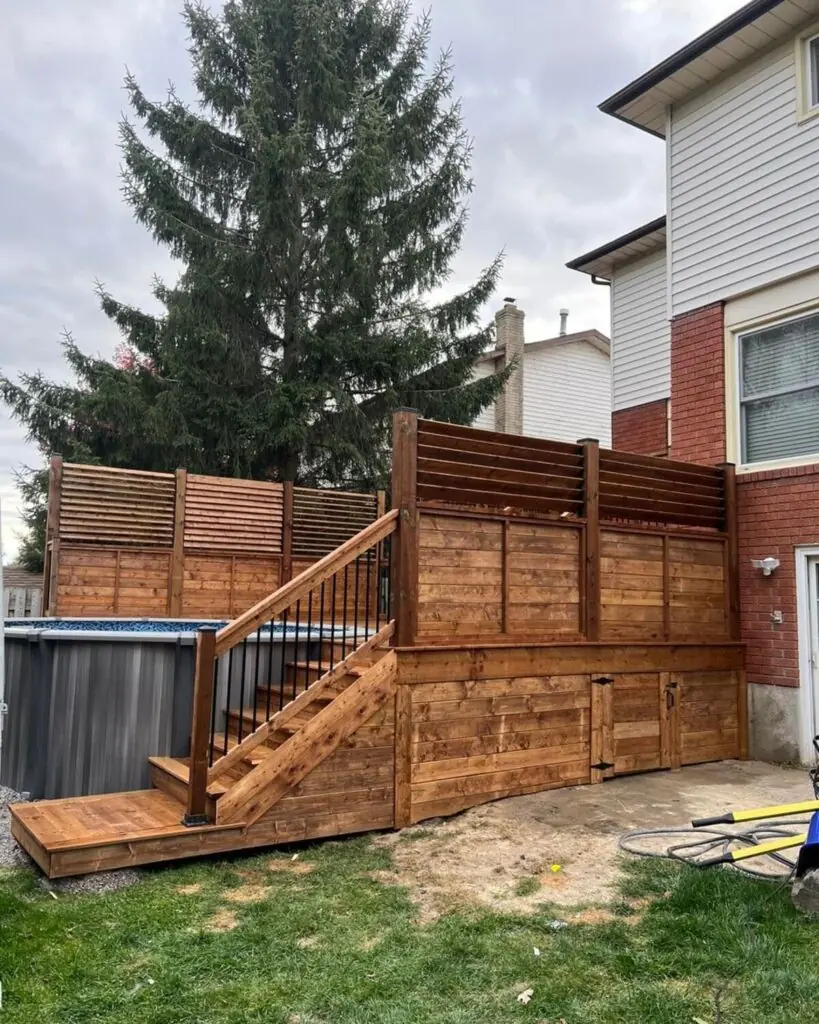
Create a secluded pool area with tall hedges, privacy screens, or decorative fencing to block views and reduce wind.
Layer plants and hardscaping bamboo or evergreen shrubs plus a lattice or slatted screen to balance sightlines and airflow.
Add retractable shades or a pergola with curtains for flexible privacy when you want it.
Use potted plants and lighting to soften the perimeter and keep the space inviting after dusk.
9) Tropical Chic
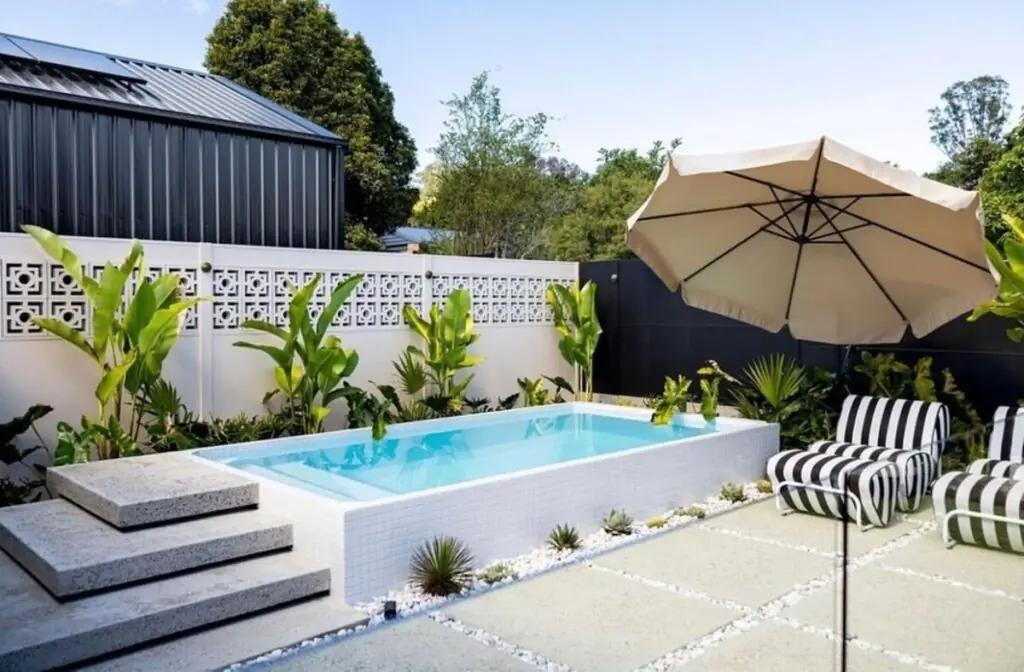
Give your above-ground pool a lush, tropical makeover with large-leafed plants and layered greenery around the perimeter. Use potted banana plants, bird-of-paradise, and palms to add height and a sense of seclusion.
Add natural materials like teak decking, woven furniture, and a stone or bamboo screen to keep the look grounded. Finish with warm string lights and a few colorful blooms for a relaxed, resort-like feel.
10) Freeform
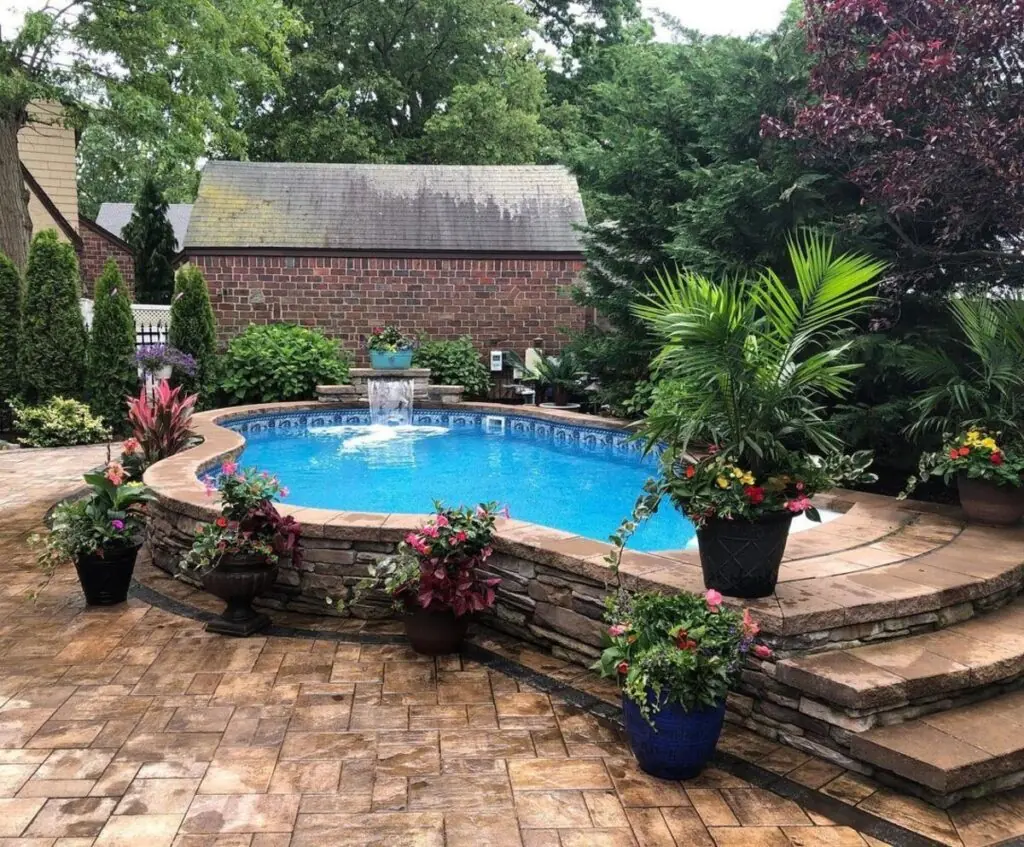
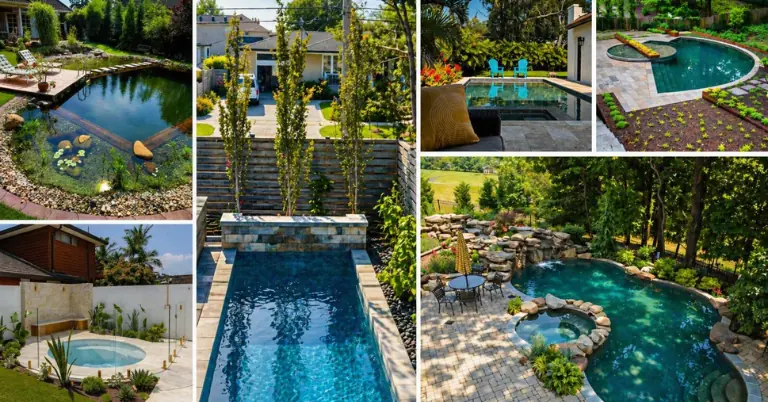
Choose a freeform above-ground pool when you want a relaxed, natural look that complements landscaping. Its curving edges soften hard lines and fit irregular yards better than rigid shapes.
You can mimic a lagoon with rock work or plantings around the perimeter. Freeform designs also let you create separate shallow play areas and deeper swim zones within the same footprint.
Key Considerations for Above Ground Pool Design
Site choice, budget limits, and material selection determine safety, longevity, and the look of your pool. Prioritize ground level, local codes, realistic costs, and materials that match your climate and maintenance willingness.
Site Selection and Preparation
Pick a flat area with good drainage and at least 3–5 feet of clear access on one side for installation and maintenance. Avoid slopes, utility lines, large tree roots, and low spots that collect water.
Test soil firmness: compacted sand or crushed stone pad works well. If soil is soft or uneven, plan for a reinforced concrete pad or a timber frame with a leveled gravel base. Measure sunlight exposure 6+ hours of sun helps heating but increase evaporation.
Confirm local setback, fence, and barrier requirements. Arrange for underground utility locates before digging. Consider proximity to water and electricity for pumps, and place the filter/pump on a stable, level pad within 20–30 feet of the pool to minimize hose length and head loss.
Budgeting and Planning
List fixed costs (pool shell, liner, frame), recurring costs (chemicals, electricity, inspections), and one-time extras (decking, fencing, permits). Expect installation labor to be 20–40% of total if you hire professionals; DIY can save labor but increases time and risk.
Allocate funds for these common line items:
- Pool kit and liner
- Ground prep (pad, excavation)
- Pump, filter, chlorinator/heater
- Decking or surround, fencing, and gate
- Annual maintenance (chemicals, replacement parts)
Plan a contingency of 10–20% for unexpected soil issues, permit delays, or upgrades like upgraded liners or decking. Get at least three quotes for major work and compare warranties, service response, and parts availability.
Material Choices
Choose between steel, resin (polymer), or hybrid frames. Steel frames offer strength and lower cost but may rust in coastal or heavily treated water; use powder-coated or galvanized steel for better corrosion resistance.
Resin components resist corrosion and require less maintenance but cost more upfront. Liners typically come in PVC, vinyl, or reinforced vinyl; thicker liners (20–30 mil) last longer and resist punctures. For decking and skirting, consider pressure-treated wood, composite decking, or IPE for durability and low maintenance.
Match materials to climate and usage: insulated or heated systems benefit from rigid walls and durable liners. Prioritize OEM-compatible parts for pumps and filters to ensure fit and warranty support.
Enhancing Pool Aesthetics and Usability
Create a comfortable, safe, and attractive pool area by choosing plantings, hardscaping, and lighting that match your yard, budget, and maintenance preferences. Prioritize privacy, safe circulation, and materials that withstand sun and pool chemicals.
Landscaping Around Your Pool
Select plants that tolerate reflected heat, chlorine splash, and periodic drought. Use ornamental grasses, lavender, and dwarf evergreen shrubs; they shed less debris than large deciduous trees. Place plantings at least 3–5 feet from the pool edge to reduce leaf litter and root intrusion.
Add mulch beds or gravel strips between the pool and lawn to control weeds and create a clean edge. Install low, well-anchored edging to prevent soil erosion toward the pool during rain. Consider raised planters or built-in planter boxes on a deck for contained beds and easier maintenance.
Use a mix of textures and heights to frame views and provide screening. Position taller shrubs or a lattice with climbing vines where you need privacy from neighbors. Keep sightlines clear to the pool from windows and seating areas for safety and supervision.
Deck and Patio Integration
Measure pool rim height before designing a deck so the deck surface aligns with the pool top for safe, easy access. For above-ground pools, build a platform with a 2–3 foot wide perimeter or a full wraparound deck; this creates seating, storage, and a solid transition from yard to water.
Choose rot-resistant materials composite decking, pressure-treated lumber, or tropical hardwoods for durability near water. Include built-in benches, storage cubbies, and steps with non-slip treads to improve function. Keep deck boards spaced for drainage and use corrosion-resistant fasteners.
Plan circulation paths at least 3 feet wide and place an anti-slip surface near ladder areas. If you want multi-level interest, stagger small steps rather than steep rises. Integrate planter boxes or railings with built-in seating to maximize usable space without crowding the pool.
Lighting Solutions
Use layered lighting for safety and ambiance: path lights for walkways, step lights for stairs, and low-voltage spotlights for focal plants. Place pathway fixtures every 6–8 feet to keep circulation routes well lit and reduce tripping hazards.
Install LED strip lighting under deck rails or along the pool rim for soft, continuous illumination that resists moisture. For the pool itself, choose color-changing underwater LEDs rated for your pool type; mount them below the waterline and follow manufacturer wiring and bonding guidelines.
Add motion-activated or timed lights to improve energy efficiency and security. Make sure all outdoor electrical work follows local code and uses GFCI protection. Use warm white (2700–3000K) bulbs for seating areas and cooler whites for task lighting to maintain a comfortable evening atmosphere.
Frequently Asked Questions:
What are the best above ground pool ideas for small backyards?
Compact round, oval, or plunge-style pools work best for small yards because they save space while leaving room for seating, decking, or landscaping.
Are container pools a good long-term above ground pool option?
Yes, container pools are durable and stylish when properly coated for corrosion resistance and installed on a stable, level foundation.
How can I create privacy around my above ground pool?
Install fences, pergolas, tall hedges, bamboo screens, or outdoor curtains to block views while maintaining airflow and comfort.
What lighting options work best for above ground pools at night?
LED strip lights, solar path lights, underwater LEDs, and pergola string lights improve safety and create a relaxing evening atmosphere.