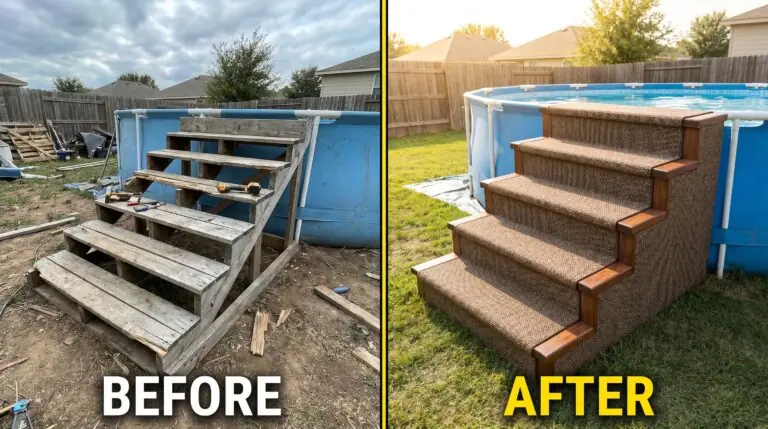
15 Deck Ideas for Above Ground Pools You’ll Love
You want an above-ground pool that feels intentional, comfortable, and like part of your yard. This article helps you imagine practical deck options that match your space, lifestyle, and budget so you can choose a layout and materials that work for you.
Expect clear, build able ideas that transform an above-ground pool into a functional, stylish backyard feature without needing a full in-ground remodel.
You’ll find options for surrounding the pool, multi-level connections to your home, seating and bar areas, and solutions for slopes, small yards, and privacy concerns. Use these ideas to plan a deck that enhances comfort, safety, and the overall look of your outdoor space.
Contents
- 1 1) Surround the Pool
- 2 2) Go for a Multi-Level Deck
- 3 3) Create a Backyard Retreat
- 4 4) Blend with the Landscape
- 5 5) Keep it Enclosed
- 6 6) Enjoy a Half Deck
- 7 7) Build on Sloping Land
- 8 8) Add a Bar Area
- 9 9) Create Multiple Seating Areas
- 10 10) Include Matching Elements
- 11 11) Upscale the Texture
- 12 12) Contrast with the Pool
- 13 13) Add a Gravel Border
- 14 14) Go for a Modern Look
- 15 15) Make the Most of Available Space
- 16 Key Design Considerations
- 17 Enhancing Comfort and Aesthetics
- 18 Conclusion
1) Surround the Pool
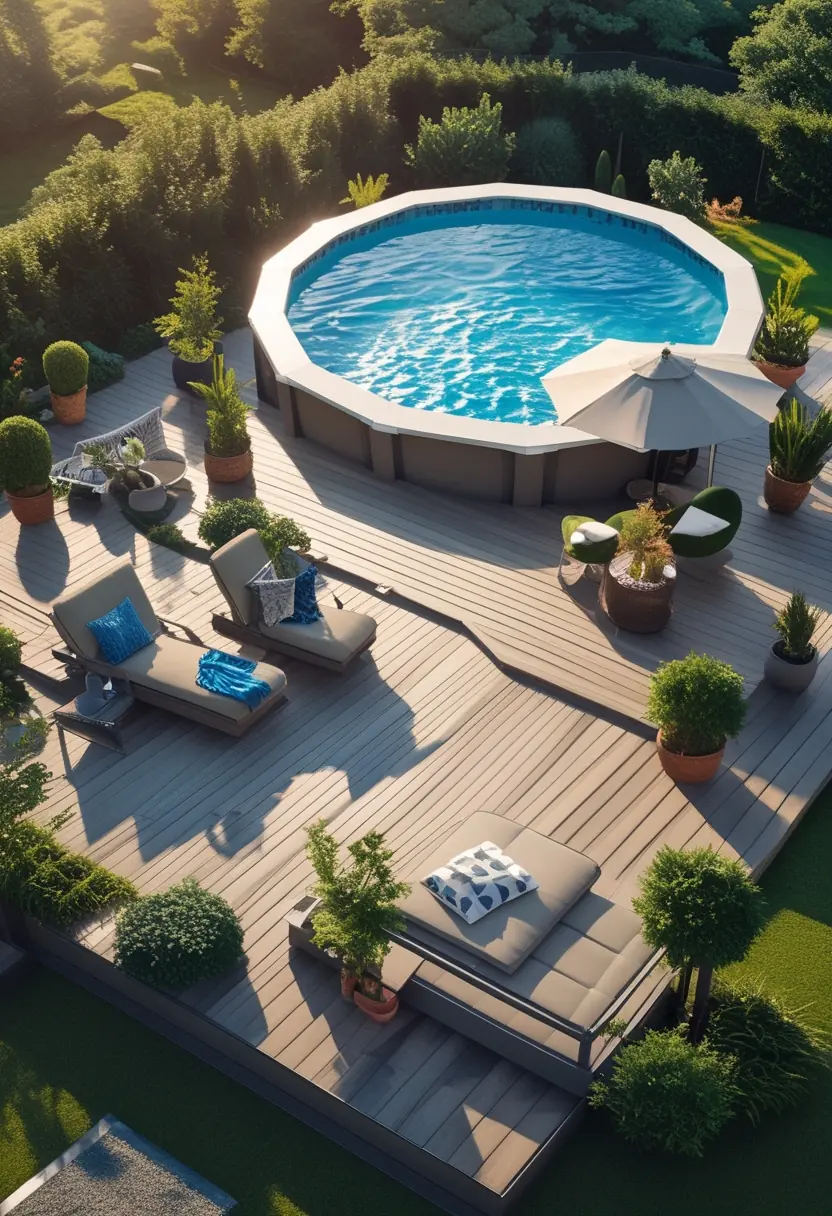
Surrounding the pool with a continuous deck creates a clean, finished look and gives you easy access for lounging and maintenance. You can wrap the deck to match the pool shape, adding steps and a railing for safety.
Choose durable materials like composite or treated wood to withstand moisture and sun. Add built-in seating or planters to maximize function without crowding your yard.
2) Go for a Multi-Level Deck
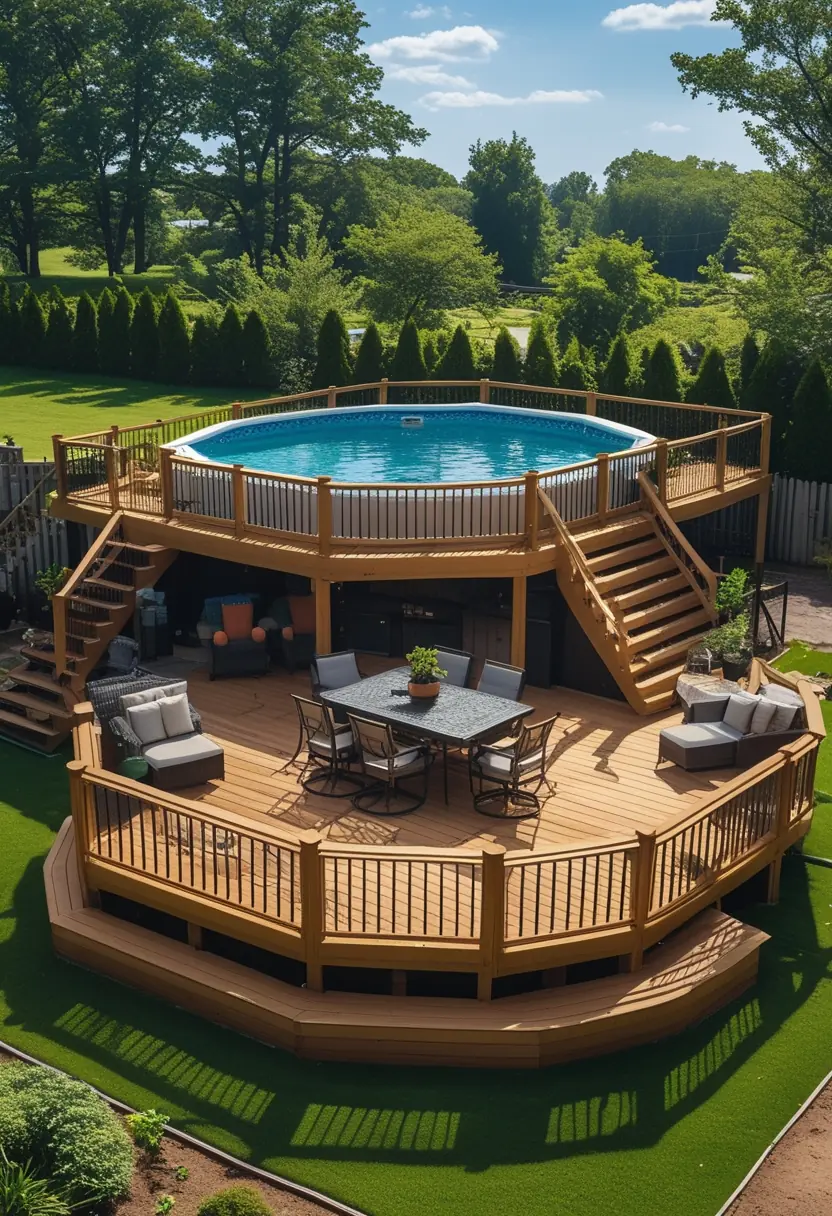
You can add visual interest and function by building a multi-level deck around your above ground pool.
Separate zones let you create a sunning platform, a shaded dining area, and a step-down lounge without expanding your yard footprint.
Staggered heights improve sightlines and safety by keeping water access controlled.
Use short stair runs and railings to connect levels and make movement intuitive for guests.
3) Create a Backyard Retreat
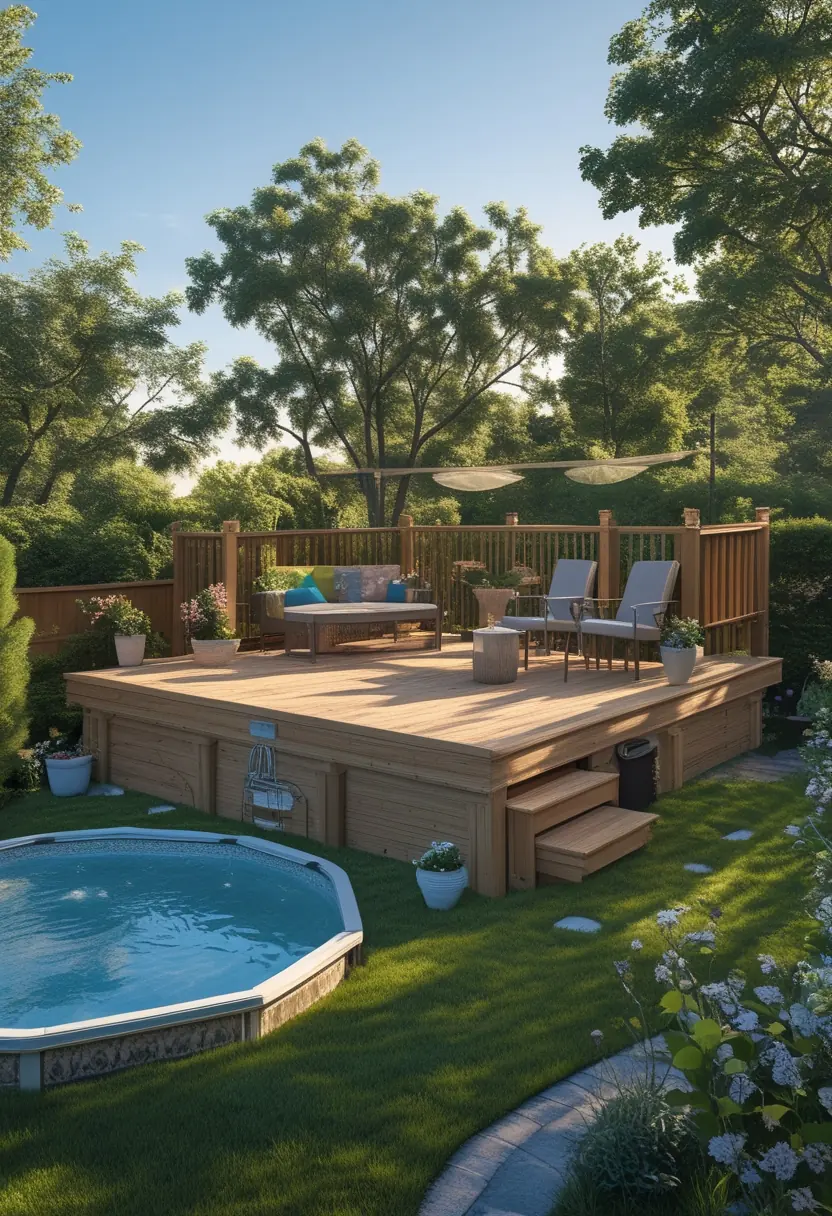
Design seating zones that face the pool and encourage conversation; mix loungers with a small dining table to suit different activities.
Add layered lighting path lights, string lights, and sconces to extend use after dusk without overpowering the space.
Use potted plants, privacy screens, and textured materials like wood or composite decking to soften edges and create a calm, cohesive aesthetic that feels intentional.
4) Blend with the Landscape
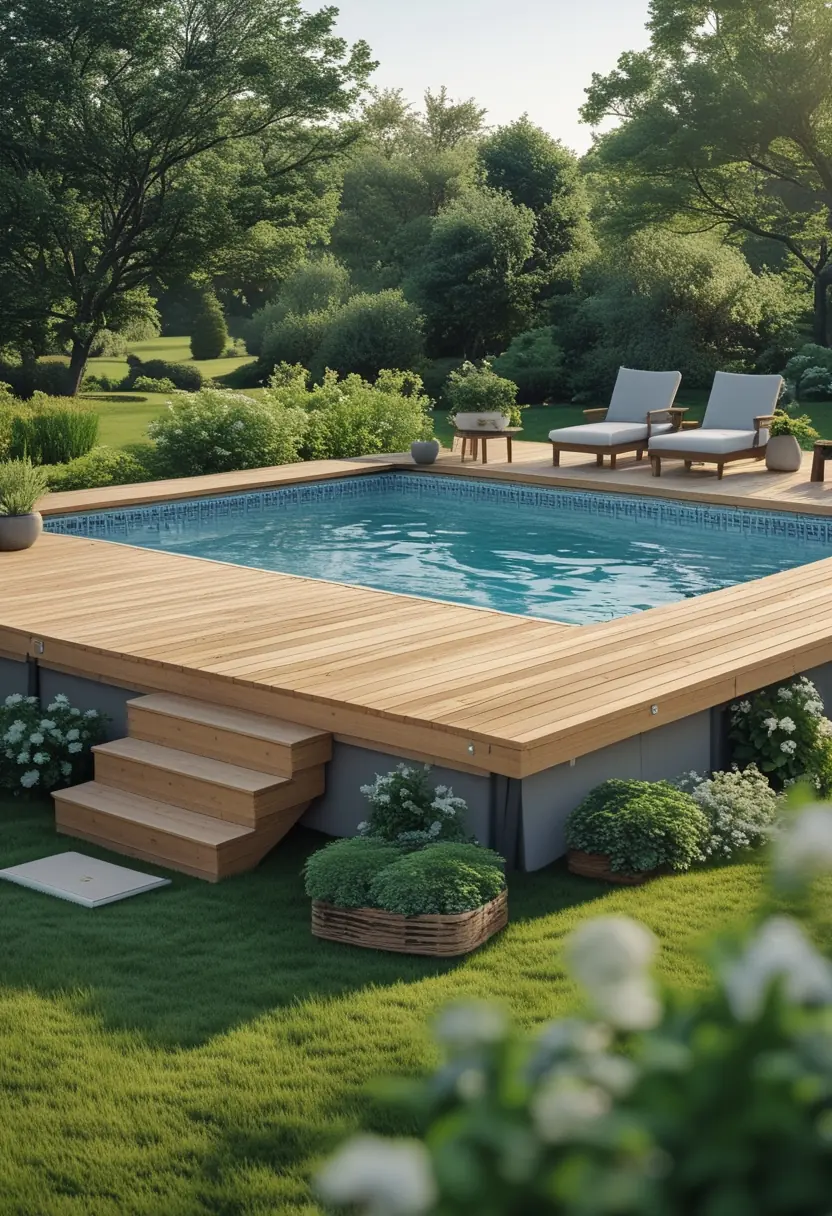
Position your deck to follow existing sightlines and plant beds so it feels like a natural extension of your yard. Use native shrubs and grasses around the base to soften the pool’s edge and reduce maintenance.
Choose materials and colors that match nearby hardscaping or house trim for visual harmony. Add stepping stones or a low retaining wall to connect levels and create a seamless transition between lawn and deck.
5) Keep it Enclosed
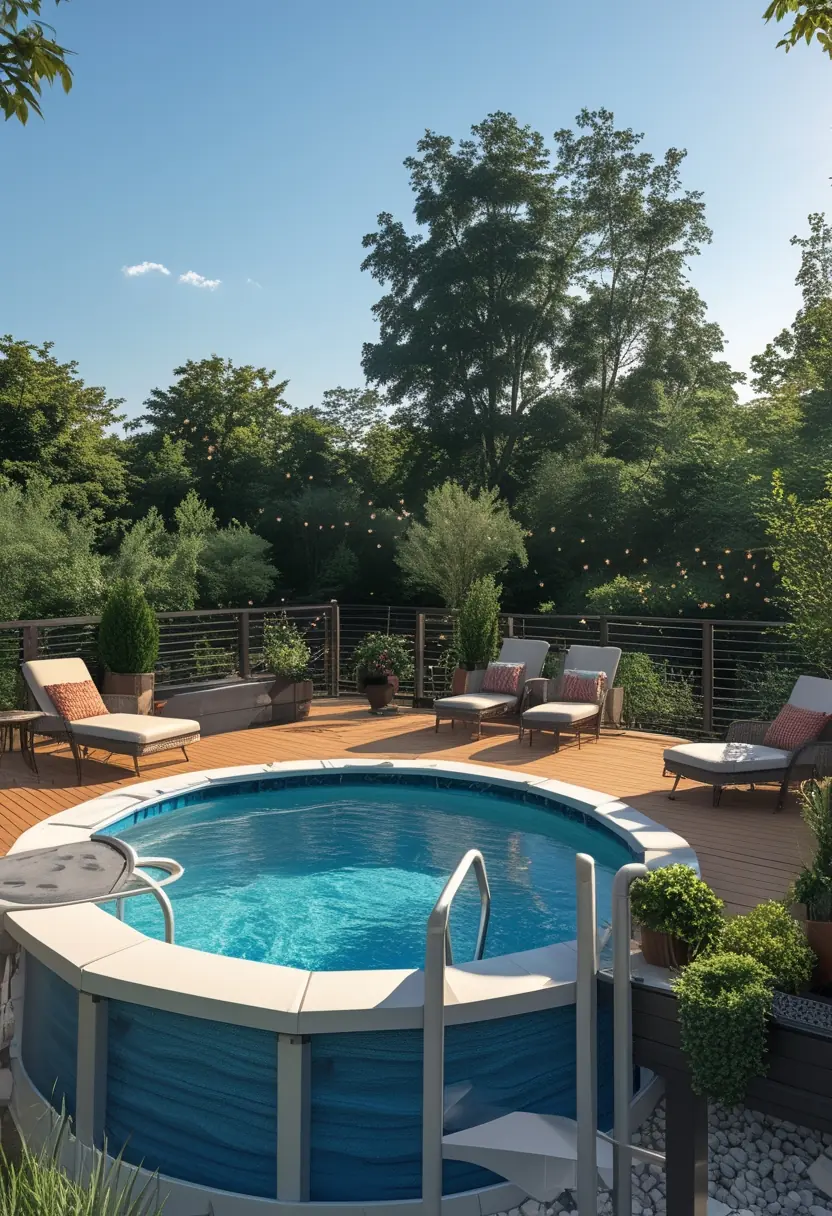
Enclose your deck with railings, lattice, or privacy panels to boost safety and define the space.
Solid barriers prevent accidental falls and keep children and pets away from the pool edge.
Choose materials that match your yard composite for low maintenance or wood for a warmer look.
You can add gates with self-closing latches and lockable hardware for controlled access.
6) Enjoy a Half Deck
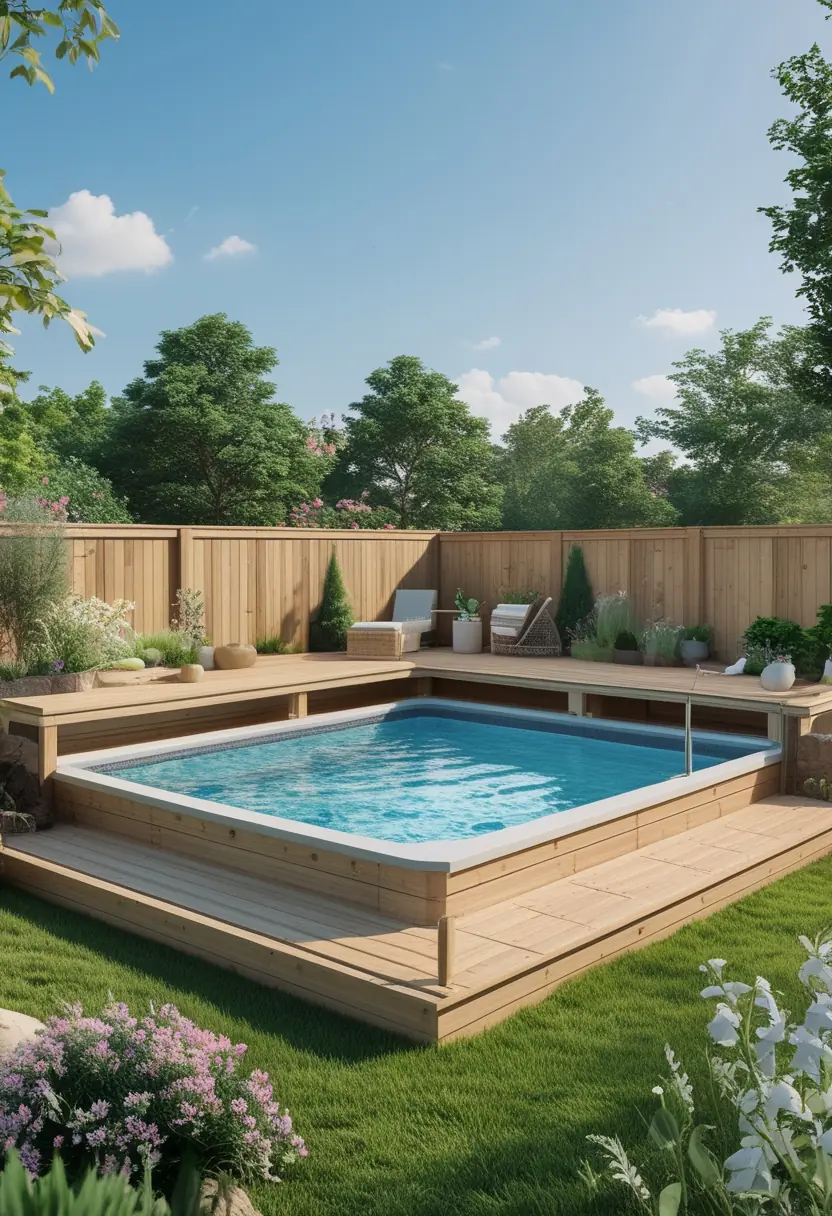
A half deck gives you easy access to your above-ground pool without enclosing the entire perimeter.
You can build it as a lounging platform with steps on one side, saving materials and yard space.
Choose durable materials like composite or treated wood for low maintenance.
Add built-in seating or planters to define the area and keep the footprint compact.
7) Build on Sloping Land
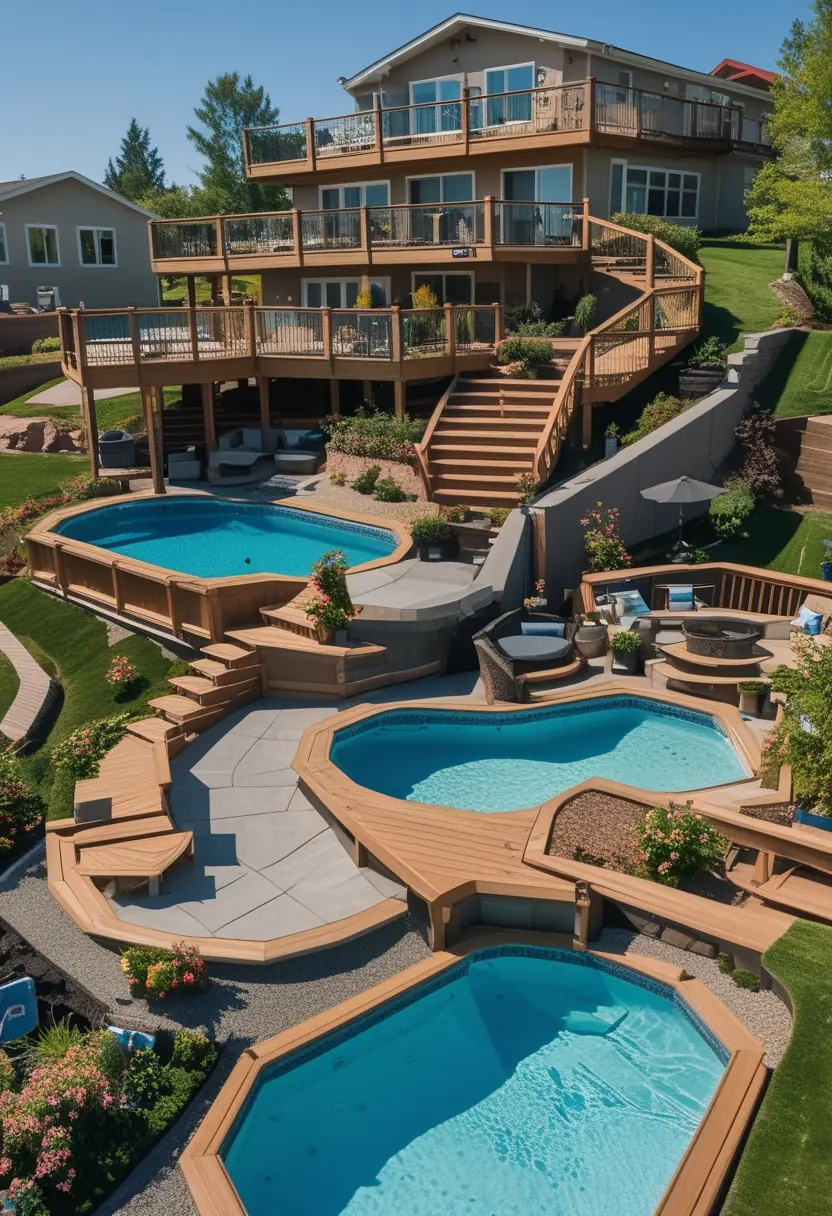
You can position an above-ground pool on a slope by creating a level platform with retaining walls or stepped foundations.
A tiered deck fits the grade and gives multiple seating levels, which improves access and sightlines.
Drainage matters; direct runoff away from the pool and reinforce soil where needed to prevent settling.
Hire an engineer for steep sites or if you plan large retaining structures to ensure safety and longevity.
8) Add a Bar Area
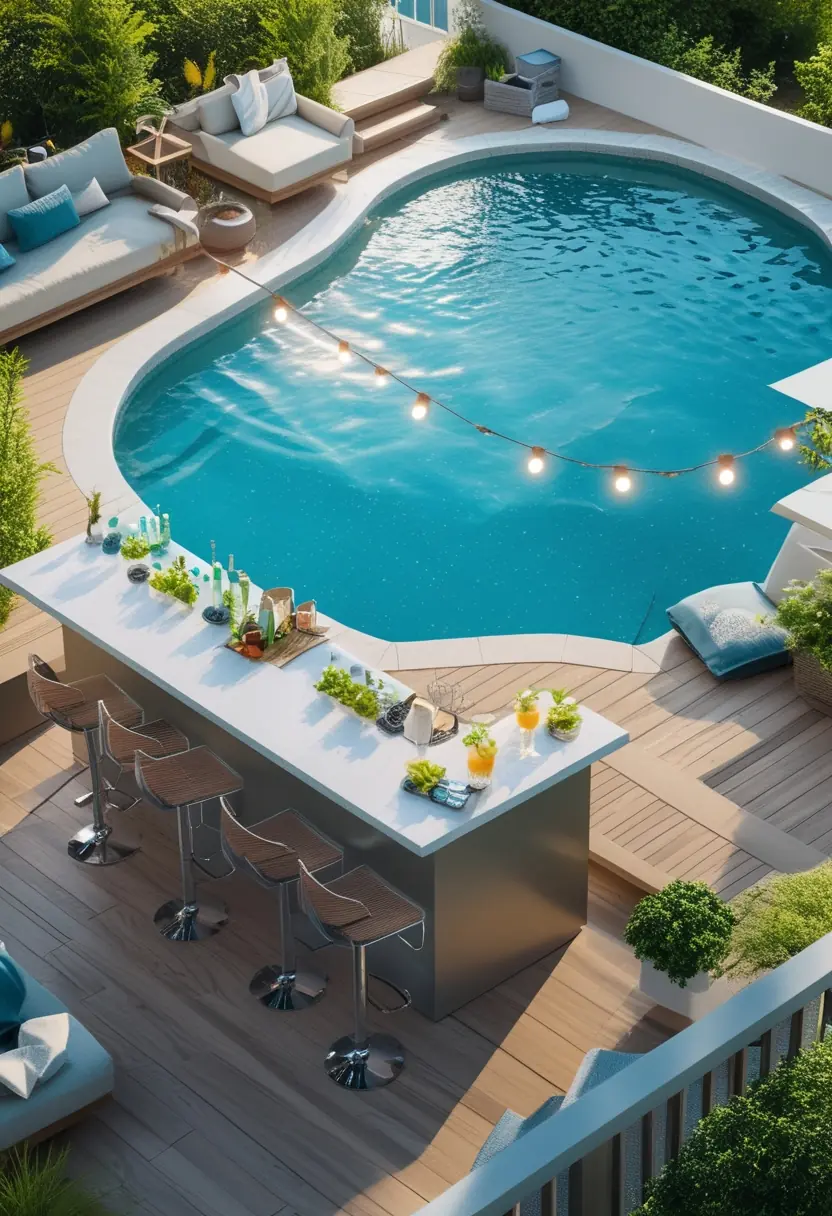
Create a bar area on your deck to make entertaining easier and keep drinks close at hand.
Position a counter at pool level or on the deck edge so guests can sit with their feet in the water.
Include weatherproof storage, a small fridge, and durable countertops to protect supplies and simplify service.
Add shade with an umbrella or pergola and choose stools that resist moisture for a low-maintenance setup.
9) Create Multiple Seating Areas
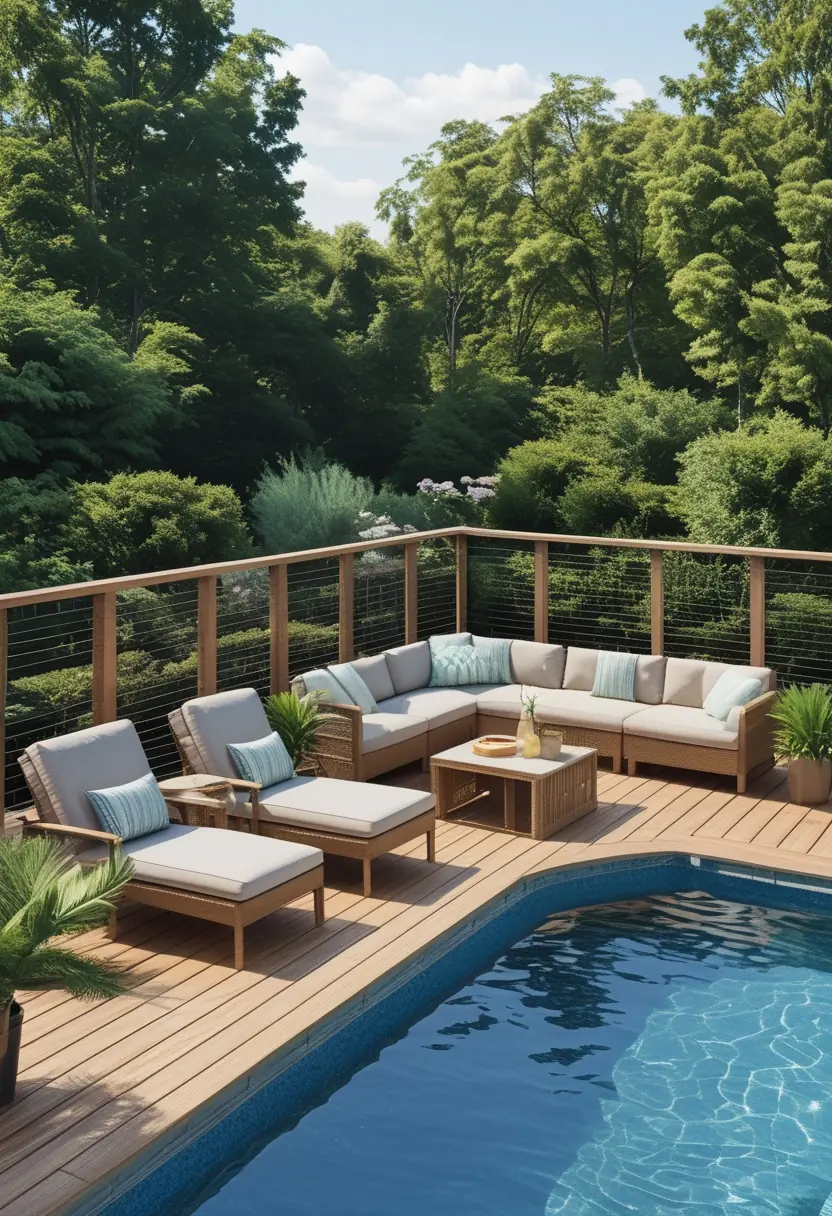
Place distinct seating zones around the deck to support different activities—lounging, dining, and socializing.
Use a mix of built-in benches, movable chairs, and a small dining set so you can reconfigure the space for parties or quiet afternoons.
Vary heights and orientations to frame pool sightlines and maintain clear circulation paths for safety and comfort.
10) Include Matching Elements
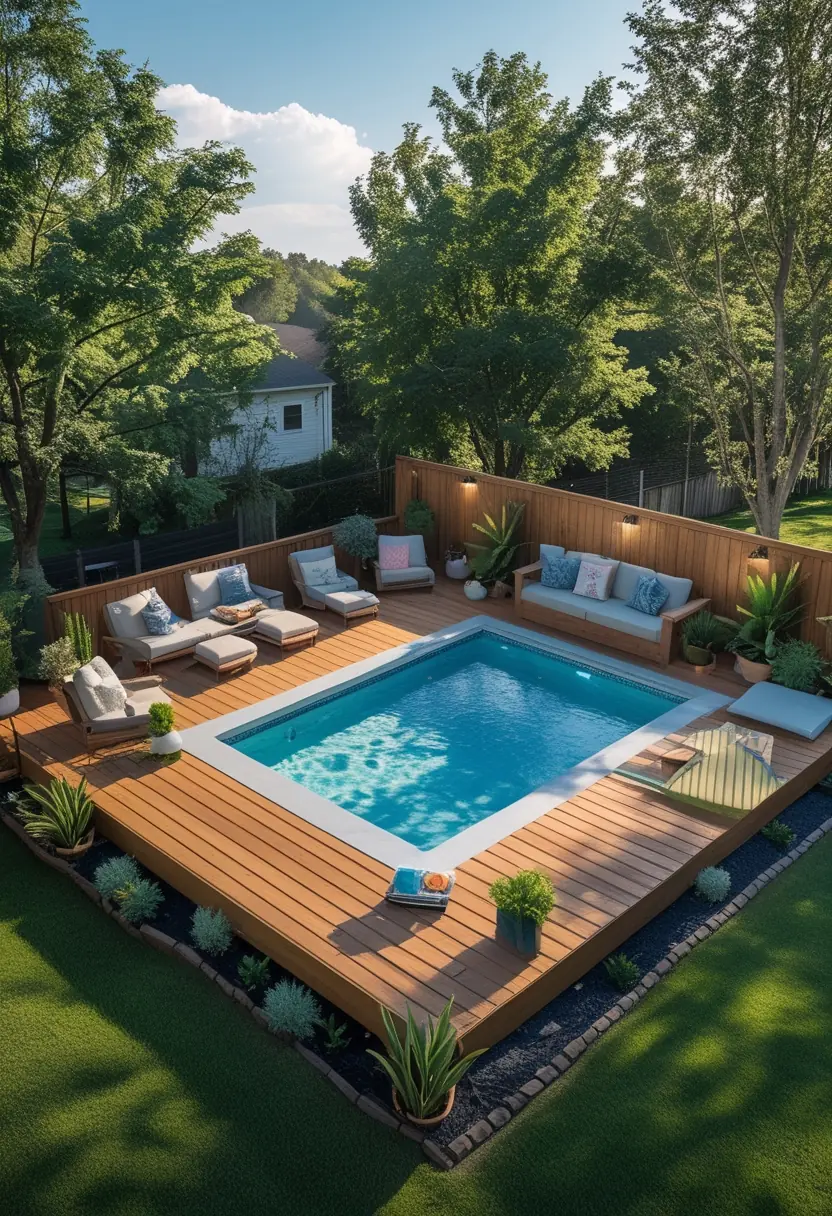
Tie the deck, pool, and yard together by repeating colors, materials, or textures. Matching railings, trim, or decking boards create a cohesive look that feels intentional.
Use coordinated cushions, planters, and lighting to reinforce the palette without overloading the space. Small, repeated accents like metal finishes or warm wood tones give a polished, unified appearance.
11) Upscale the Texture
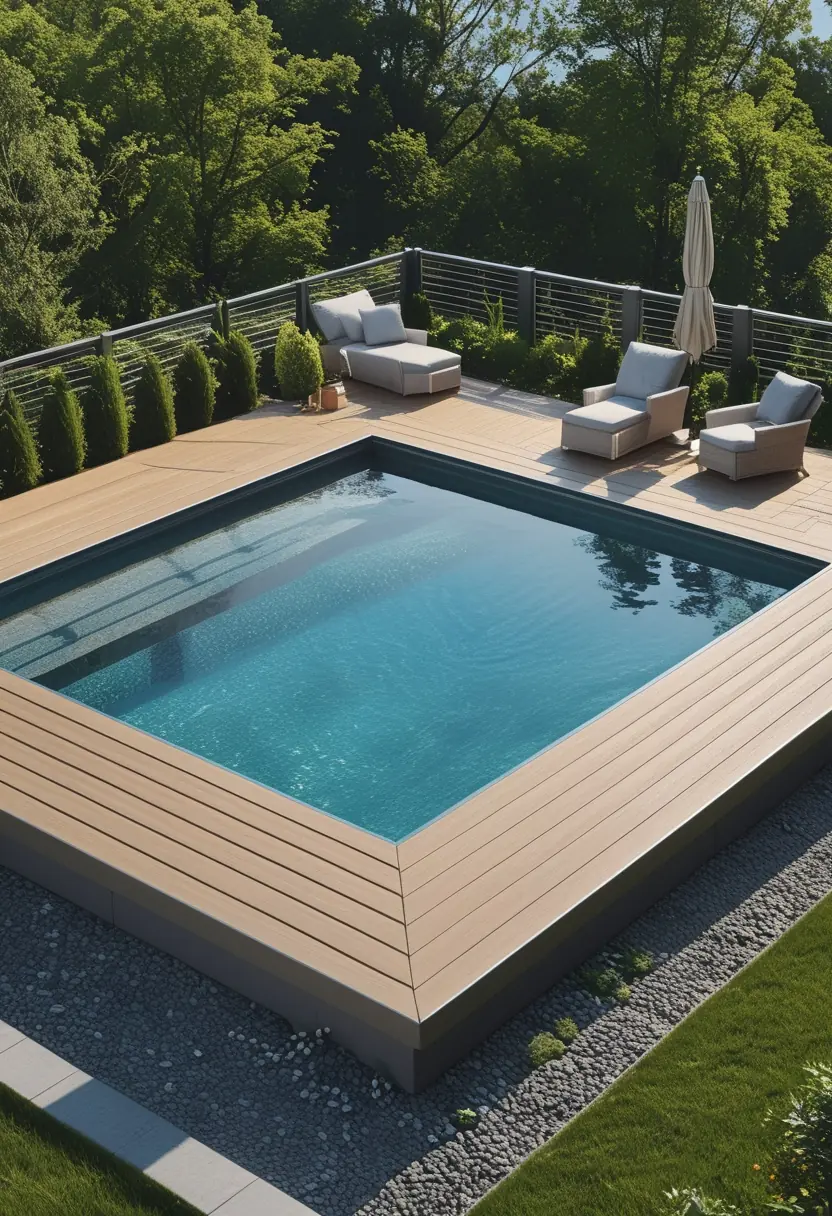
Choose decking materials that add tactile interest, like grooved composite, scalloped wood planks, or textured concrete. These surfaces improve grip and give your pool area a refined look.
Mix materials stone pavers beside smooth decking, or woven outdoor rugs over planks to create contrast and depth. Small changes in texture make the space feel intentional without major expense.
12) Contrast with the Pool
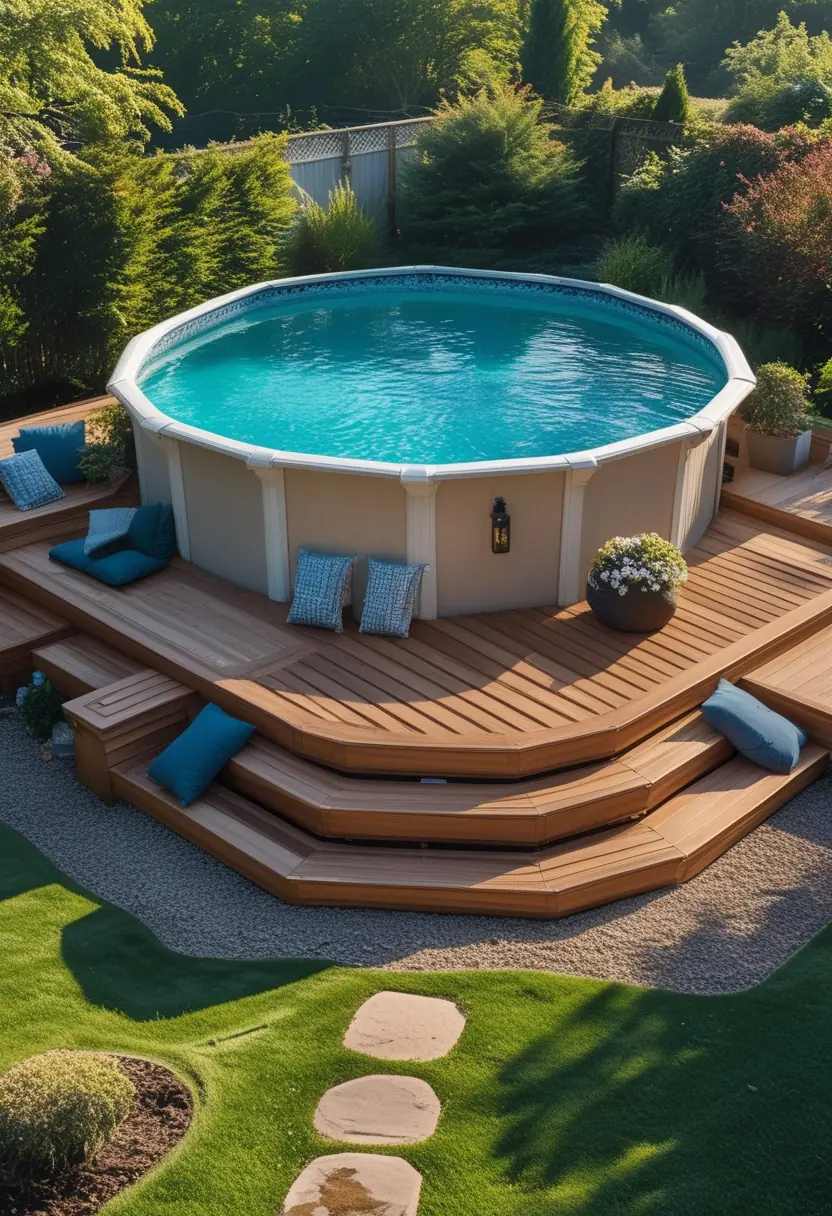
Choose deck materials and colors that contrast with your pool to make both elements stand out. A dark composite deck highlights a bright blue liner, while pale wood softens a black or charcoal pool frame.
Use contrasting textures too smooth decking beside ribbed pool walls creates visual interest. Add a few accent pieces, like cushions or planters, in a complementary hue to tie the look together.
13) Add a Gravel Border
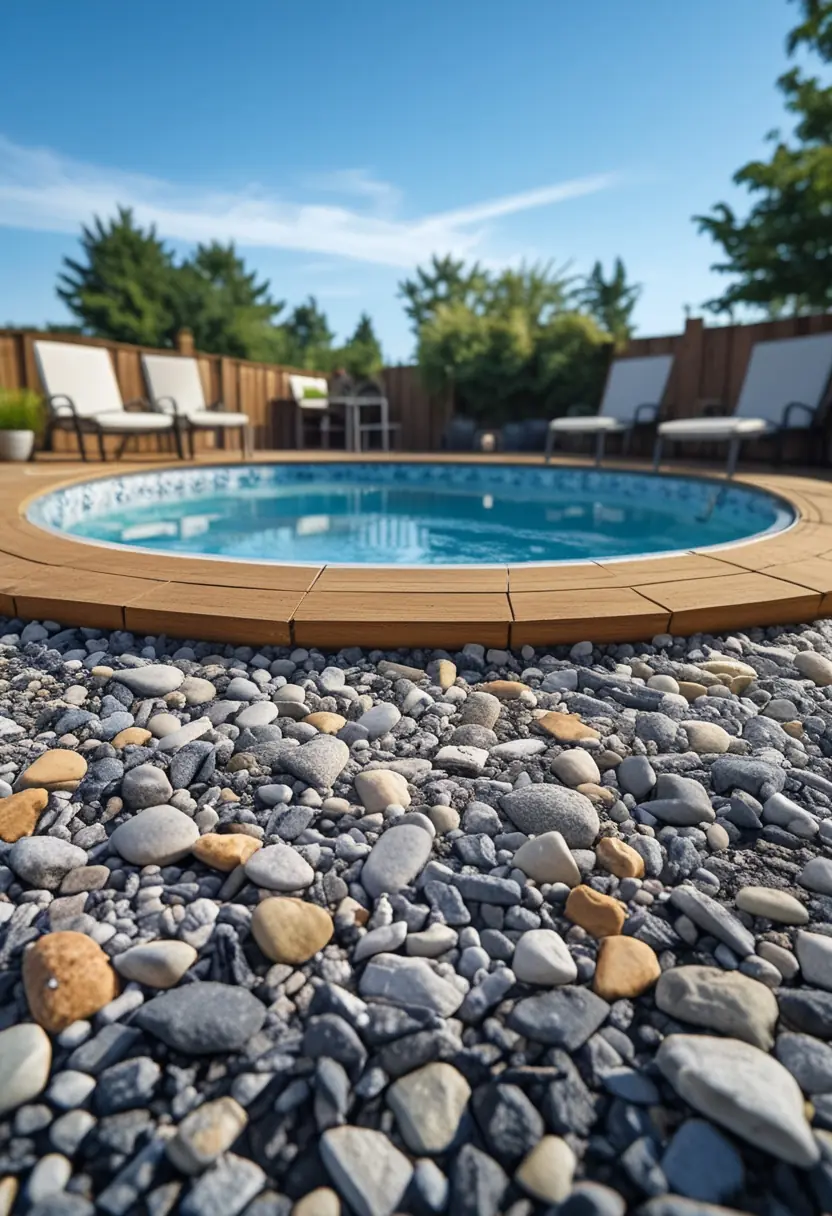
A gravel border around your above-ground pool improves drainage and keeps splashed water from pooling near the base.
Choose crushed stone or pea gravel and a weed barrier to reduce maintenance and prevent mud.
Lay a narrow trench, compact a base, then spread gravel to create a clean transition between lawn and deck.
Gravel also softens the pool edge visually and pairs well with pavers or mulch for a finished look.
14) Go for a Modern Look
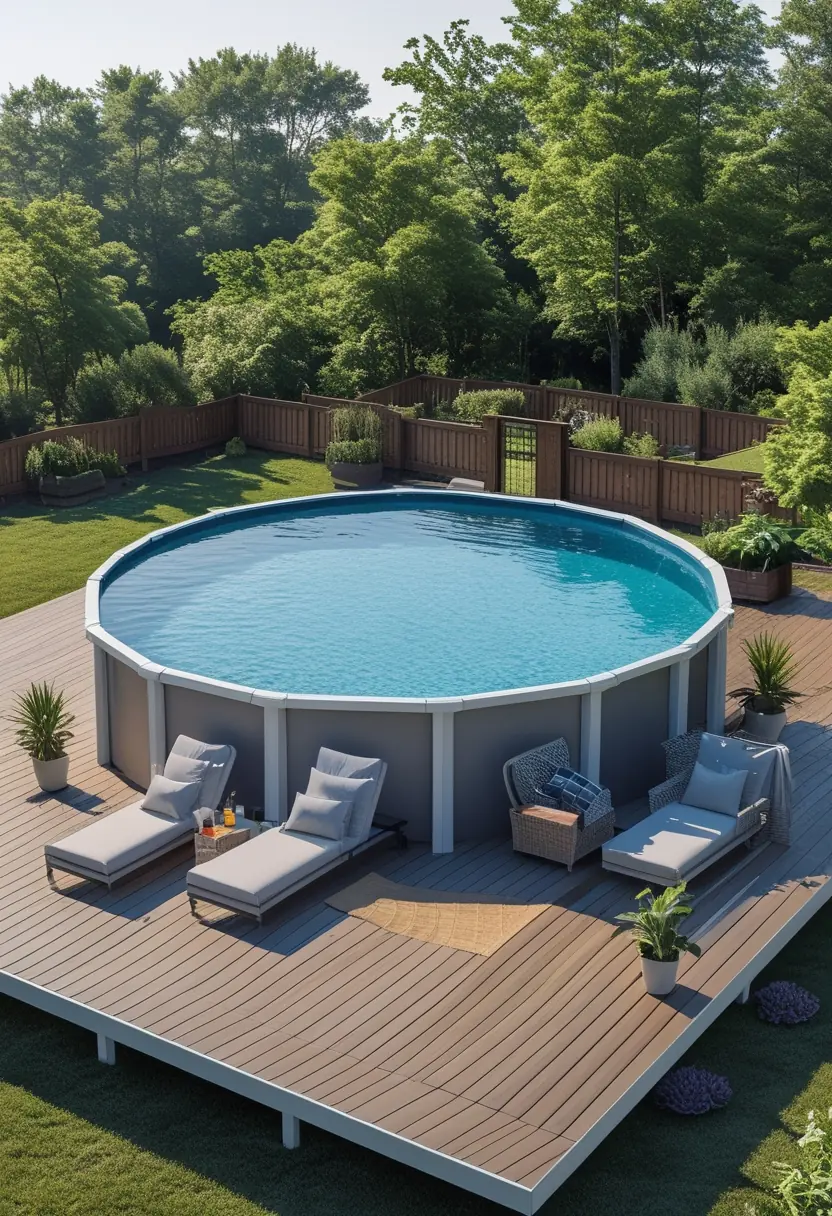
Choose clean lines, minimal railings, and a restrained color palette to create a modern deck that complements your pool. Use composite boards or smooth-finished wood in greys, charcoals, or natural tones for a sleek, low-maintenance surface.
Incorporate built-in seating and geometric planters to add function without clutter. Subtle LED lighting and matte black or stainless fixtures keep the aesthetic cohesive while improving safety.
15) Make the Most of Available Space
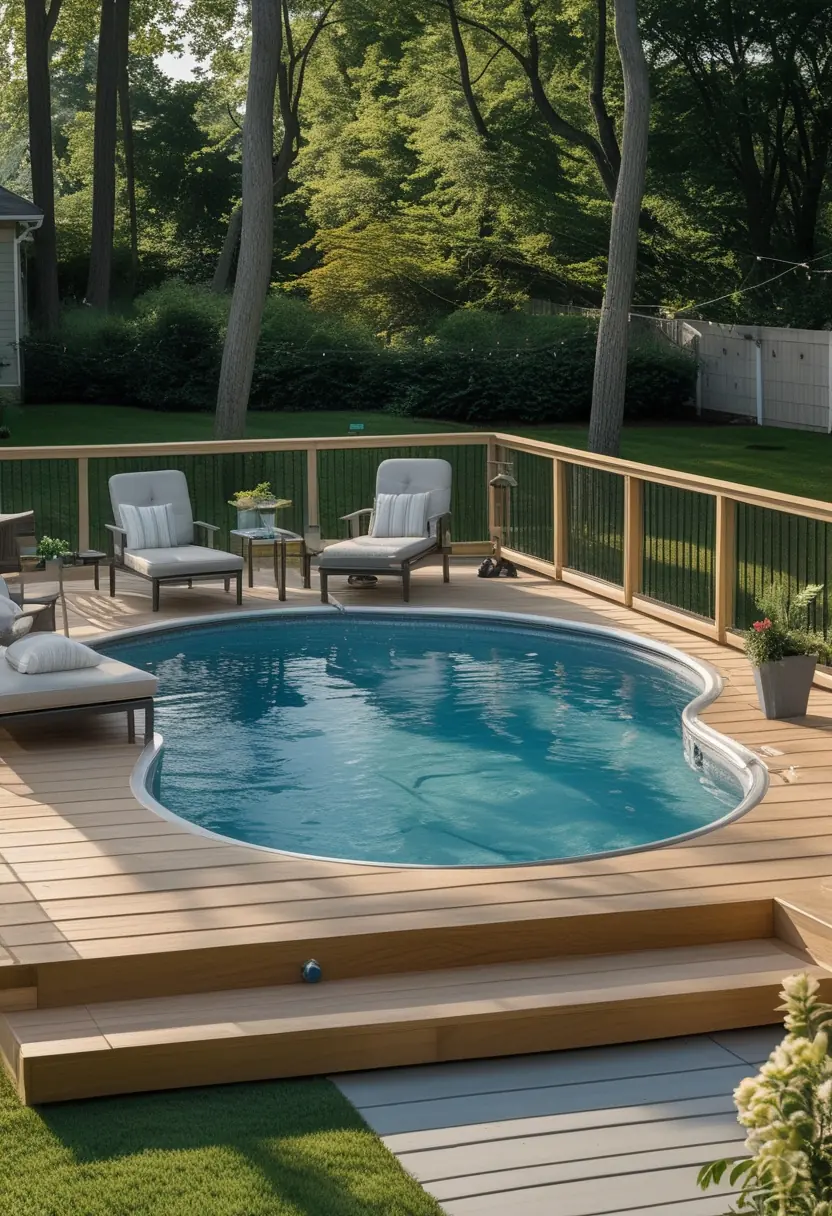
Assess your yard and prioritize functions—lounging, dining, storage—before you design.
Use a partial or corner deck to save lawn space while still providing a stable pool entry and seating area.
Build storage beneath the deck for pumps, toys, and chemicals to reduce clutter.
Consider multi-level or built-in bench seating to create zones without expanding the footprint.
Key Design Considerations
Choose materials and features that withstand water, sun, and frequent use while matching your budget and maintenance preferences. Prioritize non-slip surfaces, secure barriers, and entry choices that suit children, pets, and guests.
Material Selection and Durability
Pick materials rated for exterior, wet environments—pressure-treated lumber, composite decking, and marine-grade aluminum are common choices. Pressure-treated wood is affordable and strong but needs annual sealing and monitoring for rot; composites resist moisture and fading and typically require only occasional cleaning. Marine-grade aluminum frames resist rust and are lightweight, good for elevated decks that cantilever over the pool.
Pay attention to fasteners and hardware: stainless steel or galvanized screws and joist hangers extend lifespan. Use closed-cell foam or rot-resistant blocking where wood meets the pool to prevent water wicking. Finish choices matter: textured or grooved boards increase traction, while light colors reflect heat and keep surfaces cooler.
Safety Features for Families
Install a continuous railing at 36–42 inches high with balusters spaced no wider than 4 inches to prevent small children from slipping through. Add a self-closing, self-latching gate with a latch at least 54 inches from the ground to meet common safety codes and keep toddlers from entering unsupervised. Consider locking access to ladders when the pool is not in use.
Choose non-slip decking products or add anti-slip strips across steps and thresholds. Provide adequate lighting step lights, post caps, and path lights so edges and stairs remain visible after dark. Anchor furniture and plan for clear sightlines from the house so you can monitor swimmers easily.
Accessibility and Entry Options
Decide between integrated stairs, a deck-level gate with steps, or a reinforced ladder based on who will use the pool most. Stairs with 10–12 inch treads and handrails on both sides suit children and older adults. For steep yards, incorporate switchback ramps with a 1:12 slope to comply with accessibility best practices and reduce strain for mobility-impaired users.
If you want a seamless look and easier transfer from house to pool, build a raised platform with a wide, shallow stair run and a gate that aligns with deck height. Reinforce attachment points and distribute weight with doubled joists or concrete piers when placing heavy furniture or installing a hot tub adjacent to the pool.
Enhancing Comfort and Aesthetics
Focus on practical upgrades that improve usability, safety, and visual appeal. Prioritize durable materials, easy maintenance, and features that match how you use the space.
Integrating Lighting Solutions
Install layered lighting to extend use past dusk and improve safety around pool edges and steps. Combine low-voltage LED strip lights under deck railings, recessed step lights, and path lights for even illumination without glare.
Choose warm-white (2700–3000K) LEDs for a welcoming tone that flatters skin and landscaping. Use dimmers or smart controllers to adjust brightness for parties or quiet evenings. Solar post caps work for low-traffic areas but pair them with wired lights near the pool for consistent performance.
Place fixtures at key locations: steps, gate latches, entry platforms, and along walkways. Protect all outdoor wiring with GFCI circuits and use fixtures rated for wet locations within 10 feet of the pool.
Adding Shade Structures
Select a shade option that suits your backyard’s scale and sun exposure. Pergolas provide partial shade and support for retractable canopies or climbing plants; a freestanding gazebo gives full shelter and room for furniture and a bar.
Consider retractable awnings or motorized sails when you want flexibility between sun and shade. Choose UV-resistant fabrics and corrosion-resistant hardware for longevity. For small decks, a cantilever umbrella mounted to the deck edge frees floor space.
Anchor structures to the deck frame, not just the decking boards. Use stainless-steel connectors or hurricane ties in windy regions. Add outdoor curtains or lattice panels for privacy and additional sun control.
Incorporating Landscaping Elements
Use planting beds, raised planters, or container groupings to soften hard edges and tie the deck into the yard. Choose low-maintenance, deer-resistant perennials—like ornamental grasses, lavender, and Russian sage—near the pool to minimize leaf litter.
Place taller plants or hedges as windbreaks and privacy screens on the leeward side. Use gravel or permeable pavers around planters to improve drainage and reduce mud tracking onto the deck. Hardscape accents—stepping stones or a small rock garden—create visual transitions between lawn and deck.
Integrate planters with seating or built-in benches to save space and frame lounging areas. Select non-splitting, rot-resistant materials for planter boxes near splash zones, and include an irrigation or drip line to keep maintenance low.
Conclusion
You can make an above ground pool feel like a permanent, stylish part of your yard without breaking the bank. Pick a deck style that matches your space, budget, and how you plan to use the area.
Focus on materials and layout that balance safety, durability, and low maintenance. Composite and treated wood resist rot and need less upkeep, while pavers or gravel work for ground-level surrounds.
Think about access and flow between the house, deck, and pool. A multi-level or wraparound deck connects zones, while a small platform or ladder area keeps costs down.
Prioritize safety features like non-slip surfaces, secure railings, and proper lighting. These elements protect swimmers and extend usable hours into the evening.
Use this quick checklist to finalize choices:
- Define budget and timeline.
- Choose materials for durability and maintenance.
- Plan access, seating, and storage.
- Add lighting and safety hardware.
You have many options to create a functional, attractive pool deck that fits your backyard and lifestyle. Make choices that solve practical needs first, then add design touches that reflect your taste.