15 Creative Landscaping Ideas for Above-Ground Pools
You can turn an above-ground pool into a backyard focal point that looks intentional and feels inviting without a huge budget or major construction. This article shows practical, stylish options to transform your pool area from decking and steps to water features, lighting, and plant choices so you can pick ideas that match your space and skill level.
As you scan the options, you’ll find ways to blend the pool with existing landscaping, add functional elements like raised decks or gravel paths, and consider maintenance and safety while refining the look. Expect clear, usable suggestions that help you plan a cohesive poolside space you’ll enjoy.
Contents
- 1 1) A Cascading Water Feature
- 2 2) Try a Fountain
- 3 3) Blend It With the Surroundings
- 4 4) Make It the Center of Your Backyard
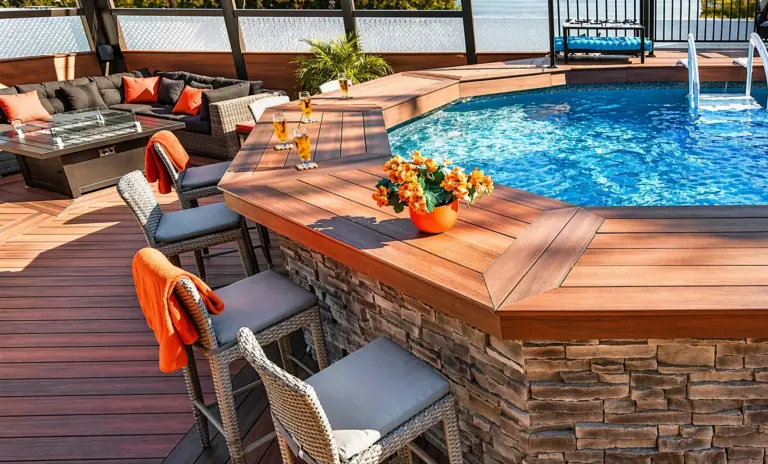
- 5 5) Create a Raised Deck
- 6 6) Use Some Gravel
- 7 7) Try a Jacuzzi Design
- 8 8) Add Some Steps
- 9 9) Blend It With the Patio
- 10 10) A Pool Oasis
- 11 11) Match the Pool with Nearby Elements
- 12 12) Illuminate It
- 13 13) Go for a Modern Design
- 14 14) Go for Natural Stone Finish
- 15 15) Add a Garden Pool
- 16 Design Considerations for Poolside Landscaping
- 17 Maintenance and Safety Tips
- 18 Frequently Asked Questions:
1) A Cascading Water Feature
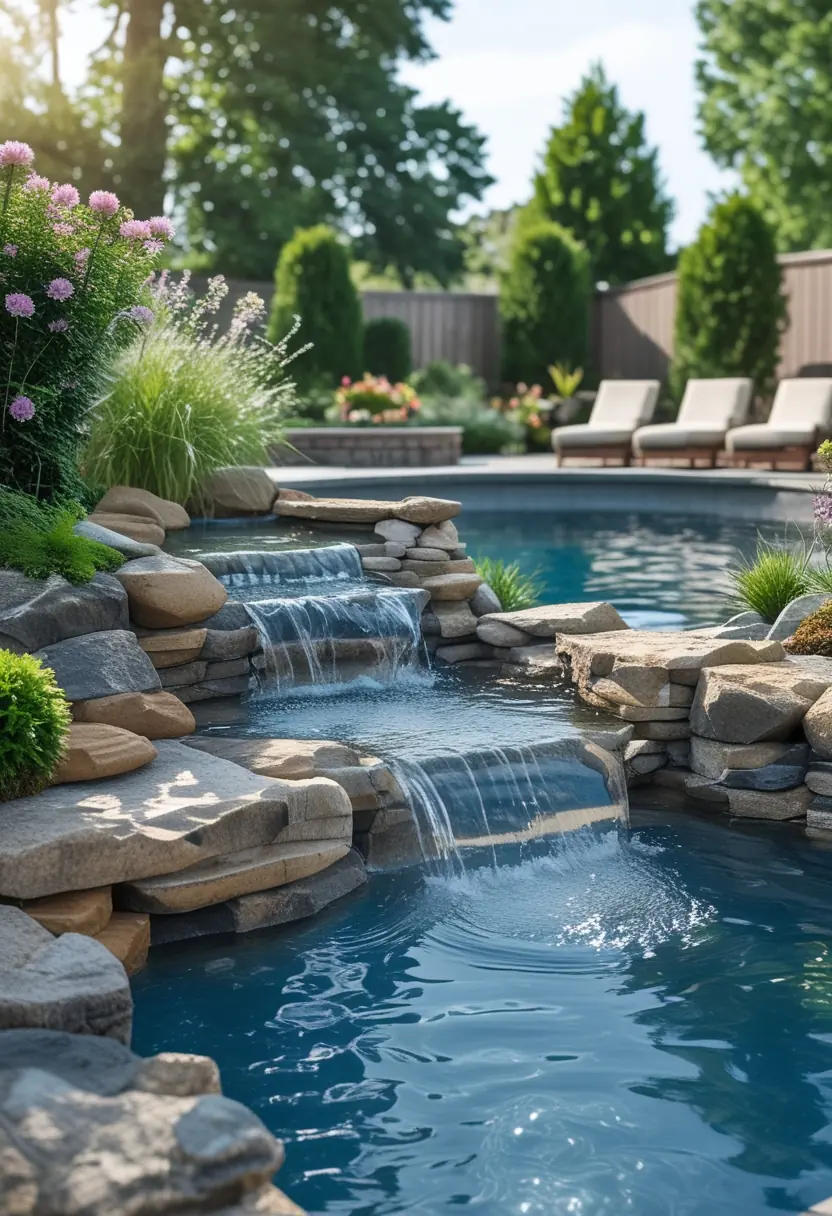
Add a cascading spillway or rock waterfall to give your above-ground pool a natural, calming focal point. You can attach a prefabricated spillway or build a rock-faced chute that recirculates pool water with a submersible pump.
Position the feature where it’s visible from seating areas and hide plumbing with plants or a low retaining wall. Aim for modest flow to avoid excessive splash and noise while still creating soothing movement and improved circulation.
2) Try a Fountain
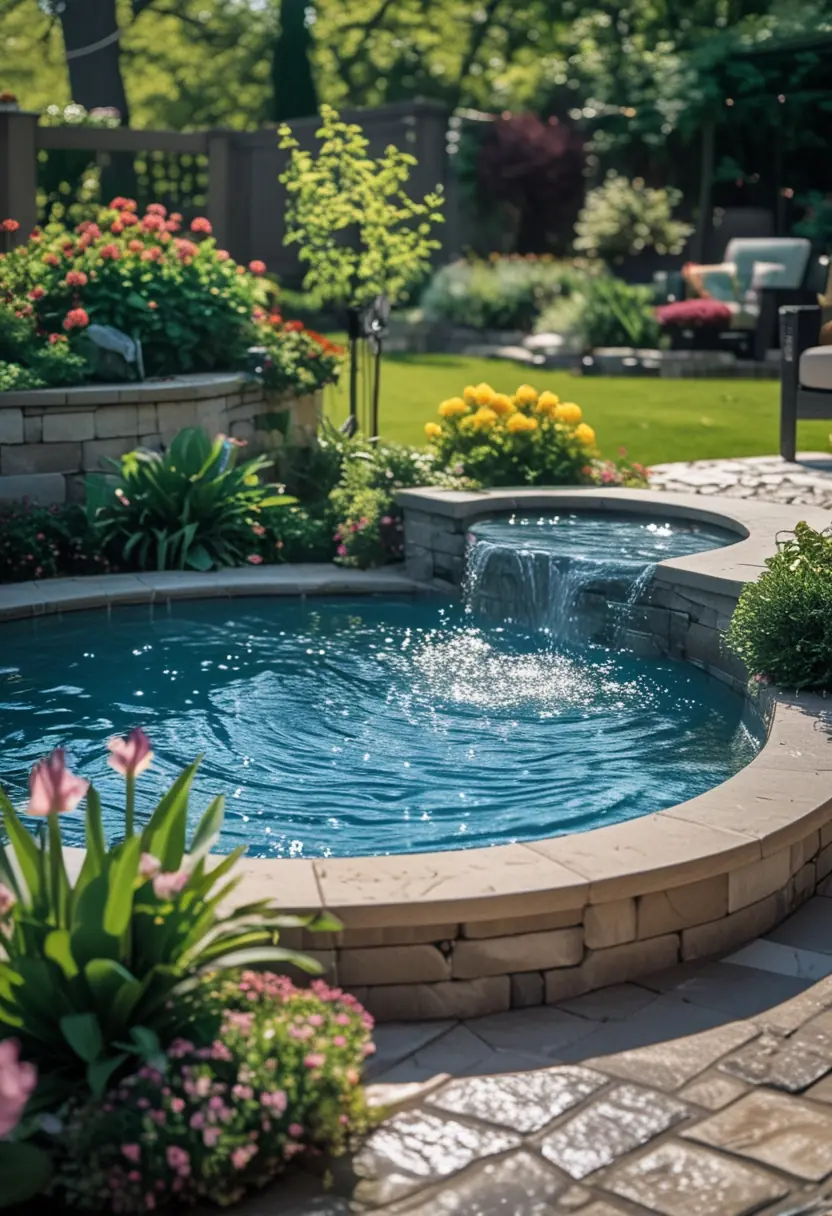
Add a small fountain to your above-ground pool to improve water circulation and create gentle sound that masks neighborhood noise.
Choose a solar or plug-in fountain designed for pools; they sit on the pool edge or float and require minimal installation.
Fountains can be decorative or functional pick a style that matches your landscaping and safety needs.
Position the fountain to avoid splashing walkways and to help move water toward your filter intake.
3) Blend It With the Surroundings
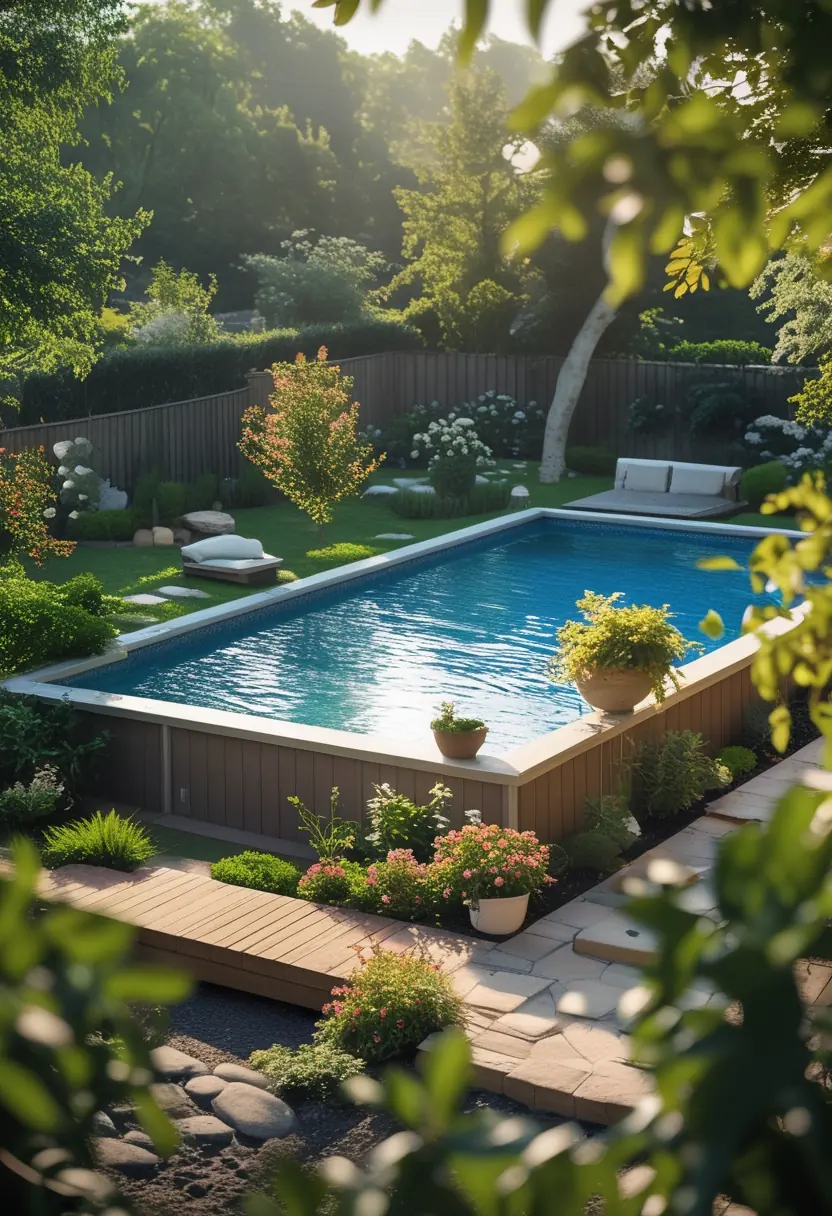
Choose plants, materials, and colors that match your yard so the pool feels like a natural part of the landscape. Use native shrubs and ornamental grasses to soften the pool edge and reduce maintenance.
Extend existing pathways or repeat decking tones to create visual continuity. Add low-profile planting beds or rockwork to hide the pool base without blocking sightlines.
4) Make It the Center of Your Backyard
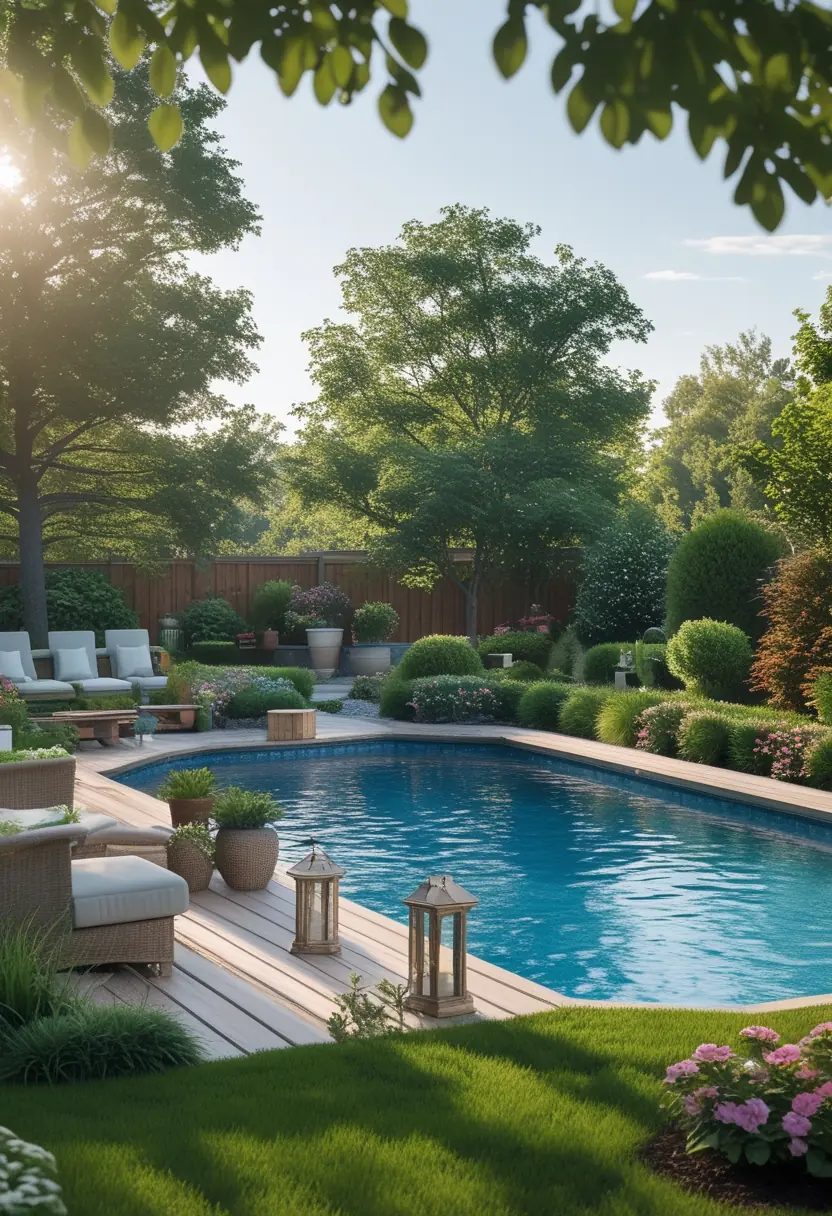
Position your above-ground pool where it becomes the focal point of sightlines and activity. Add a surrounding deck, stepping stones, or a low retaining wall to create a defined, intentional area.
Use consistent materials and simple plantings to tie the pool into the rest of your yard. Layer lighting, seating, and a few sculptural plants so the space feels balanced and inviting day or night.
5) Create a Raised Deck
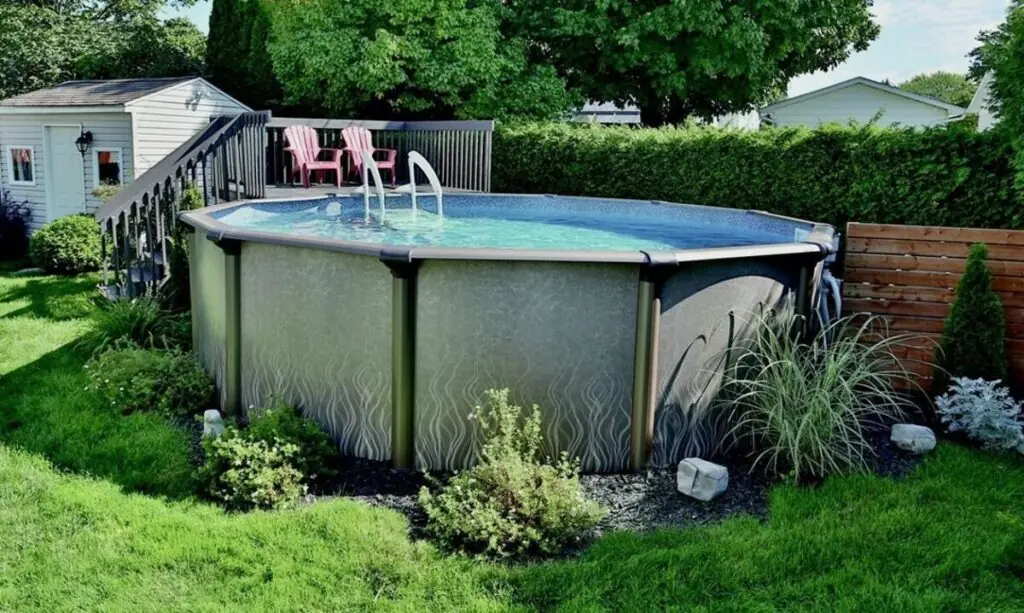
A raised deck makes your above-ground pool feel built-in and improves access for swimmers and loungers.
Design it with durable materials like pressure-treated lumber or composite decking to resist moisture and sun.
Include wide steps, a gate or railing for safety, and space for chairs or a small table to create a usable poolside platform.
6) Use Some Gravel
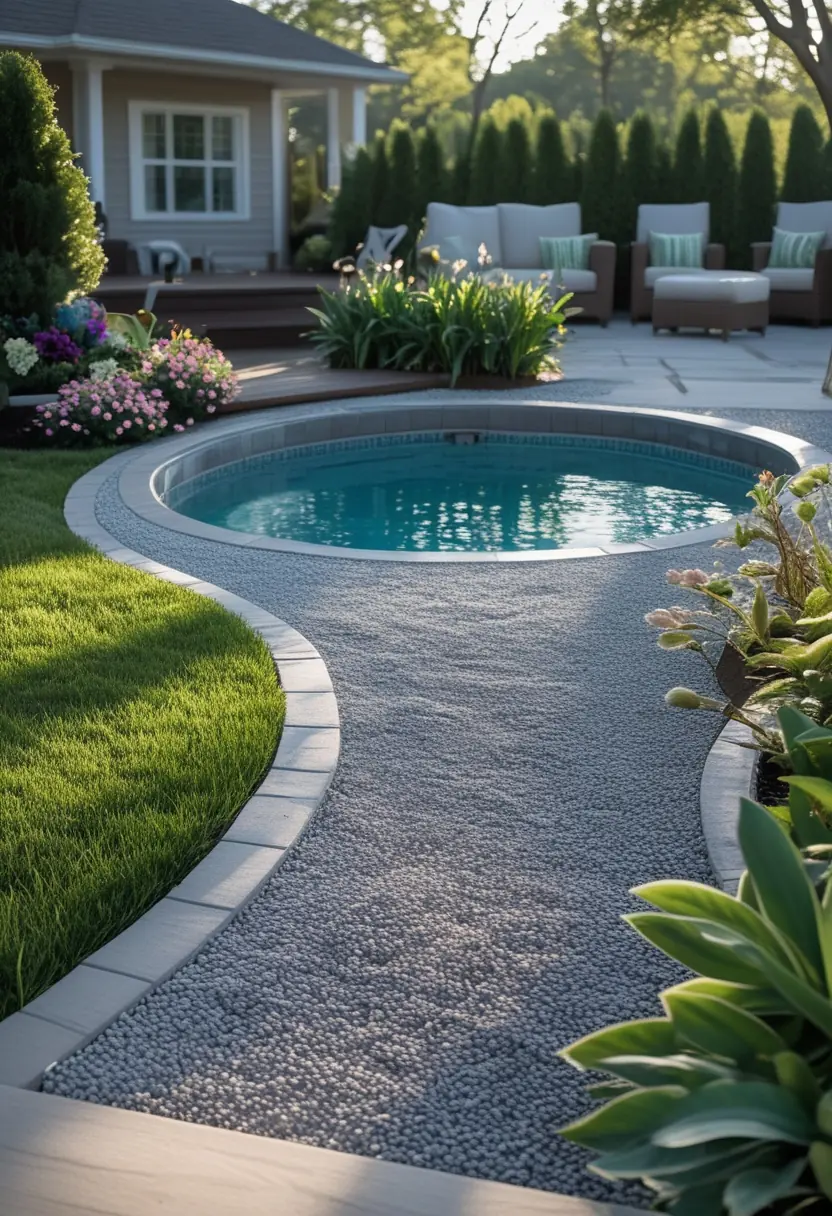
Gravel creates a clean, low-maintenance border around your above-ground pool that improves drainage and reduces mud.
Choose angular gravel for stability or smooth pea gravel for a softer look, and lay a weed barrier underneath.
You can use gravel to define pathways, create a small patio area, or hide the pool skirt with a neat edge.
Keep gravel at least a few inches from the pool wall to prevent stones from scratching and to allow easy maintenance.
7) Try a Jacuzzi Design
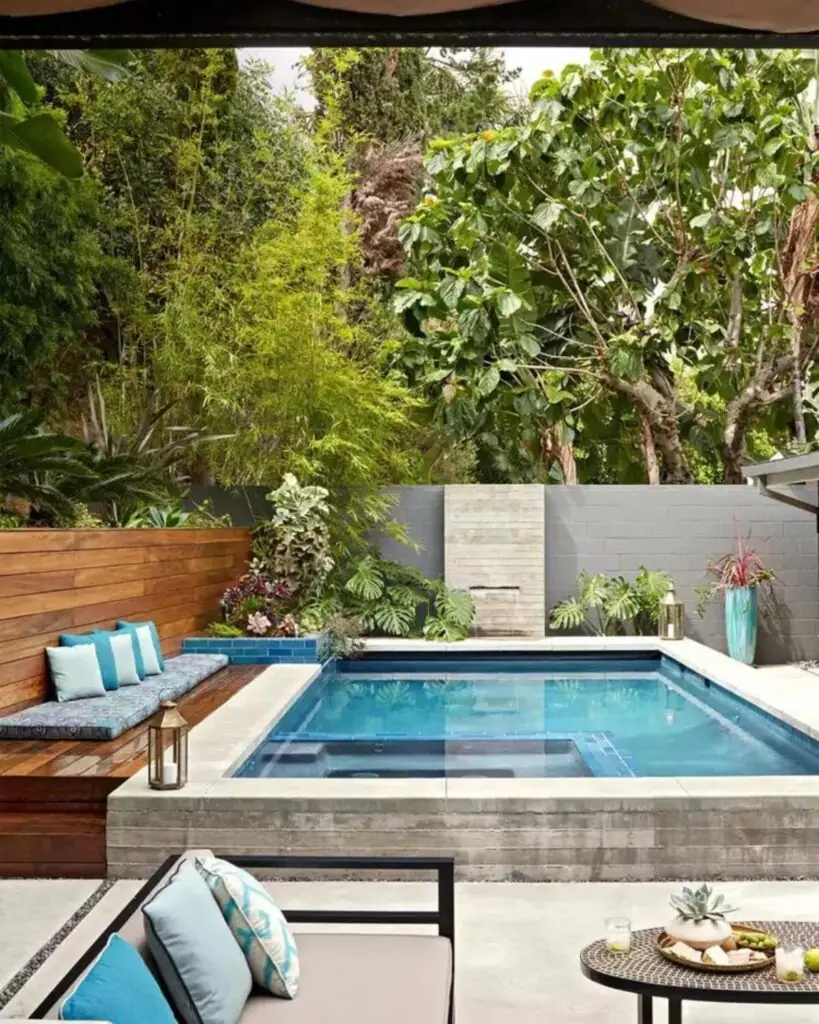
Convert part of your above-ground pool area into a jacuzzi-style space by adding jets, seating, and temperature controls.
You can install modular spa seats or retrofit a shallow section with circulating jets to create a relaxing soak.
Use a compact, insulated enclosure or raised deck to hide equipment and improve heat retention.
Add non-slip steps and handheld controls so you maintain safety and ease of use.
8) Add Some Steps
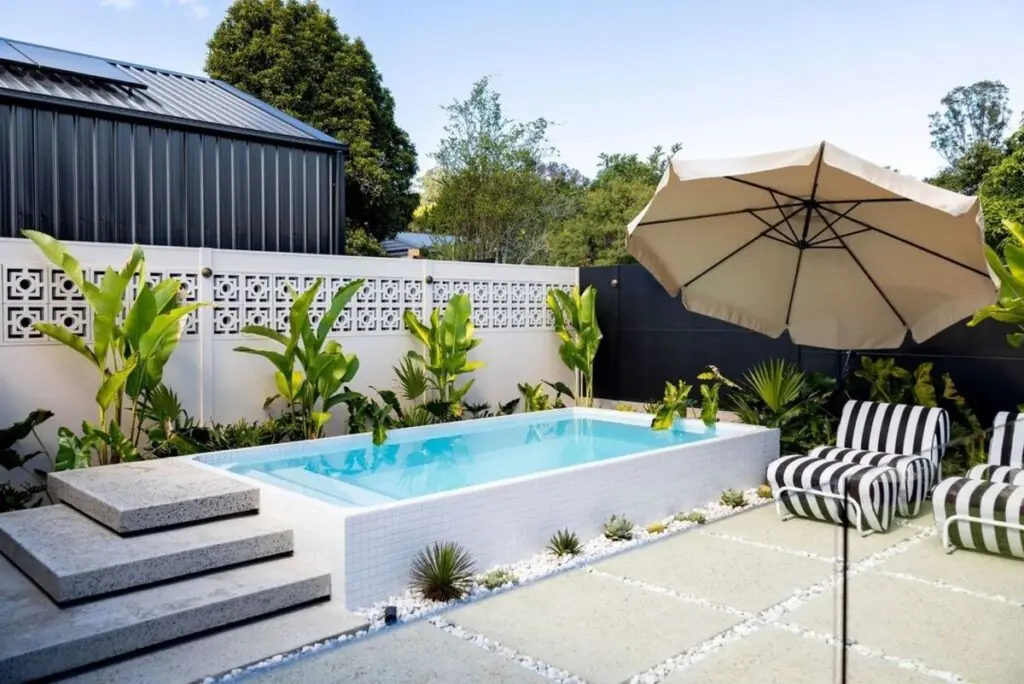
Adding steps makes entering and exiting your above-ground pool safer and more convenient. Build wide, non-slip steps that match your deck or use prefabricated step units for a faster install.
You can add storage beneath the steps for cushions or pool toys. Choose treated wood, composite, or metal to resist moisture and reduce maintenance.
9) Blend It With the Patio
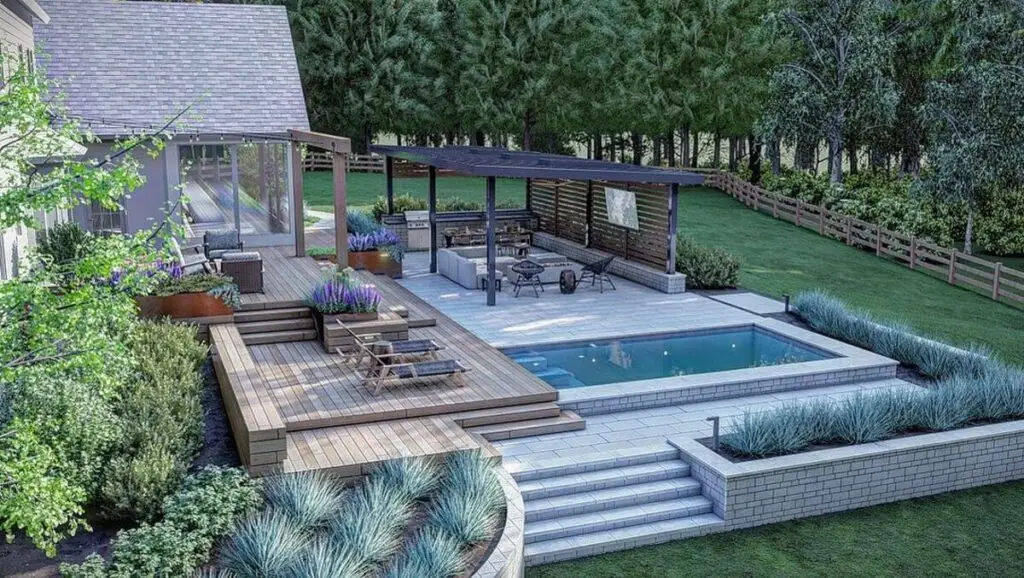
Connect your above-ground pool to your patio with a consistent flooring material or complementary pavers. This creates a smooth visual flow and reduces tripping hazards between surfaces.
Add a short deck or step area that matches patio finishes to improve access and seating. Use planters and low walls to soften the transition and define the pool zone.
10) A Pool Oasis
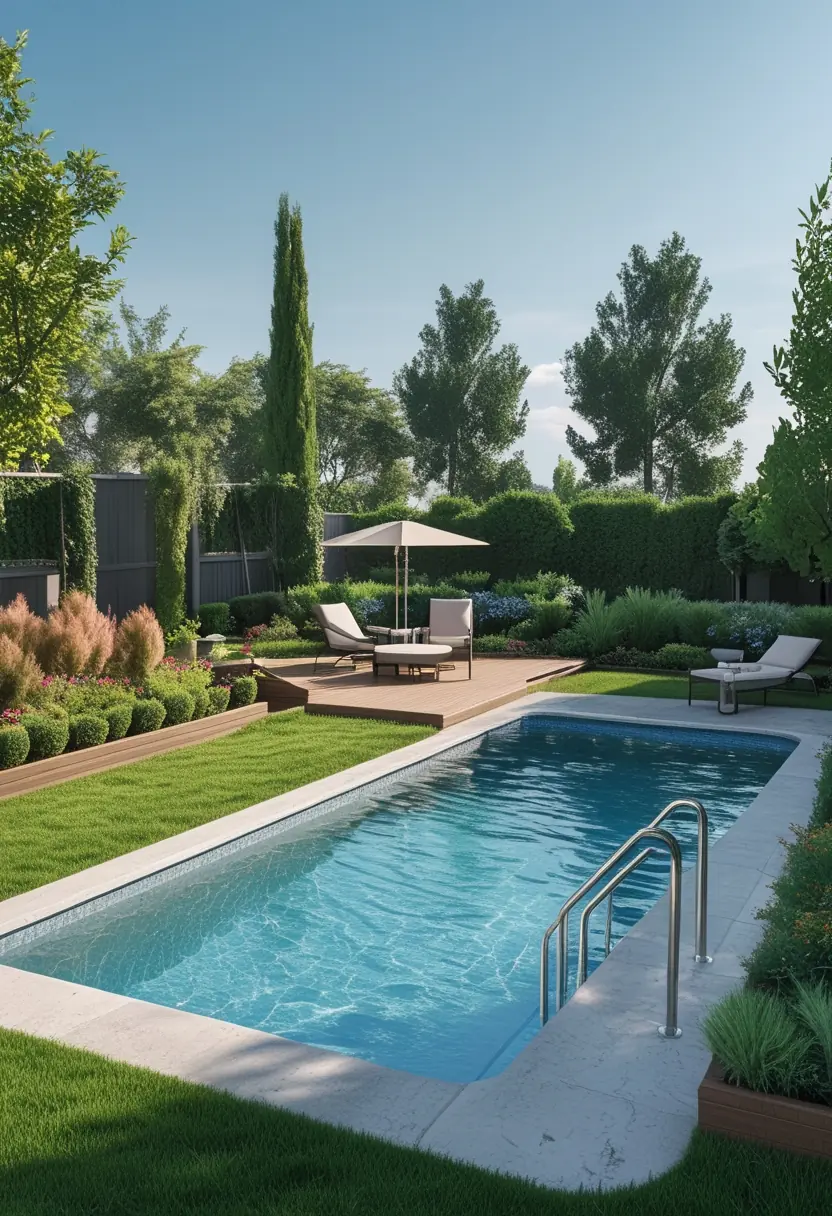
Create a private oasis around your above-ground pool with layered planting and soft lighting to frame the space.
Place taller shrubs or bamboo at the perimeter for windbreak and privacy, then add lower perennials for color and texture.
Install a small deck or cushioned seating area to make entry and lounging comfortable.
Use solar path lights and string lights to extend use after sunset without major wiring.
11) Match the Pool with Nearby Elements
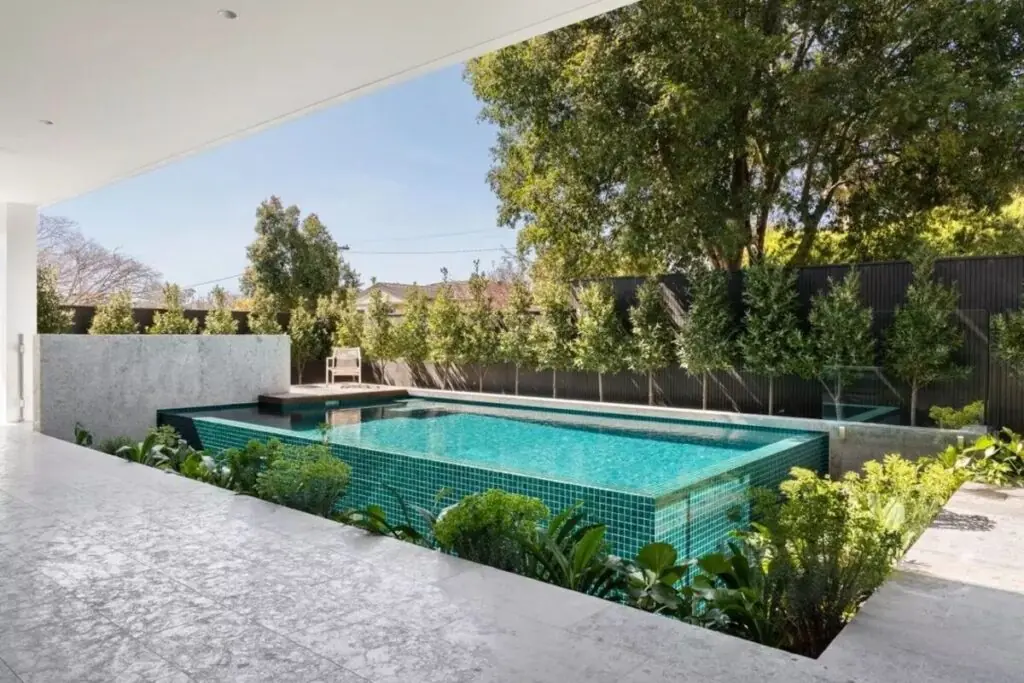
Choose materials and colors that echo nearby structures so your pool feels intentional, not tacked on. Match deck boards, fence tones, or patio pavers to your house or garden beds for visual continuity.
Scale plantings and furniture to surrounding elements so nothing looks out of place. Small yards benefit from low, neat shrubs; larger yards can handle taller screens or layered plantings to balance the pool.
12) Illuminate It
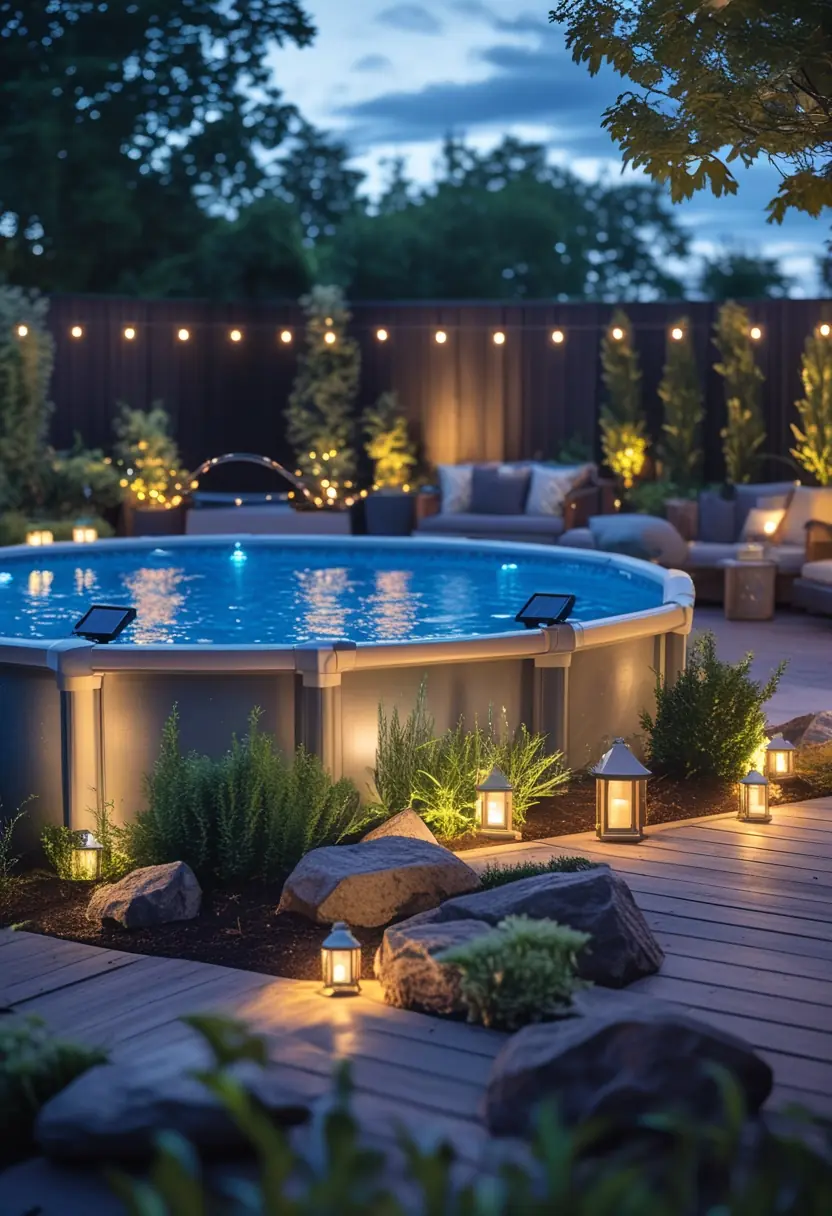
Add layered lighting around your above-ground pool to extend use after sunset and improve safety. Use path lights and solar stakes to mark walkways, and place waterproof LED strips under the pool lip or decking for soft, even glow.
Install a few accent lights in nearby planting beds to highlight textures and create depth. Consider color-change LEDs for mood shifts, but keep primary lighting warm and glare-free for clear visibility.
13) Go for a Modern Design
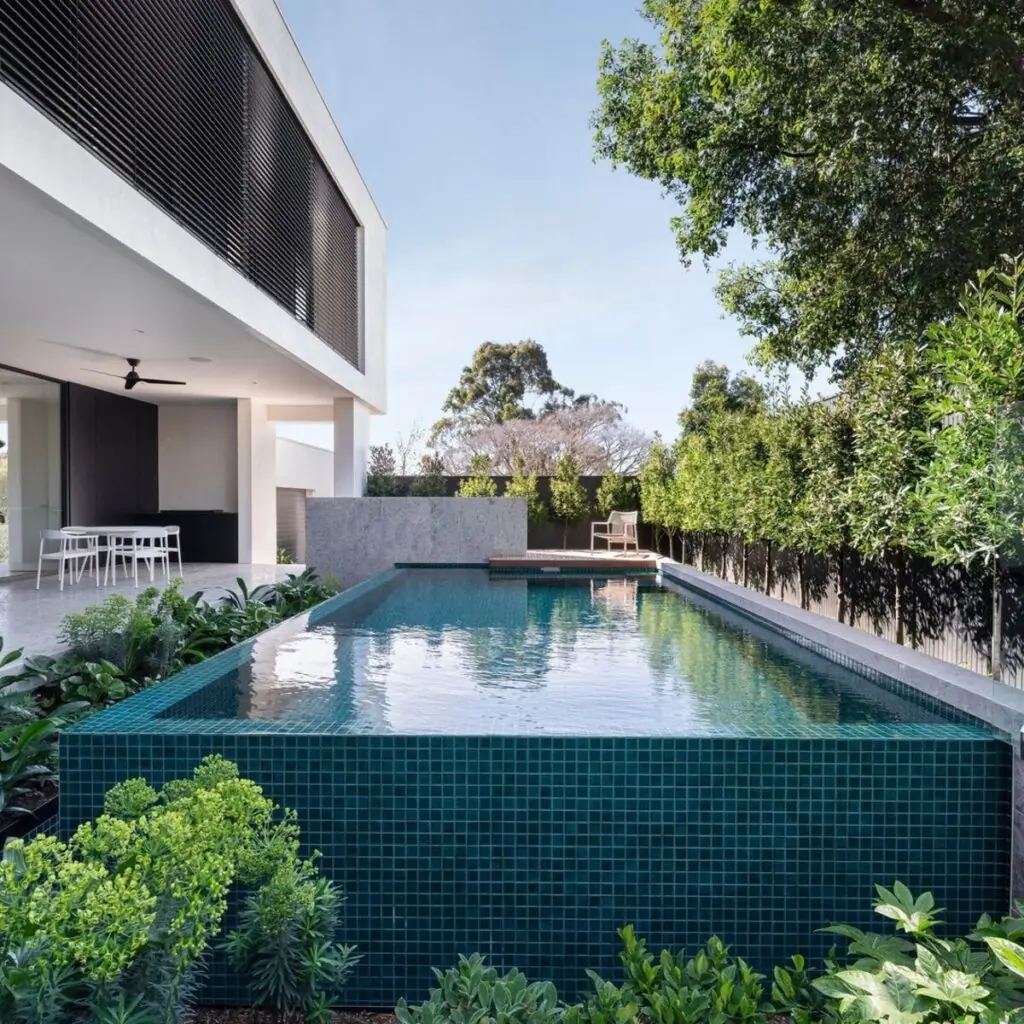
Give your above-ground pool a clean, modern look with simple lines and a restrained palette. Use composite decking, matte finishes, and neutral colors to create a cohesive, contemporary vibe.
Add minimal, geometric planters and integrated LED lighting for function without clutter. Keep furniture low-profile and choose materials like metal and teak to reinforce the modern aesthetic.
14) Go for Natural Stone Finish
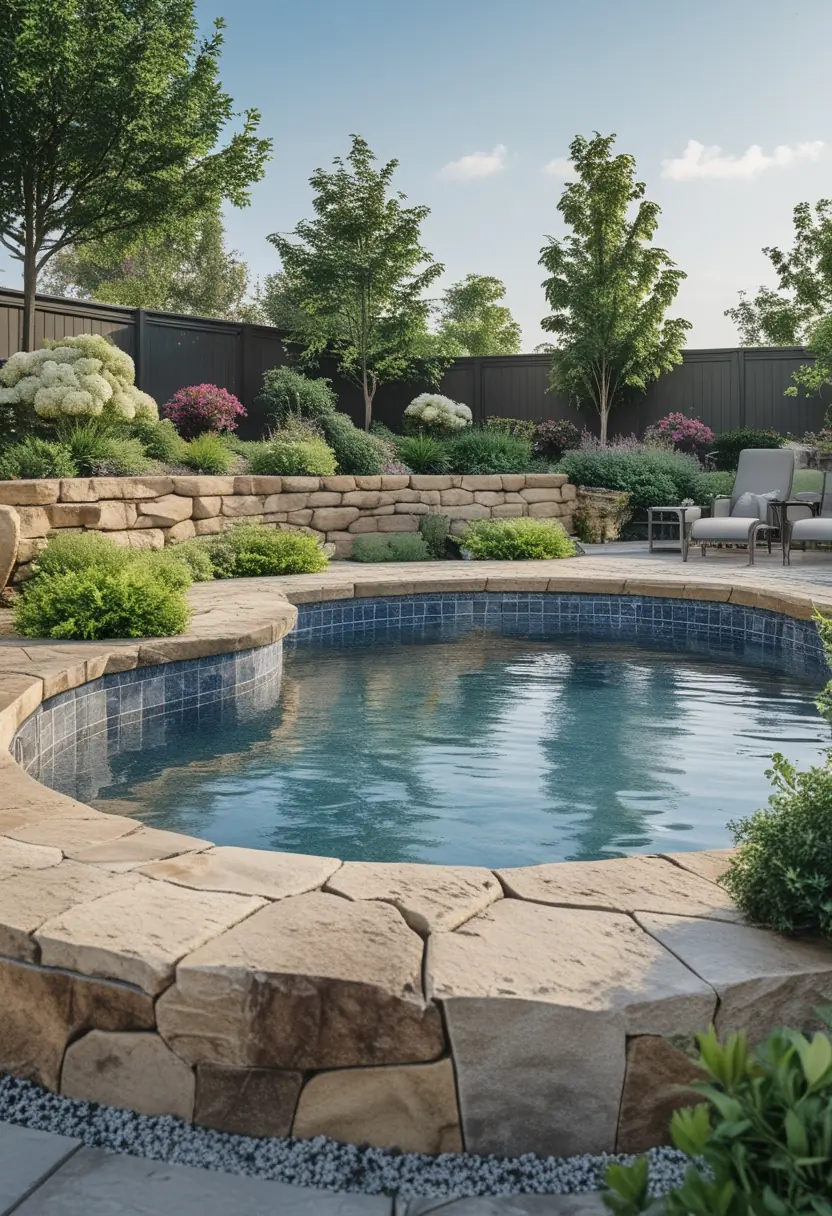
A natural stone finish gives your above-ground pool a grounded, high-quality look that blends with landscaping.
Use flagstone, slate, or stacked stone veneers around the pool skirt or on a surrounding short wall to hide the metal frame.
Stone retains heat and requires little maintenance compared with wood.
Seal porous stones to prevent staining and choose flat pieces for safe, even footing near the pool.
15) Add a Garden Pool
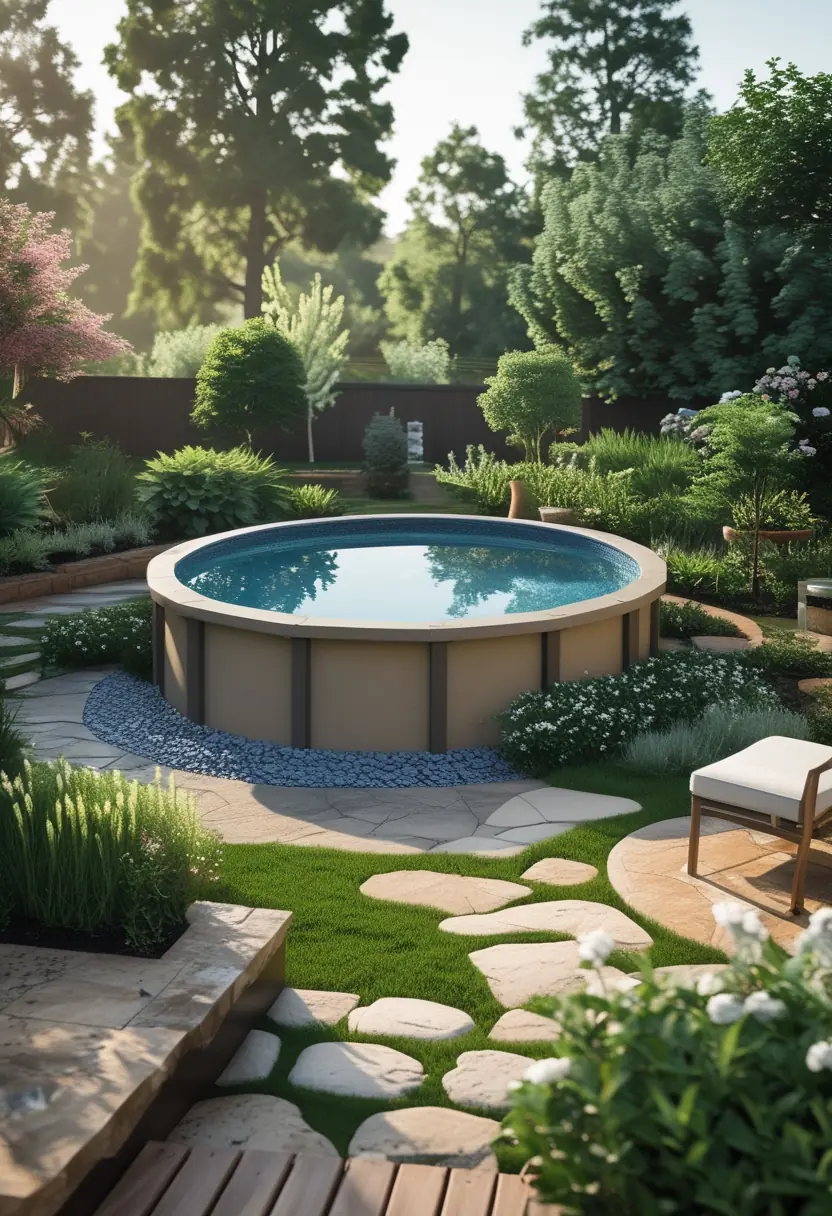
You can surround the above-ground pool with raised planting beds to blend water and greenery.
Choose low-maintenance perennials and ornamental grasses that tolerate splashes and reflected heat.
Install a narrow stone or gravel path for access and to keep soil off the pool deck.
Add potted flowering plants and a few hanging baskets to soften the pool’s silhouette and add seasonal color.
Design Considerations for Poolside Landscaping
Plan plant placement, privacy screens, and space-saving features that fit your yard dimensions, maintenance tolerance, and pool access. Prioritize non-shedding plants near the water, durable materials for decking, and sightlines that keep the pool visible from house entrances.
Choosing Complementary Plant Types
Pick plants that tolerate splash, humidity, and occasional chlorine. Use non-deciduous or low-drop species like ornamental grasses, dwarf evergreens, and clumping bamboos to reduce leaf litter in the pool. Avoid fruiting or heavy-seeding trees such as maples, birches, and oaks within a 20–30 foot radius.
Group plants by water needs. Locate drought-tolerant beds (lavender, sedum) farther from the pool and moisture-loving plants (hostas, ferns) in shaded, irrigated pockets. This keeps irrigation efficient and prevents overwatering.
Consider root behavior and maintenance. Choose shallow-rooted shrubs for edging and keep aggressive rooters, like willows, well away from the pool liner and deck foundations. Place taller plants behind shorter ones to preserve sightlines and safety.
Balancing Privacy and Aesthetics
You can build privacy without creating a dark, claustrophobic space. Use layered screening: a 3–4 foot low hedge (boxwood or dwarf holly), a mid-height ornamental grass row, then 6–8 foot vertical elements (bamboo screens, arborvitae, trellis with vines). This gradation softens the view and prevents a single, imposing barrier.
Choose materials and colors that match your house and deck. Natural wood slats, composite panels, or powder-coated metal trellises pair well with neutral stone coping. Add climbing vines like clematis or star jasmine to soften hard screens and introduce seasonal flowers without heavy litter.
Factor in wind and visibility. Solid fences block wind but reflect noise; living screens reduce noise and provide wildlife habitat. Keep a 3–4 foot clear area for emergency access and maintain trimmed sightlines to the pool from entry points.
Maximizing Limited Space
Turn tight yards into functional poolside zones by layering functions vertically and horizontally. Build a narrow bench-deck along the pool wall that doubles as a planter box; choose compact plants such as dwarf lavender or rosemary for fragrance without bulk.
Use multi-use elements to save room. Install steps that integrate shallow planting terraces, or a fold-down table attached to a deck railing for drinks and towels. Mount vertical planters or pallet gardens on adjacent fences using shallow-rooted herbs and annuals.
Prioritize circulation and safety. Keep a 3–4 foot walk path around at least half the pool perimeter for movement and maintenance. For very small yards, locate furniture and storage under overhangs or built-in seating to avoid cluttering the pool edge.
Maintenance and Safety Tips
Keep water away from the pool base, control surface traction, and plan easy access for routine cleaning and emergency exit routes.
Managing Water Runoff
Direct runoff at least 3–5 feet away from the pool skirt to protect the frame and ground support. Grade surrounding soil so it slopes away from the pool edge at a minimum of 1/8 inch per foot, and use compacted gravel or a perforated drain pipe under any deck to carry water to a garden bed or storm drain.
Install a simple French drain if you have heavy seasonal rain: a trench with landscape fabric, washed gravel, and a perforated pipe routed downhill reduces saturation and prevents soil washout under supports. Keep gutter downspouts pointed away and add splash-blocks or extensions to disperse concentrated flows.
Clean leaves and debris from the pool perimeter and any nearby beds weekly during fall. Mulch lightly and avoid soil berms directly against the pool wall to reduce mold, rust, and insect habitat.
Selecting Slip-Resistant Materials
Choose decking with a coefficient of friction suited for wet areas; composite boards with textured grain, rough-sawn cedar, and brushed concrete score well for grip. Look for products labeled slip-resistant or with a wet DCOF (Dynamic Coefficient of Friction) rating — values above 0.42 are recommended for outdoor, frequently wet surfaces.
Use non-slip outdoor tiles or rubber pavers on stairs and transition zones. Apply anti-slip coatings or tape on steps and top rails where barefoot traffic concentrates. For gravel paths, pick angular crushed stone rather than round pea gravel to reduce sliding.
Maintain surfaces: power-wash to remove algae, reseal wood every 1–2 years, and replace worn anti-slip adhesive strips promptly. Keep lighting over walkways and steps bright (300–500 lumens per fixture) to improve visual traction during dusk and night use.
Frequently Asked Questions:
How can I make my above-ground pool look more attractive?
You can improve the look with decking, plants, gravel borders, and lighting. Blending materials and adding focal features like waterfalls makes it feel built-in instead of temporary.
What is the cheapest way to landscape around an above-ground pool?
Gravel, mulch, and low-maintenance plants are the most budget-friendly options. They improve drainage, reduce mud, and give a clean, finished look without major construction.
What plants are best for landscaping around a pool?
Choose low-shedding, heat-tolerant plants like ornamental grasses, evergreens, and succulents. Avoid trees that drop leaves or have aggressive roots.
Is gravel a good option around an above-ground pool?
Yes, gravel improves drainage, reduces dirt, and is low maintenance. Use a weed barrier underneath and keep it slightly away from the pool wall.