15 Wooden Pool Decks: Creative DIY Ideas for the Perfect Backyard Oasis
You can turn a plain backyard into a stylish, functional pool area that reflects your taste and lifestyle. This article shows 15 wooden pool deck ideas that help you choose designs, materials, and layouts that suit your space and budget.
Expect practical inspiration ranging from compact, easy-to-access pool setups to multi-level and high-end constructions, plus tips to blend decking with fencing, stairs, and landscaping. You’ll find options that fit DIY plans, weatherproofing needs, maintenance considerations, and ways to add a natural or sophisticated touch to your outdoor living area.
Contents
- 1 1) Keep The Pool Small
- 2 2) Deck To Add A Natural Touch
- 3 3) Two Level Decking
- 4 4) Surround A Silo Tank
- 5 5) Sophisticated Deck
- 6 6) Weatherproof Deck
- 7 7) Corner Deck
- 8 8) Build The Pool Into The Deck
- 9 9) Partial Deck
- 10 10) A Deck Extension
- 11 11) DIY Deck
- 12 12) Matching Deck And Fence
- 13 13) Deckign With Stairs And Railing
- 14 14) Easy-To-Access Pool
- 15 15) High-end Construction
- 16 Benefits of Wooden Decks for Pools
- 17 Maintenance and Longevity
- 18 Frequently Asked Questions:
1) Keep The Pool Small
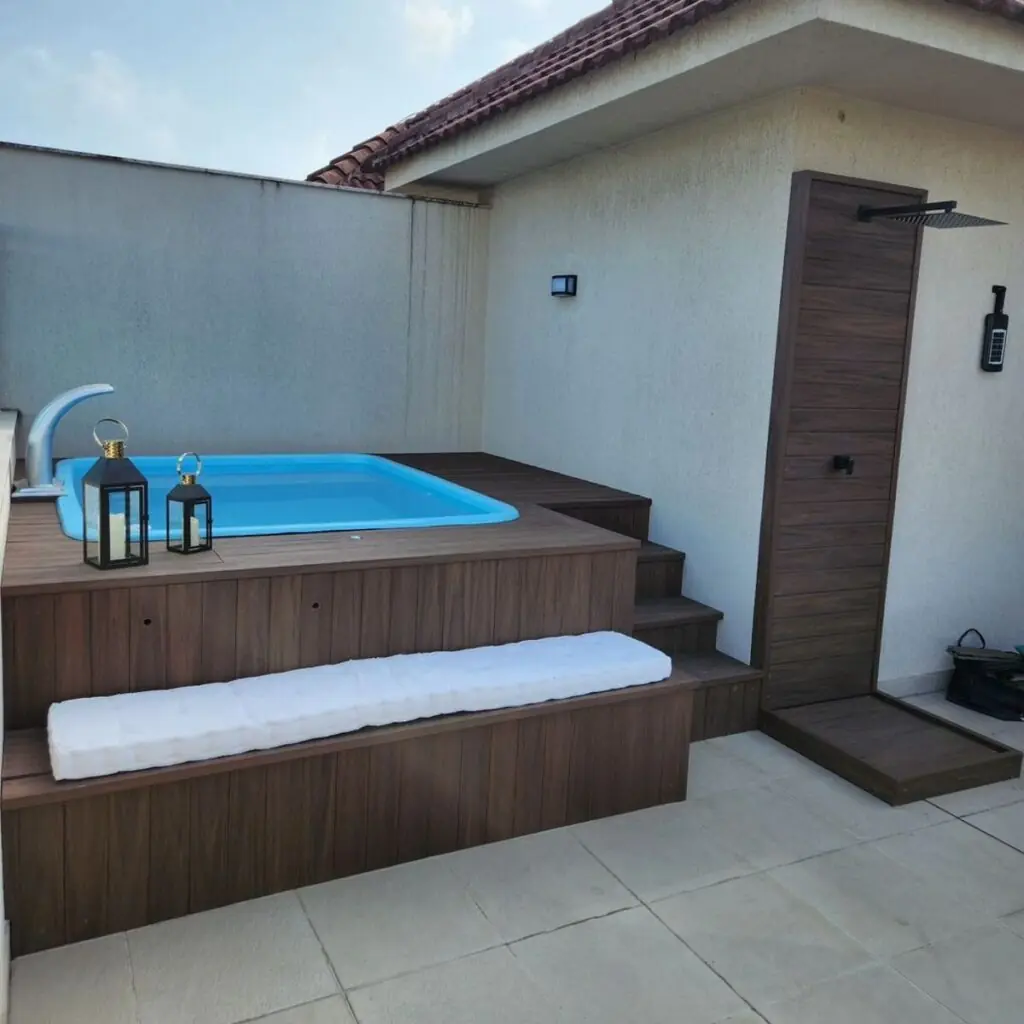
Choosing a smaller pool lets you maximize deck space and keep costs down.
A compact pool fits neatly into tighter yards and creates a more intimate focal point.
You’ll save on excavation, heating, and maintenance while still enjoying regular swims.
Use the surrounding wooden deck for seating, planting boxes, or a sunning area to extend usable space.
2) Deck To Add A Natural Touch
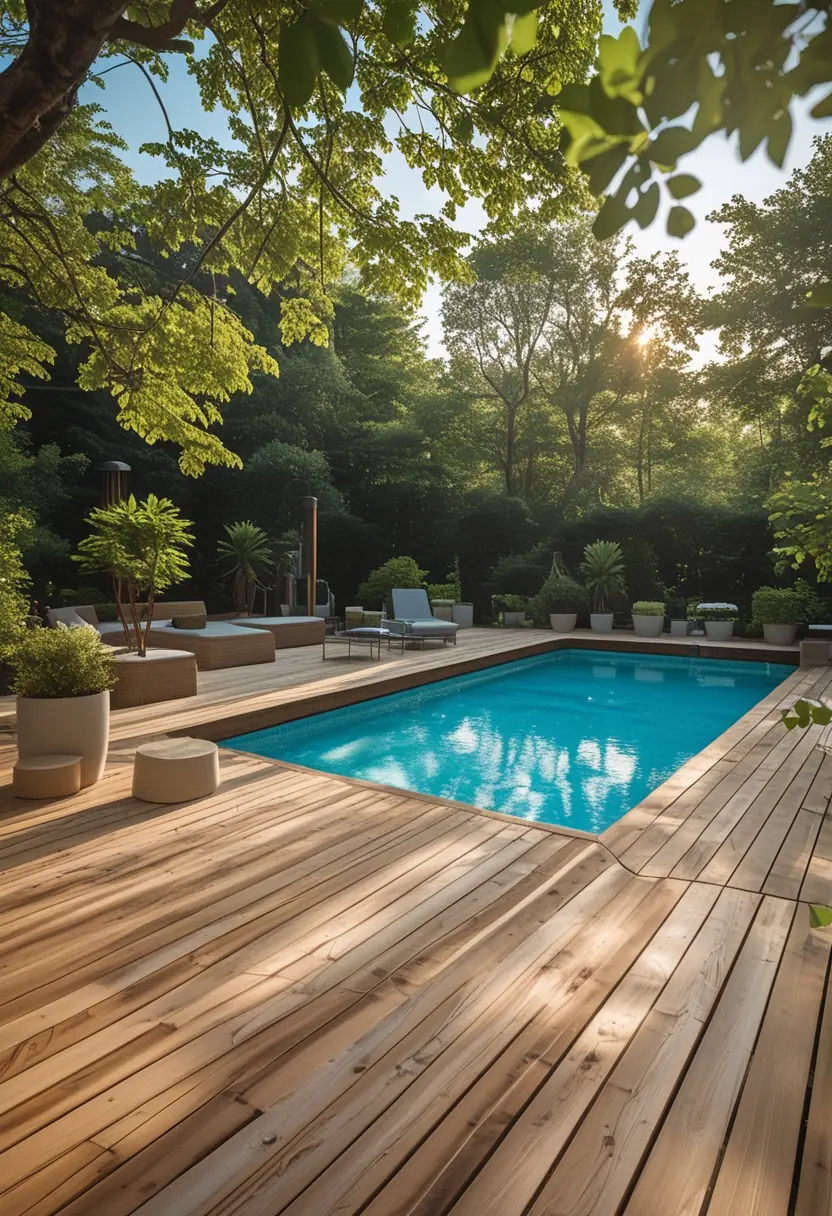
Choose warm-toned wood to soften hardscape edges and connect your pool to the surrounding landscape. You get a grounded, organic look that works with plants, stone, and lawn.
Keep deck boards wide and laid parallel to sightlines to emphasize flow and create usable ledges for seating. Finish with a low-sheen, water-resistant oil to preserve color and reduce slipperiness.
3) Two Level Decking
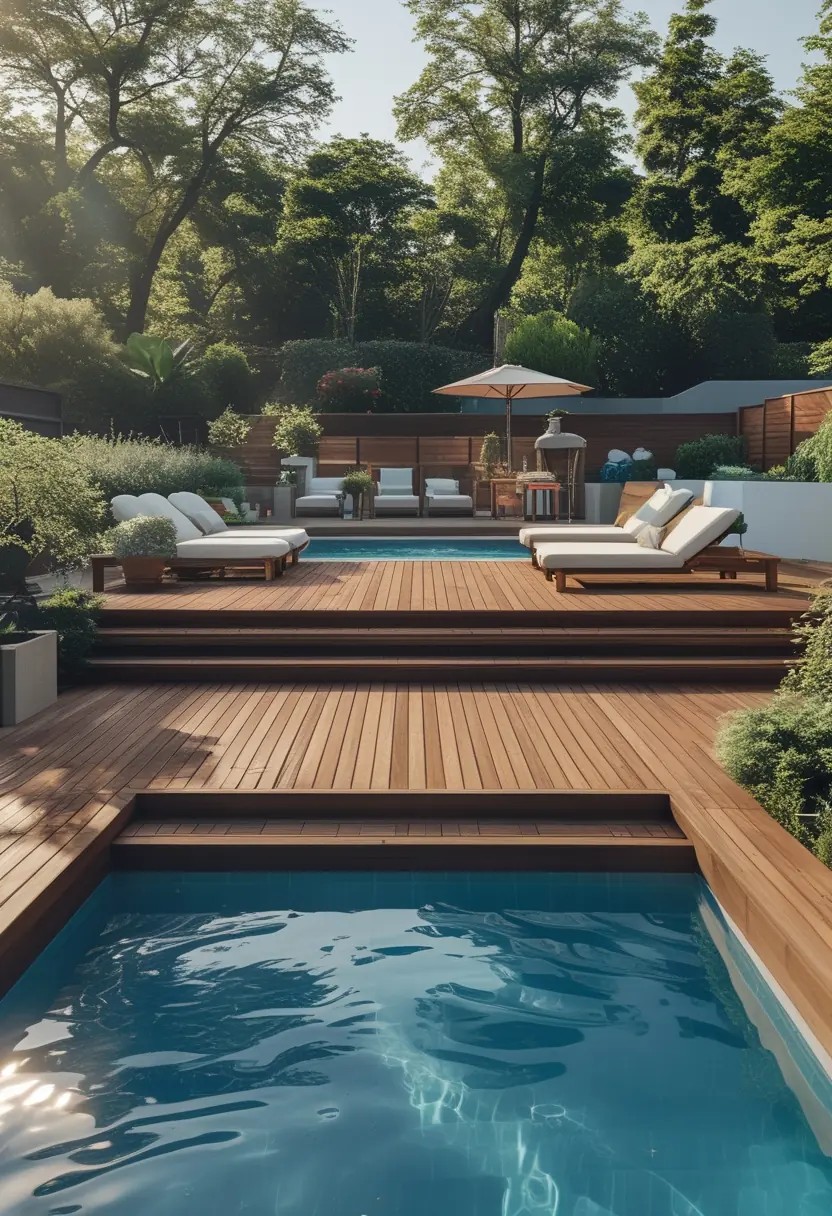
You can use two level decking to create distinct zones for dining and lounging while keeping the pool area connected. Multi-tiered layouts work well on sloped lots and let you integrate stairs, planter boxes, or a grill area without crowding the pool edge.
Choose durable, slip-resistant decking and plan railing and step placement for safe circulation. Proper drainage and structure are essential to prevent water pooling and wood damage over time.
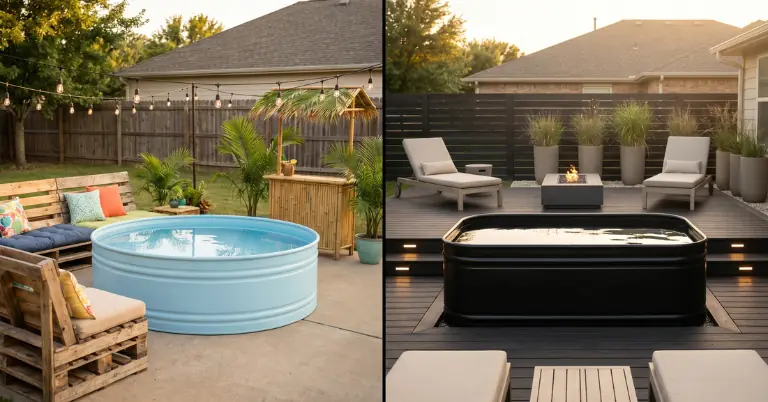
4) Surround A Silo Tank
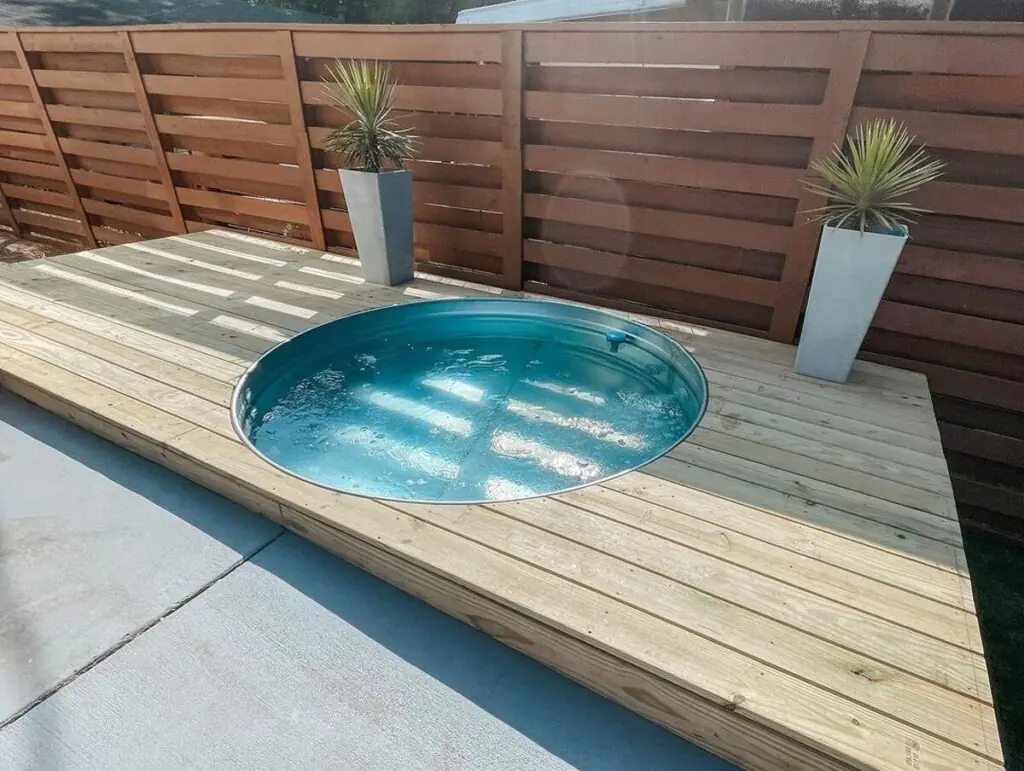
You can frame a stock tank pool with a simple wooden surround to give it a finished, intentional look. Build a low deck that matches the tank’s diameter for easy entry and a neat profile.
Use rot-resistant lumber or composite boards for durability and fasten the frame to a basic ground anchor or pavers. Add built-in seating or a narrow ledge for drinks to increase function without crowding the footprint.
5) Sophisticated Deck
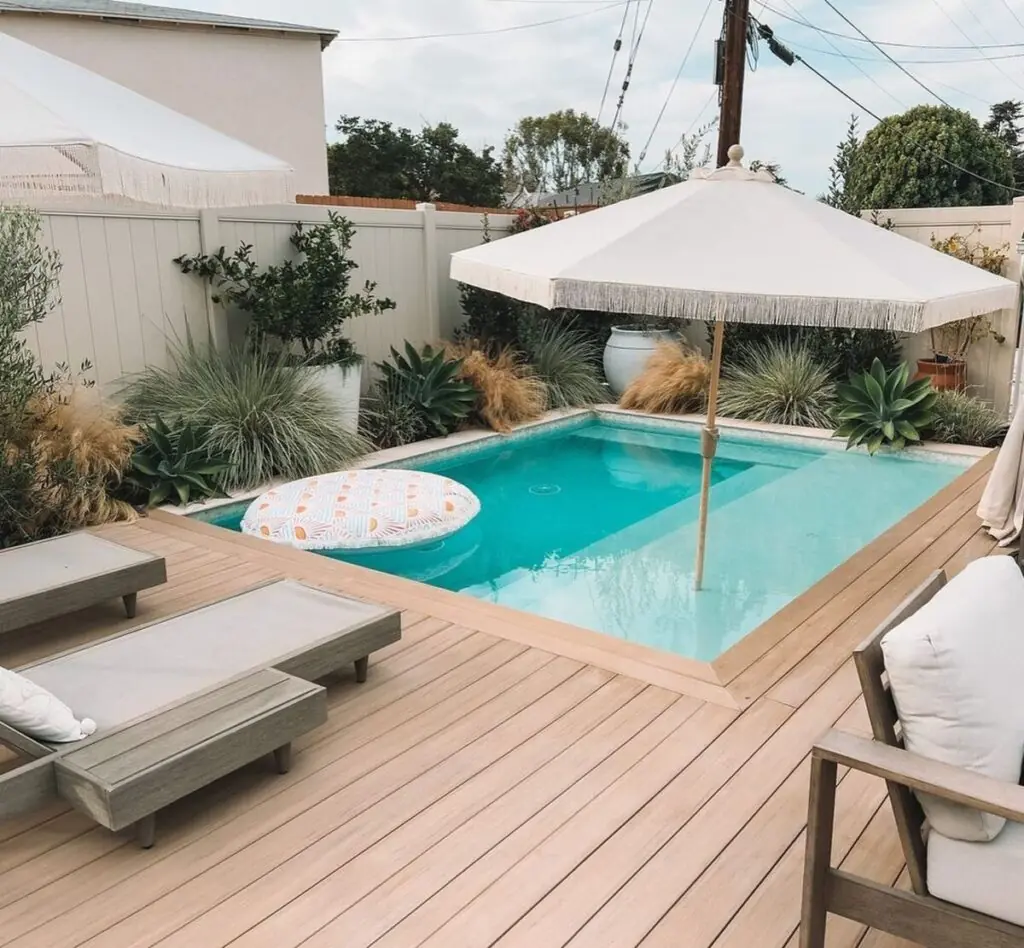
You’ll create a refined poolside look with clean lines and high-quality hardwood like Ipe or teak. Use narrow board spacing and a consistent grain orientation to reinforce a modern, elegant feel.
Keep finishes matte and colors natural to avoid glare and maintain a quiet, upscale appearance. Integrate low-profile lighting and minimalist railings so your deck complements the pool without competing for attention.
6) Weatherproof Deck
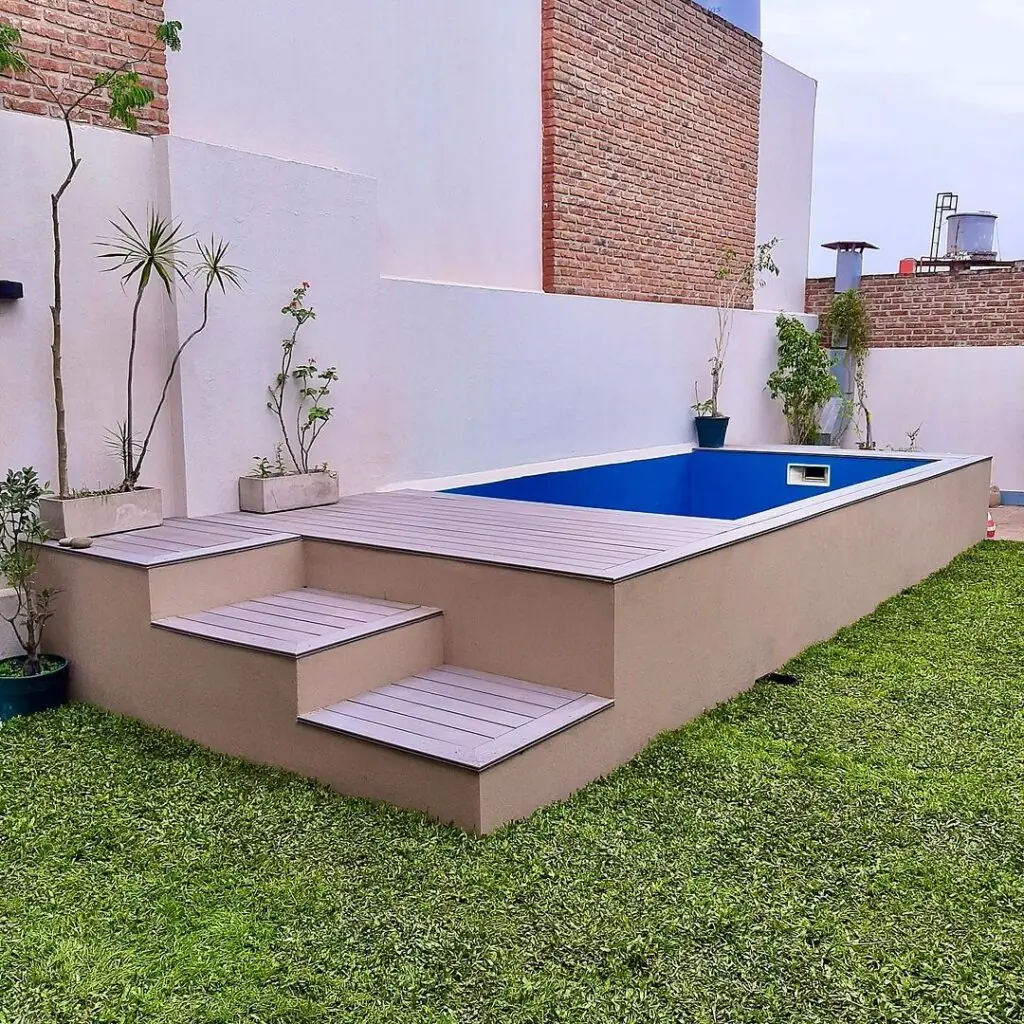
You can extend the life of a wooden pool deck by choosing weatherproof materials and finishes. Select rot-resistant species or treated lumber, and apply a high-quality waterproof sealer to slow moisture damage.
Proper installation matters: slope boards for drainage and leave ventilation gaps to prevent trapped water. Regular maintenance cleaning, re-sealing, and swift repairs keeps your deck safe and attractive for years.
7) Corner Deck
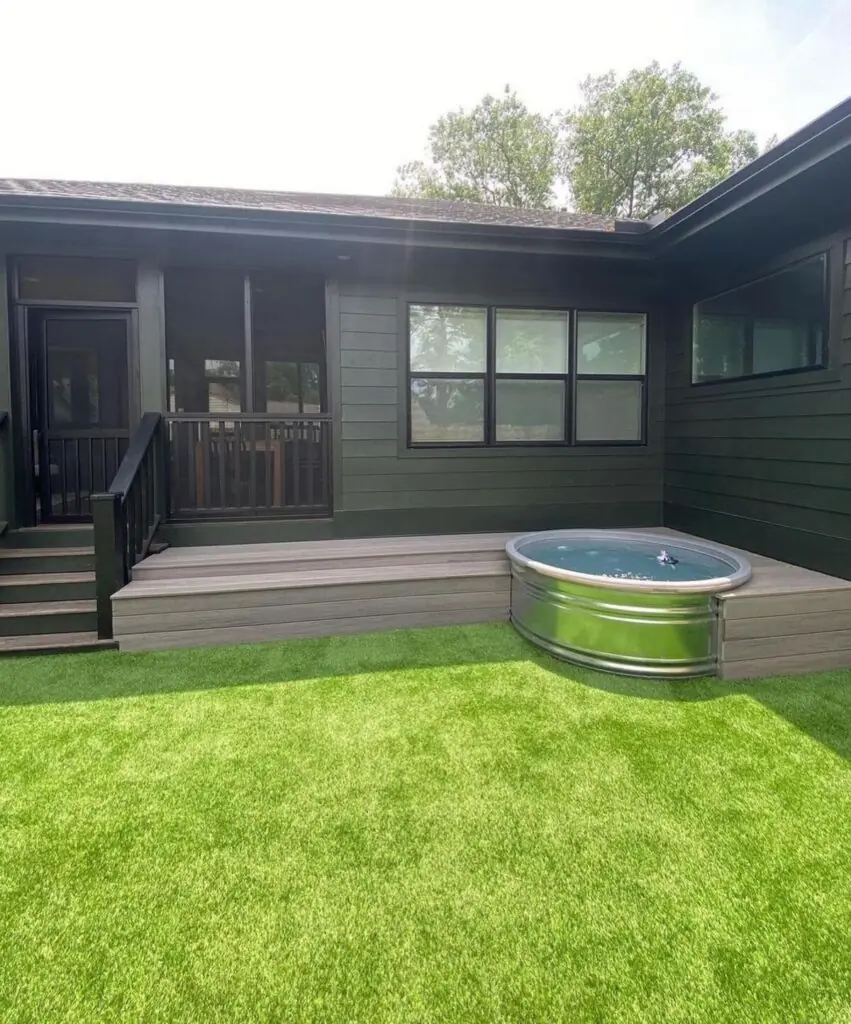
A corner deck fits snugly into unused yard space and extends your pool area without crowding it. You can create seating, planters, or a shaded lounge spot that feels intentional and tidy.
Choose rot-resistant wood or composite for safety and low maintenance. Keep pathways clear and use non-slip finishes so your deck stays practical as well as attractive.
8) Build The Pool Into The Deck
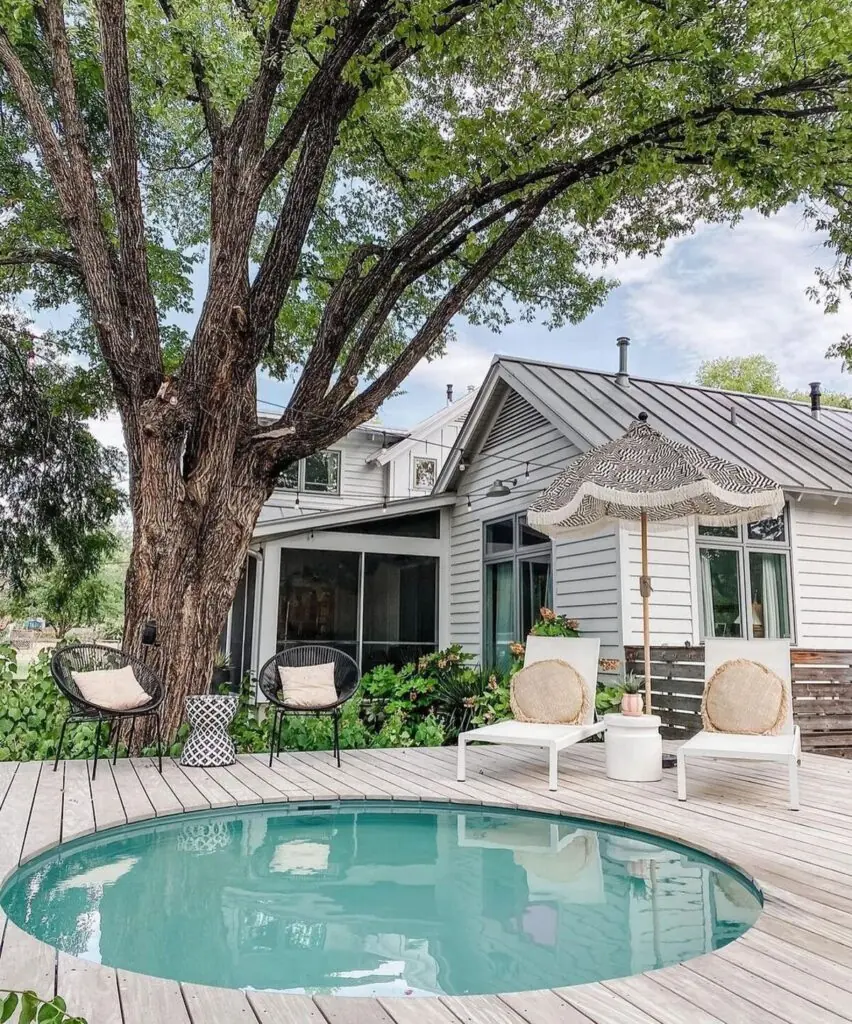
Integrate your pool so the deck and water sit on the same plane for a clean, modern look. This approach shortens circulation lines and simplifies access, but it requires precise framing and waterproofing.
You should plan for proper drainage, decking overhangs, and slip-resistant surfacing. Consult local codes and a contractor for structural and pool-safety requirements before you begin.
9) Partial Deck
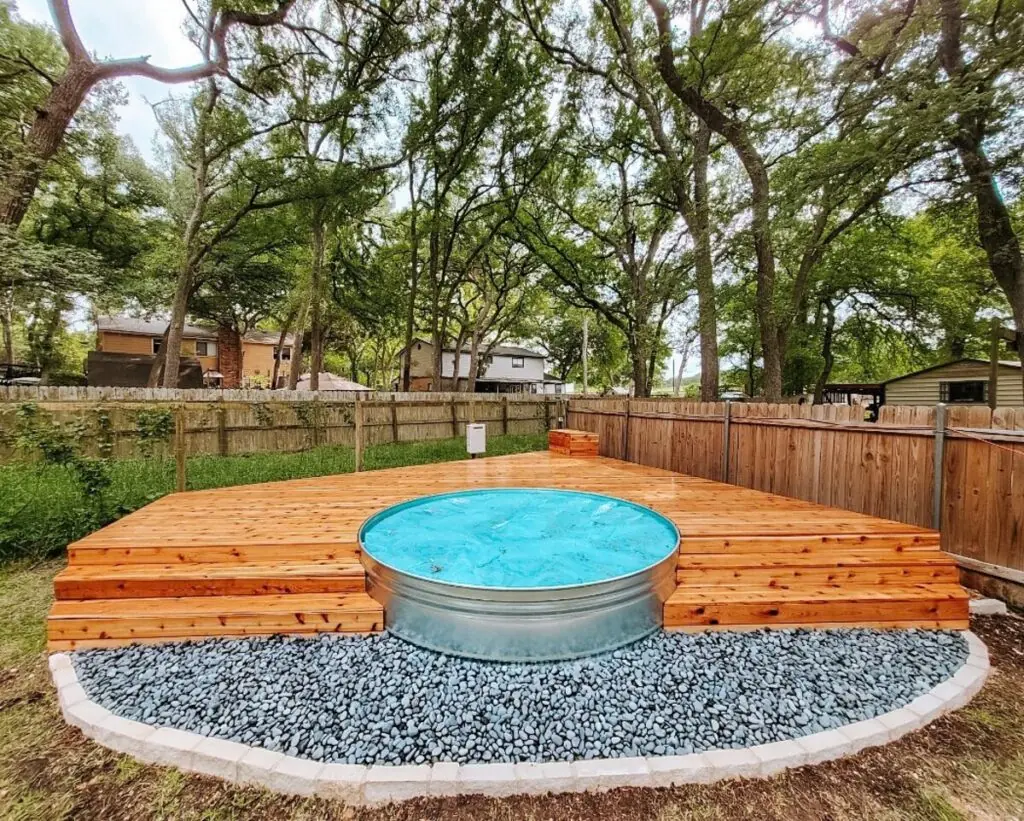
A partial deck wraps one side of your above‑ground or inground pool, giving you a defined entry and lounging zone without decking the entire perimeter.
You save materials and installation time while still creating a stable platform for chairs, a ladder, or planters.
Design the partial deck to follow the pool curve or angling it for sun exposure; both choices improve flow and usability.
10) A Deck Extension
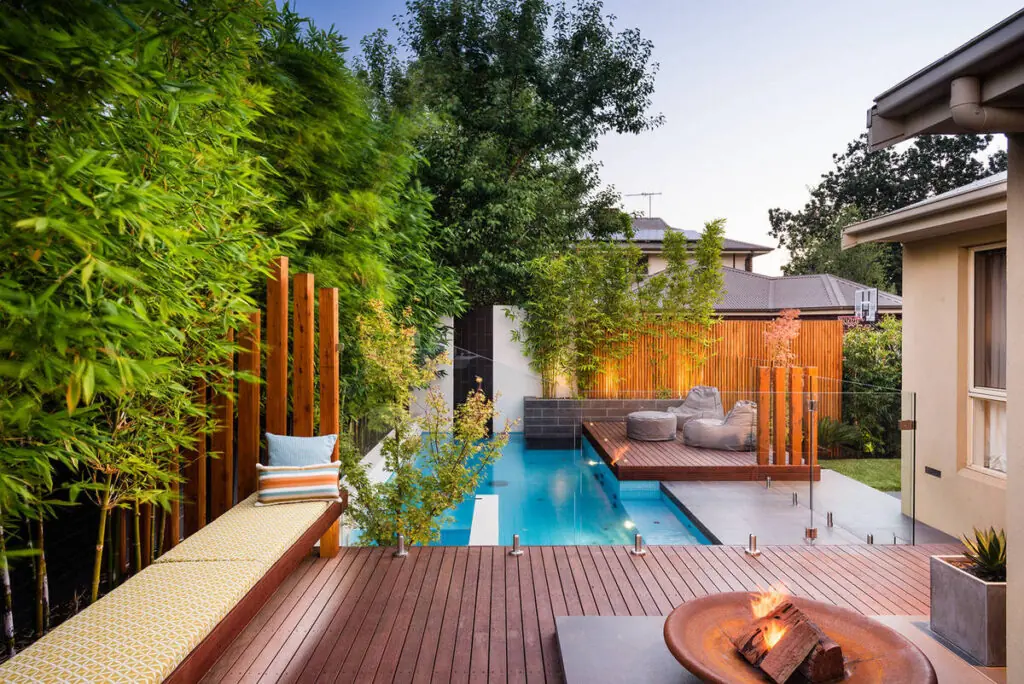
You can extend an existing deck to create more usable space around your pool without rebuilding from scratch.
Plan according to local building codes and site conditions to ensure safety and permit compliance.
Choose materials that match or complement your current decking for a cohesive look.
Consider structural reinforcement, proper drainage, and non-slip finishes to protect against moisture and heavy use.
11) DIY Deck
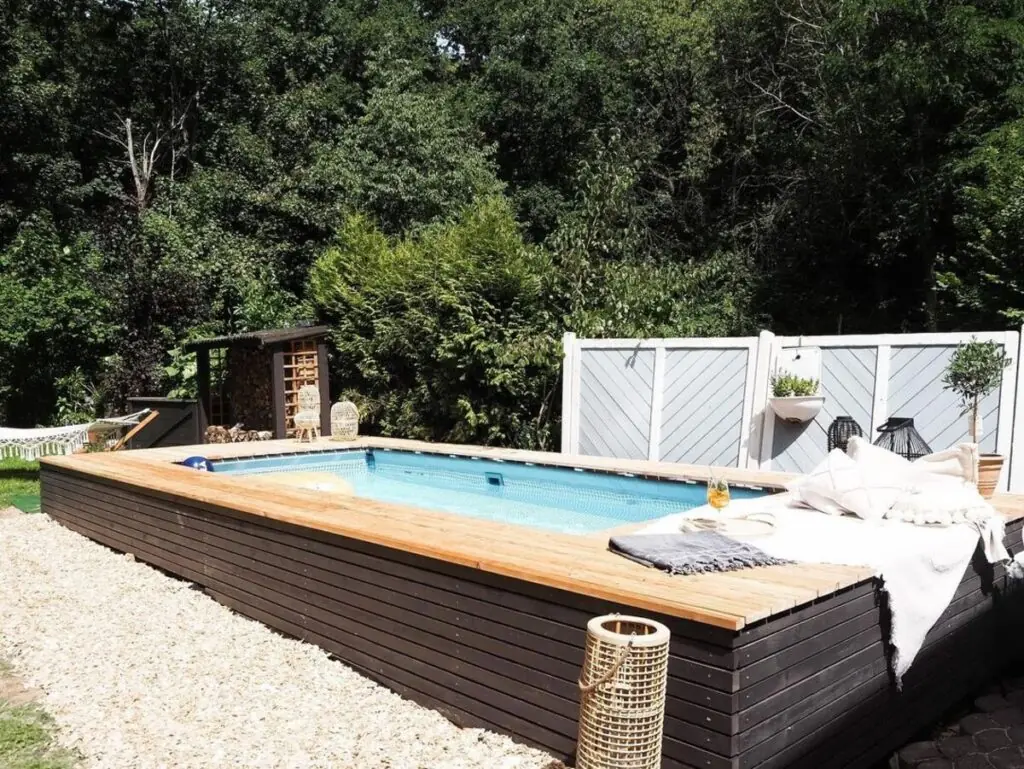
You can build a functional wooden pool deck without hiring contractors if you plan carefully and choose durable materials. Start by measuring the pool perimeter and sketching a simple layout that fits your yard and access points.
Use pressure-treated lumber or a hardwood suited to wet conditions, and follow local codes for framing and railing. Work in stages: layout, framing, decking, and sealing, testing each step for level and drainage.
12) Matching Deck And Fence
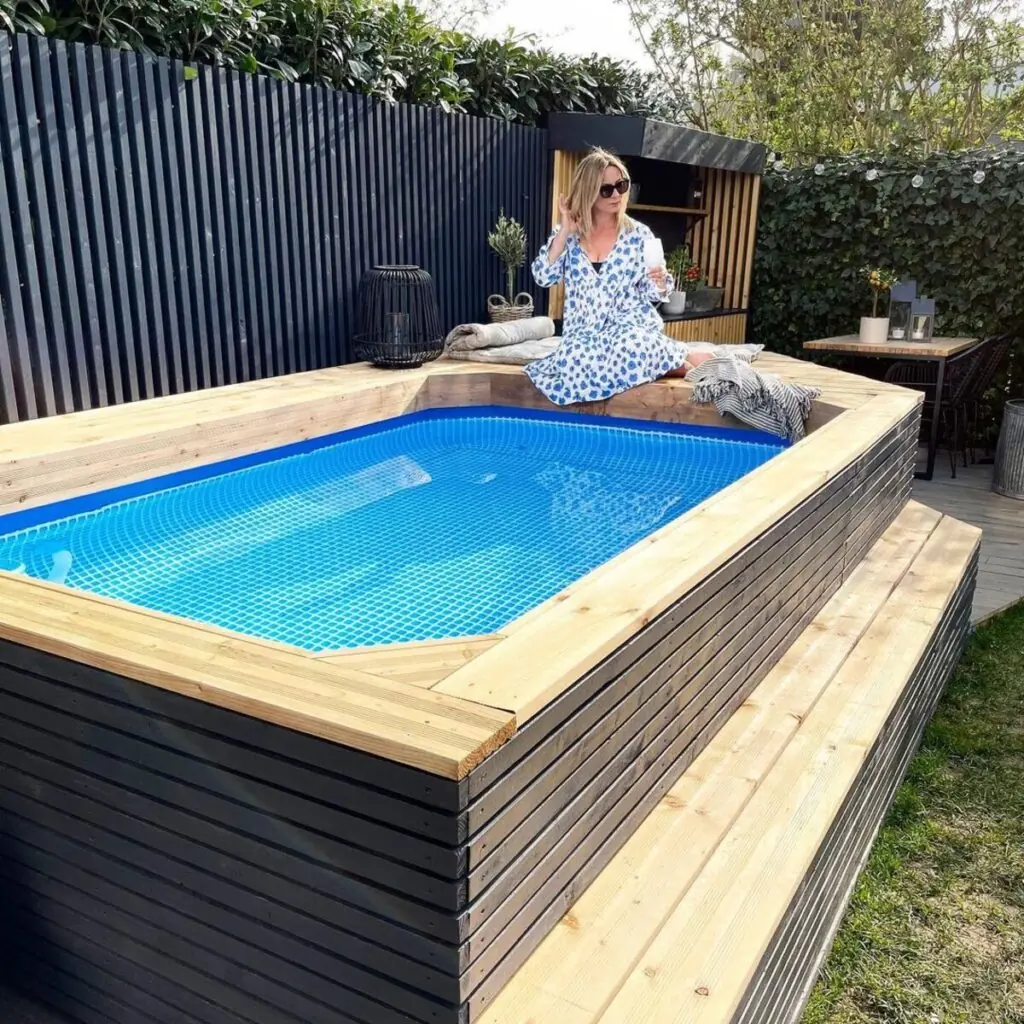
Matching your deck and fence creates a unified look that makes your pool area feel intentional and well-designed. Choose the same wood species and stain to keep color and grain consistent.
Align board widths and railing profiles so lines flow from deck to fence, improving visual continuity. Matching hardware and post caps finish the look and strengthen the overall aesthetic.
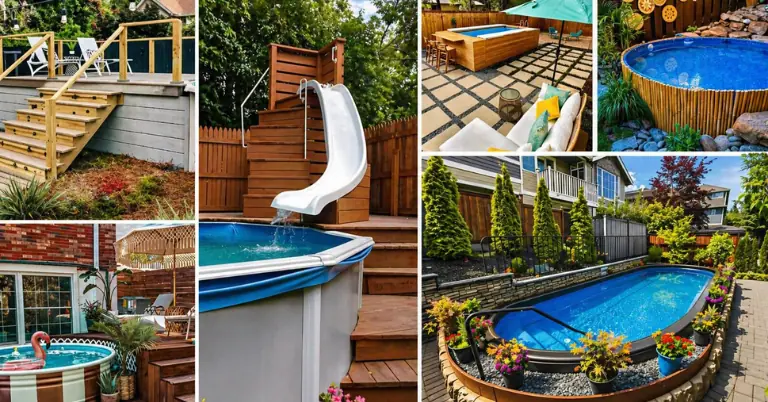
13) Deckign With Stairs And Railing
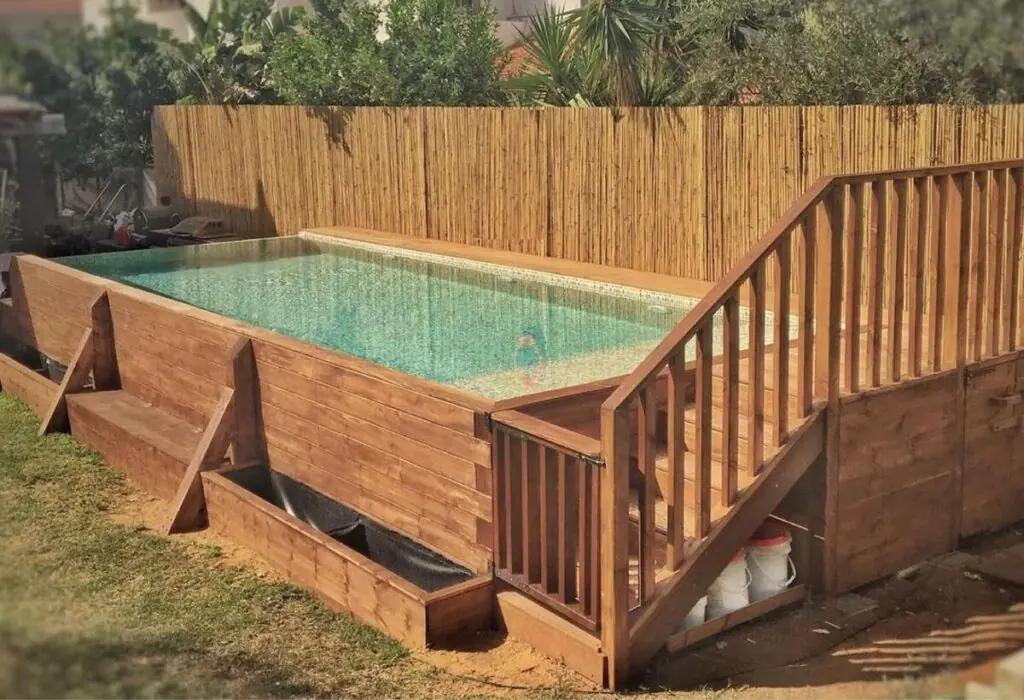
Plan stairs with consistent rise and run for safe, comfortable use; verify local code for tread depth and handrail height.
Choose railings that balance visibility and safety glass panels keep sightlines while wood or metal offers durability and style.
Integrate lighting into steps and posts to reduce trip risk and extend usable hours.
Use rot-resistant materials and proper fasteners where stairs meet the pool deck to prevent water damage and loosening over time.
14) Easy-To-Access Pool
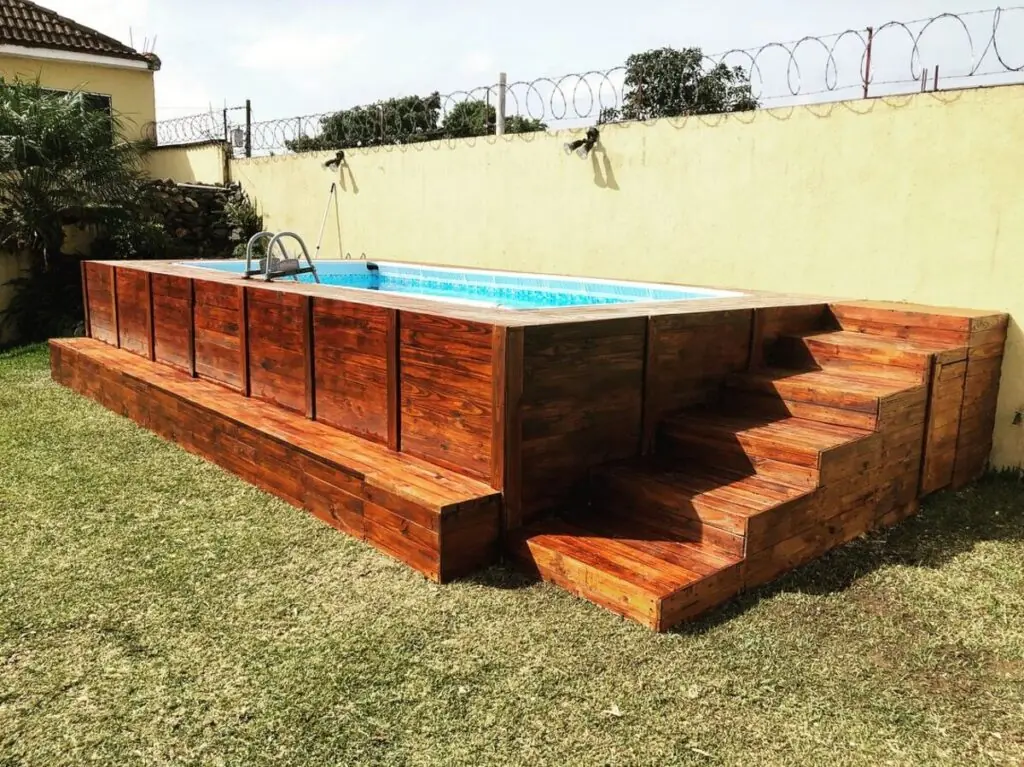
Design the deck so entry and exit feel natural and safe. Place wide steps or a gentle ramp with non-slip treads where swimmers naturally approach the pool.
Integrate handrails and a landing area to give you space to sit or dry off. Keep pathways clear and level to reduce tripping risks and make maintenance easier.
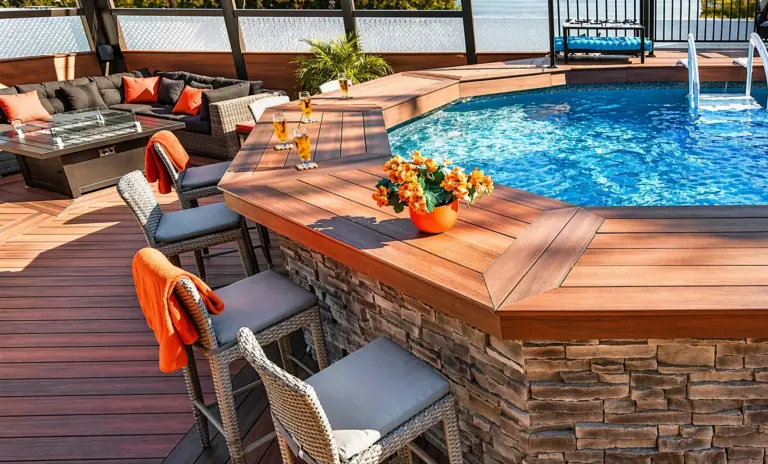
15) High-end Construction
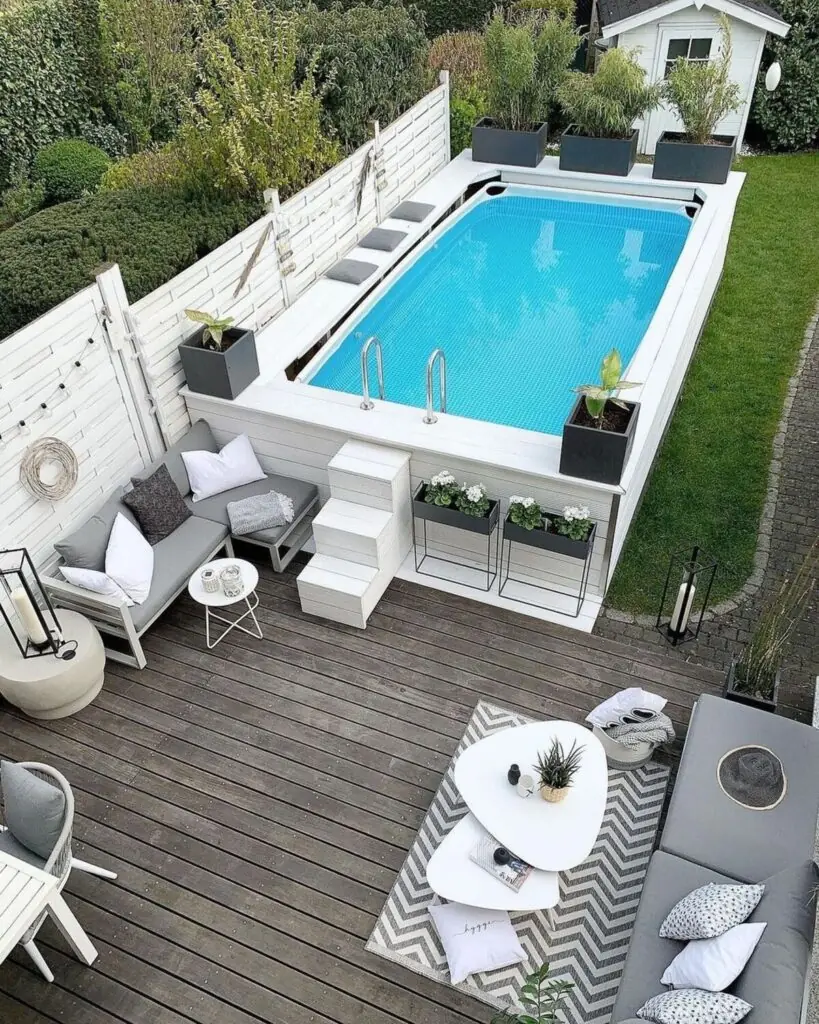
You can elevate an above-ground or in-ground pool with premium wood decking that expands usable space. Choose durable hardwoods like Ipe or properly treated cedar and specify stainless fasteners to resist corrosion.
Work with an experienced contractor to ensure proper drainage, joist spacing, and ventilation beneath the deck. That attention to detail reduces maintenance and keeps the deck looking refined for years.
Benefits of Wooden Decks for Pools
Wooden pool decks give you natural warmth, practical safety features, and cooler underfoot comfort compared with many alternatives. They also let you choose species and finishes that match your budget, climate, and maintenance willingness.
Natural Aesthetic Appeal
Wood offers grain, color variation, and texture that creates a cohesive connection between your pool and landscape. Choose cedar or redwood for warm reddish tones and natural rot resistance, or tropical hardwoods like ipe for deep brown hues and extreme density. You can also use stained pine or thermally modified wood when you want a specific color without exotic species.
Design flexibility matters: you can run boards diagonally, create inlaid patterns, or combine plank widths to echo architectural lines of your home. Finishing options oil, penetrating stain, or a clear sealer alter shine, color retention, and weathering pace. These choices let you tailor the visual outcome precisely to your outdoor style.
Slip Resistance and Safety
A properly finished wooden deck reduces slip risk because wood naturally provides more traction than smooth concrete or tile when wet. Use textured boards, routed grooves, or anti-slip coatings to increase grip where people enter and exit the pool. Fastener choice and spacing also affect safety; recessed or hidden fasteners cut tripping points and create a smoother walking surface.
Wood also performs well under foot in barefoot conditions. It minimizes sharp edges and sudden temperature changes that can cause slips. Maintain traction by keeping the deck clean of algae and reapplying non-slip treatments annually in high-use areas.
Comfort in Hot Climates
Wood stays noticeably cooler under direct sun than most stone, concrete, or composite surfaces. Species with lower thermal conductivity cedar, pine, and certain treated softwoods absorb less heat, so you can walk barefoot comfortably after midday sun. Lighter stains and reflective sealers further reduce surface temperature.
Proper ventilation beneath the deck and spacing between boards improves airflow and reduces heat retention. If you live in a very hot, sunny region, select lighter woods, add shading elements, or use pergolas to lower peak surface temperatures without sacrificing the wood look you want.
Maintenance and Longevity
Regular washing, seasonal sealing, and timely repairs keep your wooden pool deck safe and extend its life. Focus on cleaning debris, applying UV- and water-resistant treatments, and fixing loose or rotten boards as soon as you spot them.
Routine Cleaning Tips
Sweep the deck daily or after heavy use to remove sand, leaves, and grit that abrade the wood. Use a soft-bristle broom for routine sweeping and a leaf blower for quick removal of loose debris.
Deep-clean at least twice a year. Mix a deck cleaner or mild dish soap with water and scrub with a stiff nylon brush, working along the grain. Rinse thoroughly with a garden hose or pressure washer on a low setting (maximum 1,200–1,500 psi) from 3–4 feet away to avoid gouging the wood.
Address stains and calcium buildup promptly. For rust or metal stains, use a commercial rust remover safe for wood. For mineral deposits from pool water, apply white vinegar or a descaling product, then rinse.
Drying matters. Allow the deck to dry 24–48 hours after cleaning before applying any finish or using the pool, to prevent trapped moisture and mold.
Weatherproofing Treatments
Choose a sealant or stain formulated for poolside exposure with UV inhibitors and water repellency. Penetrating oil-based sealers soak into the wood and reduce splitting; film-forming stains provide more visible color and surface protection.
Apply treatments every 1–3 years depending on product and traffic. Test adhesion by sprinkling water if it beads, the seal is working; if it soaks in, plan to recoat. Reapply after major cleanings, power washing, or winter.
Follow proper application steps: clean and dry the deck, sand rough spots, then apply with a roller or brush in thin, even coats along the grain. Work in temperatures between 50–85°F and avoid rainy forecasts for 24–48 hours.
Protect fastener heads and edges. Use stainless-steel screws and consider sealing exposed screw heads to prevent corrosion stains and localized wood deterioration.
Repairing Common Issues
Inspect your deck quarterly for loose boards, popped nails, rot, and splintering. Tighten or replace fasteners with stainless or coated screws; avoid nails that back out under poolside traffic.
Replace any board with soft or crumbly wood probe suspect areas with a screwdriver to check for decay. Cut out the damaged section and fit a new, pressure-treated or preserved board; glue and screw it into place for a secure repair.
Address cupping, warping, or large gaps by evaluating substructure moisture and ventilation. Improve airflow under the deck, add or replace flashing where water pools, and re-fastener warped boards after correcting the cause.
Sand splintered areas and apply a touch-up stain or sealer after repairs. Keep a small repair kit extra boards, matching stain, screws, and wood filler to complete quick fixes before small problems worsen.
Frequently Asked Questions:
What is the best wood for a pool deck?
Pressure-treated lumber, cedar, redwood, and tropical hardwoods like Ipe are popular choices. Cedar and redwood offer natural rot resistance, while Ipe provides premium durability and a luxury finish.
Are wooden pool decks slippery when wet?
Wood is generally less slippery than tile or concrete, especially with textured boards or anti-slip coatings. Proper sealing and regular cleaning help maintain safe traction.
Can I build a DIY wooden pool deck myself?
Yes, many homeowners build DIY pool decks using pressure-treated wood and simple layouts. Careful planning, proper tools, and local code compliance are essential.
Does a wooden pool deck increase home value?
A well-designed wooden pool deck can improve outdoor appeal, functionality, and resale value by creating an attractive backyard living space.