15 Stunning Natural Swimming Ponds for Your Peaceful Backyard Retreat
You can transform your outdoor space into a living, swimmable ecosystem that replaces chlorine with plants, stones, and thoughtful design. This article shows 15 natural swimming pond ideas so you can imagine options that fit your garden, lifestyle, and maintenance comfort level.
Explore varied layouts from small tucked-away pools to meadow ponds with waterfalls and learn how design choices affect ecology, usability, and seasonal care. You’ll find inspiration for DIY builds, rustic and contemporary looks, and practical features that connect patios, decks, and natural habitats.
Contents
- 1 1) Naural Swimming Pond With Asymmetric Decks
- 2 2) Small Pool Tucked In The Garden
- 3 3) Natural Swimming Pool With Extras
- 4 4) Swimming Pool With Natural Surroundings
- 5 5) Natural Swimming Pond With A Deck And A Gazebo
- 6 6) A Swimming Pond In The Meadow
- 7 7) A Pool With Rich Biodiversity
- 8 8) Fairytale Garden With A Natural Swimming Pool
- 9 9) Pool With A Fountain
- 10 10) Contemporary Natural Pool
- 11 11) Rustic Swimming Pool
- 12 12) A Waterfall And A Pond
- 13 13) Pond With Stepping Stones
- 14 14) A Deck To Make A Connection Between The Patio And The Pond
- 15 15) DIY Natural Pool
- 16 Design and Ecological Benefits
- 17 Maintenance and Seasonal Care
- 18 Frequently Asked Questions:
1) Naural Swimming Pond With Asymmetric Decks
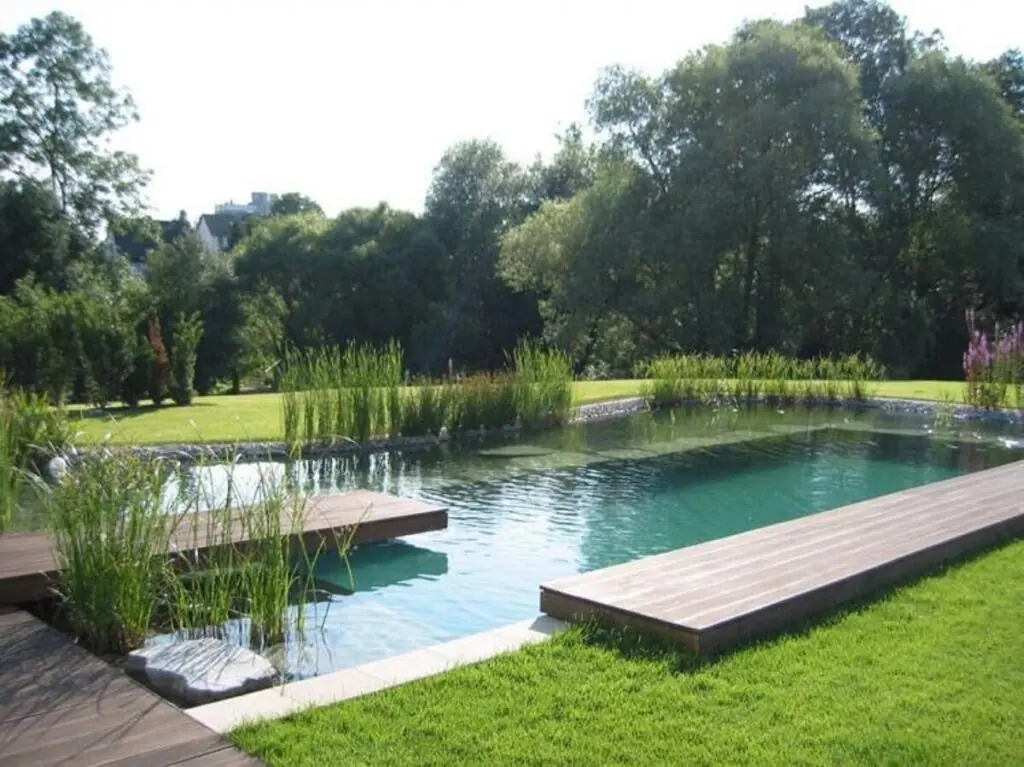
You’ll find asymmetric decks add visual interest and better integrate a pool with natural contours.
They create varied seating, sunning, and entry points so different activities can happen without crowding.
Use materials like weathered timber or stone to match surrounding planting and soften edges.
Position decks to preserve existing trees and sightlines, letting the pond feel like a natural extension of your garden.
2) Small Pool Tucked In The Garden
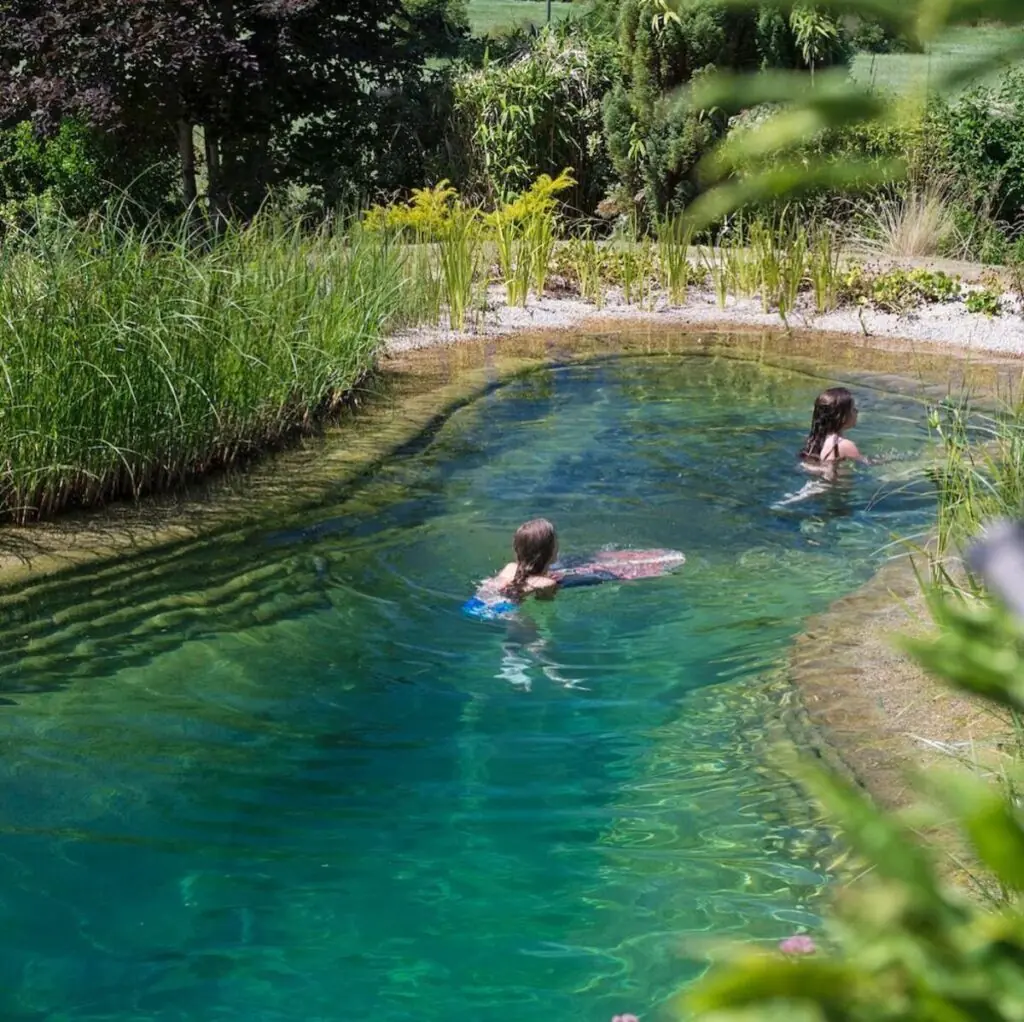
You can fit a natural swimming pond into a tight yard by prioritizing shape over size.
Place it near existing plants and shade to blend the pool into your garden and reduce evaporation.
Use a shallow planting shelf and compact filtration planting to keep maintenance low.
Careful edging with native stone or timber makes the pool feel intentional and keeps circulation steady.
3) Natural Swimming Pool With Extras
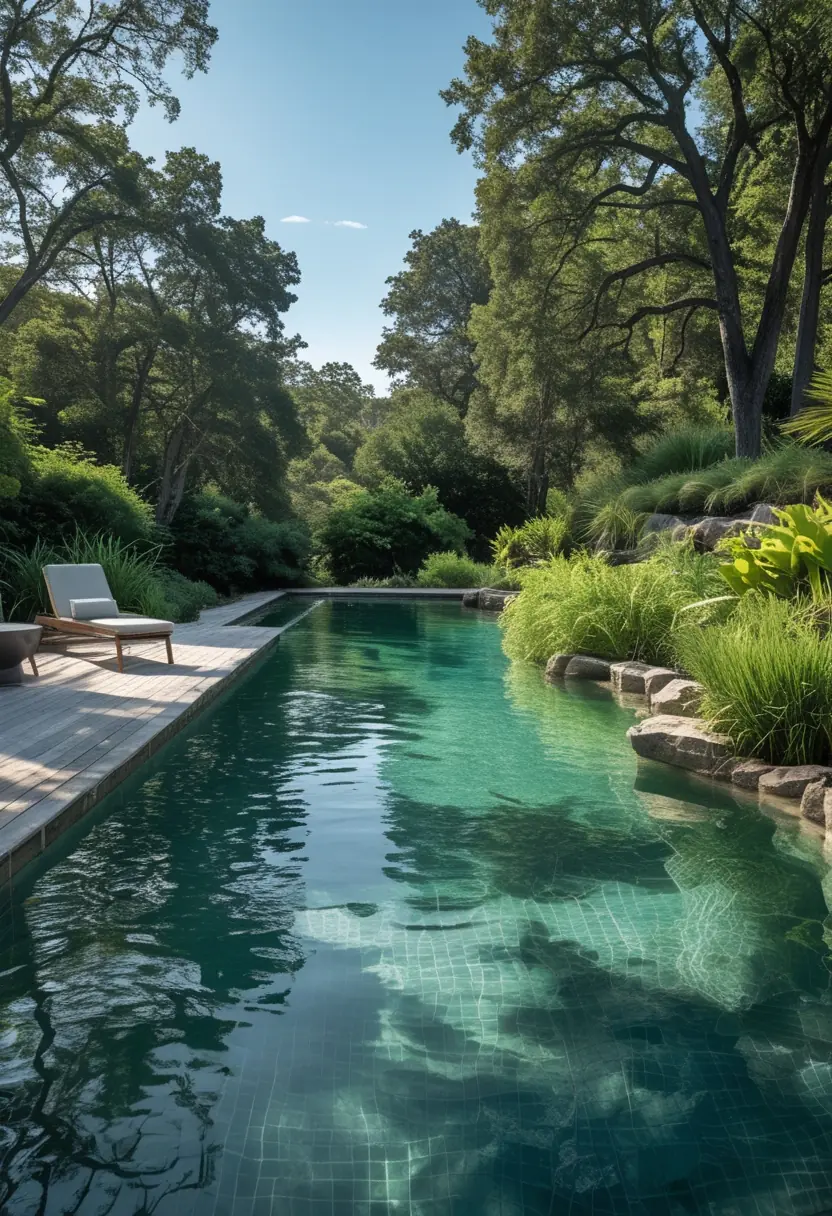
You can add features like a shallow tanning shelf, rock waterfall, or integrated spa to broaden how you use the pond.
Extras enhance aesthetics and function while keeping filtration natural; plan placement so plants and circulation still do their job.
Consider lighting, seating ledges, or a changing pavilion for comfort and evening use.
Work with your builder to integrate extras without disrupting the biological filtration zones.
4) Swimming Pool With Natural Surroundings
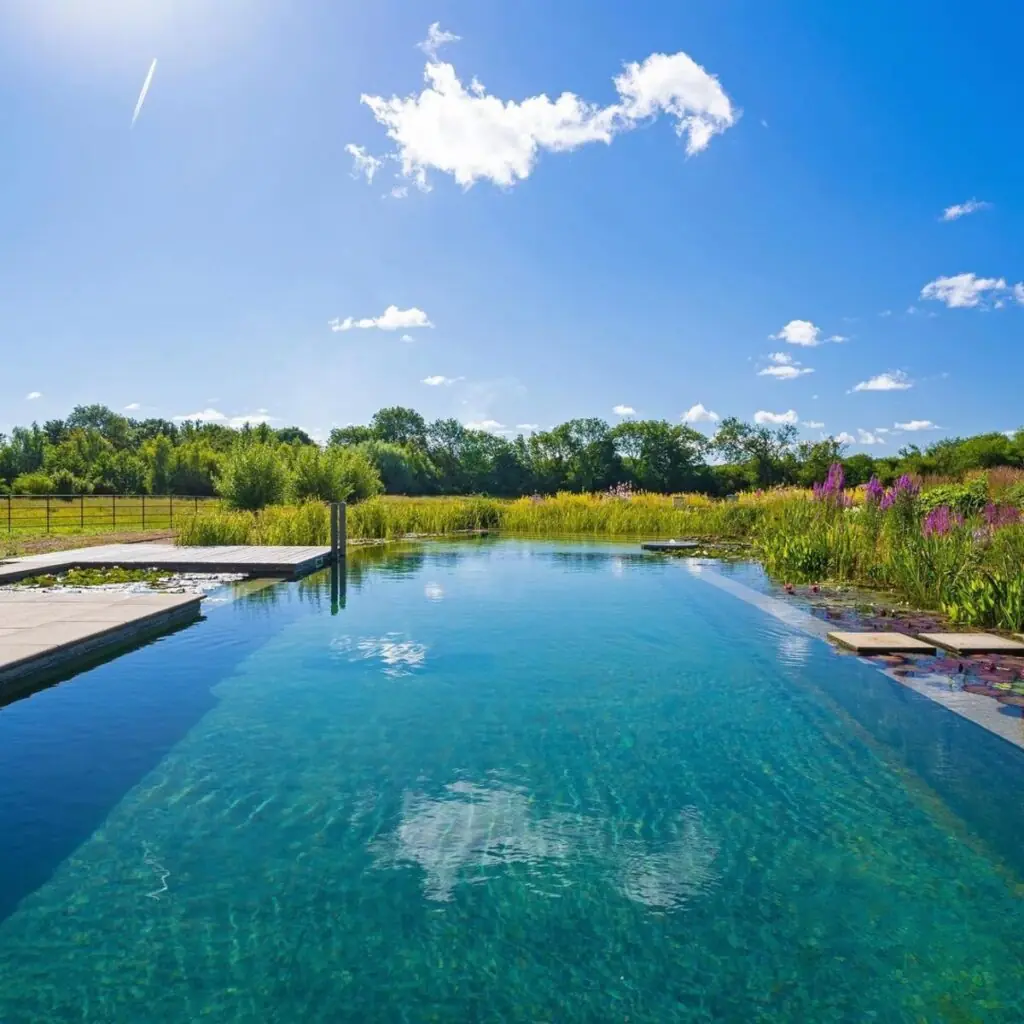
You place a clean-lined pool amid native plants and stone to blur the line between built and wild.
Vegetation and planted biofilters reduce maintenance while supporting local wildlife and improving privacy.
You’ll enjoy clearer water without heavy chemicals when you design shallow planting zones and a dedicated filtration area.
Keep circulation and sunlight balance in mind to prevent algae and ensure comfortable swimming.
5) Natural Swimming Pond With A Deck And A Gazebo
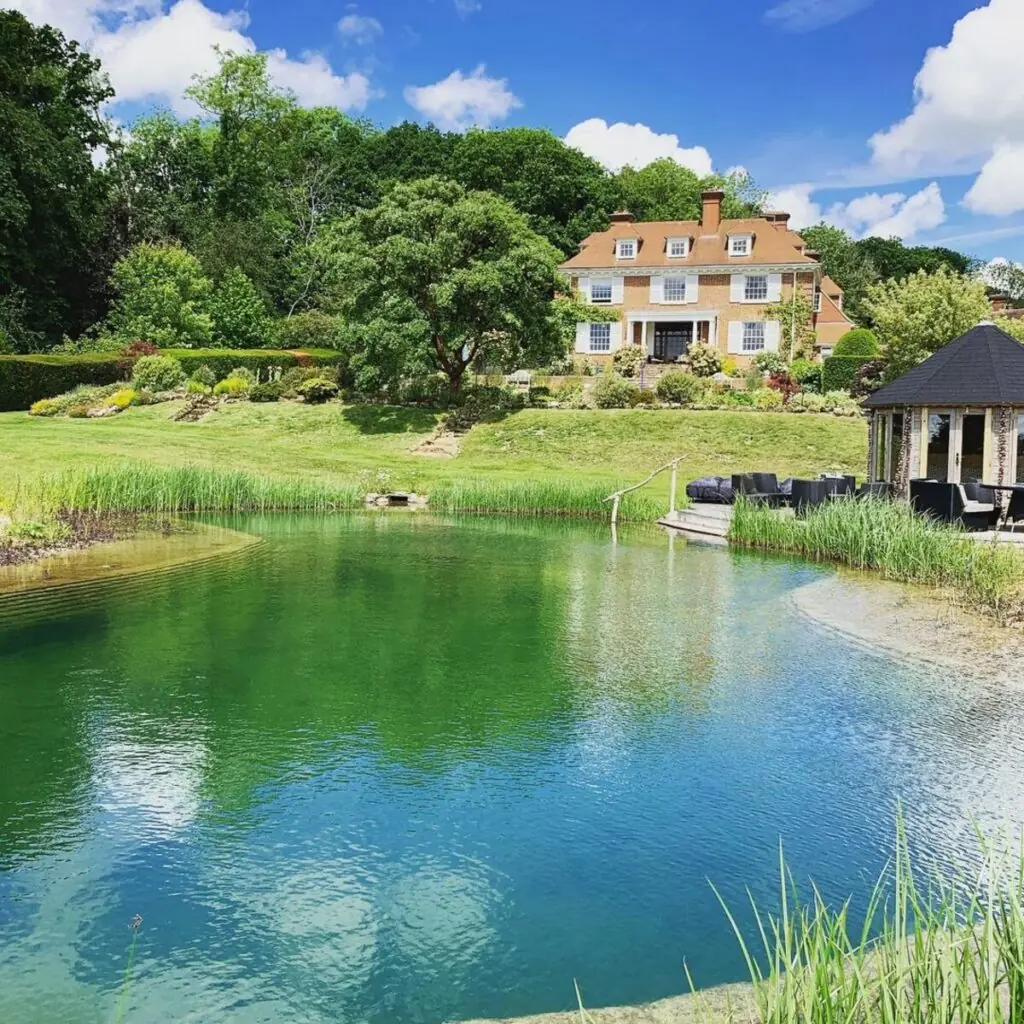
You get a versatile outdoor room when you pair a wooden deck with a gazebo beside your natural swimming pond.
The deck provides entry, lounging space, and sunbathing areas while the gazebo offers shade and shelter for meals or changing.
Position the gazebo for views across the pond and use durable, water-resistant materials to handle splash and humidity.
6) A Swimming Pond In The Meadow
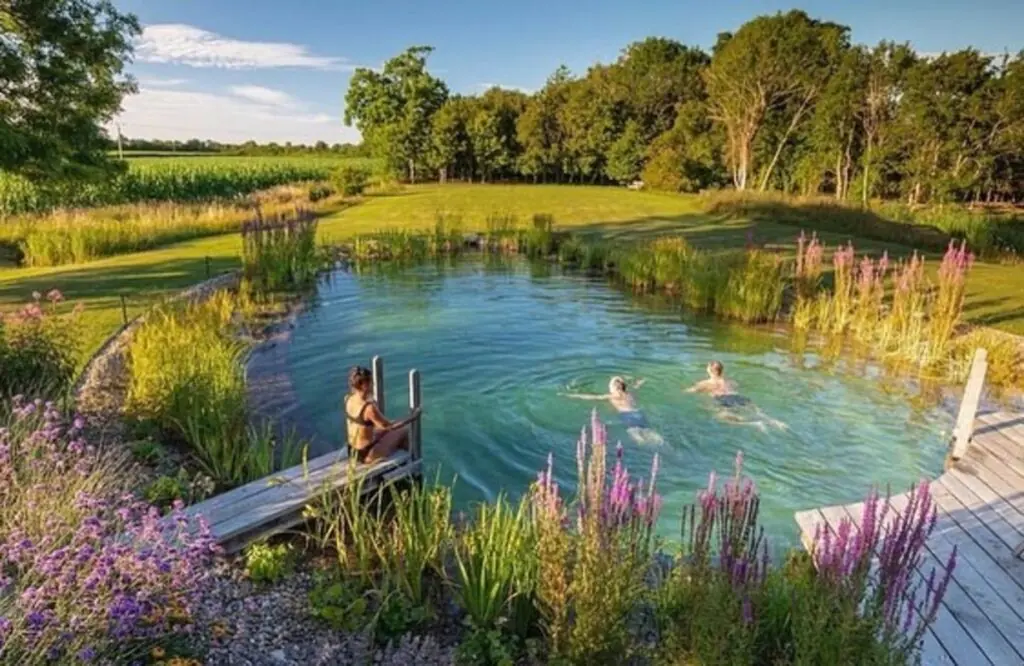
Placing your swimming pond in a meadow creates a soft, natural edge that encourages wildlife and native plants to thrive.
You’ll enjoy wide sightlines and a relaxed, pastoral feel while the shallow planting zones filter water naturally.
Locate the pond where sunlight supports plant growth but avoid low spots that collect runoff.
Design gentle slopes for easy access and to blend the pool into your meadow landscape.
7) A Pool With Rich Biodiversity
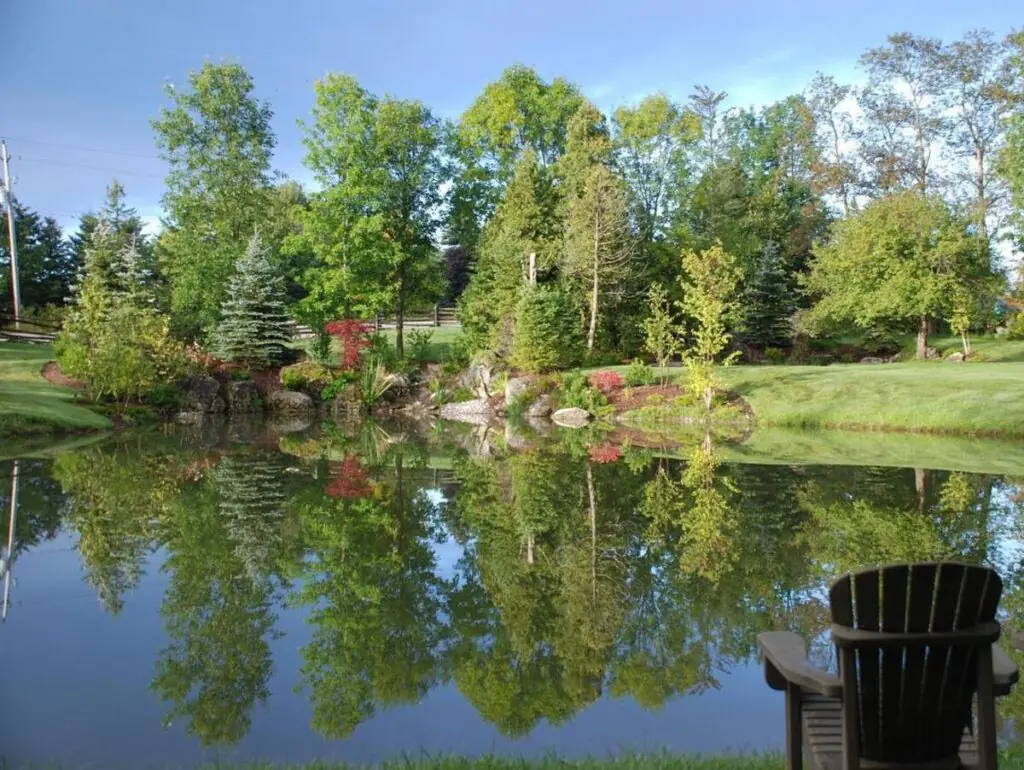
You can design a swim pond that supports frogs, dragonflies, and native plants without compromising water quality.
Use shallow planting shelves and varied depths to create habitat zones that also help filter and oxygenate the water.
Place stones and logs for basking and shelter to encourage wildlife while keeping clear swim areas.
Maintain balance with occasional pruning and monitoring rather than heavy chemical treatments.
8) Fairytale Garden With A Natural Swimming Pool
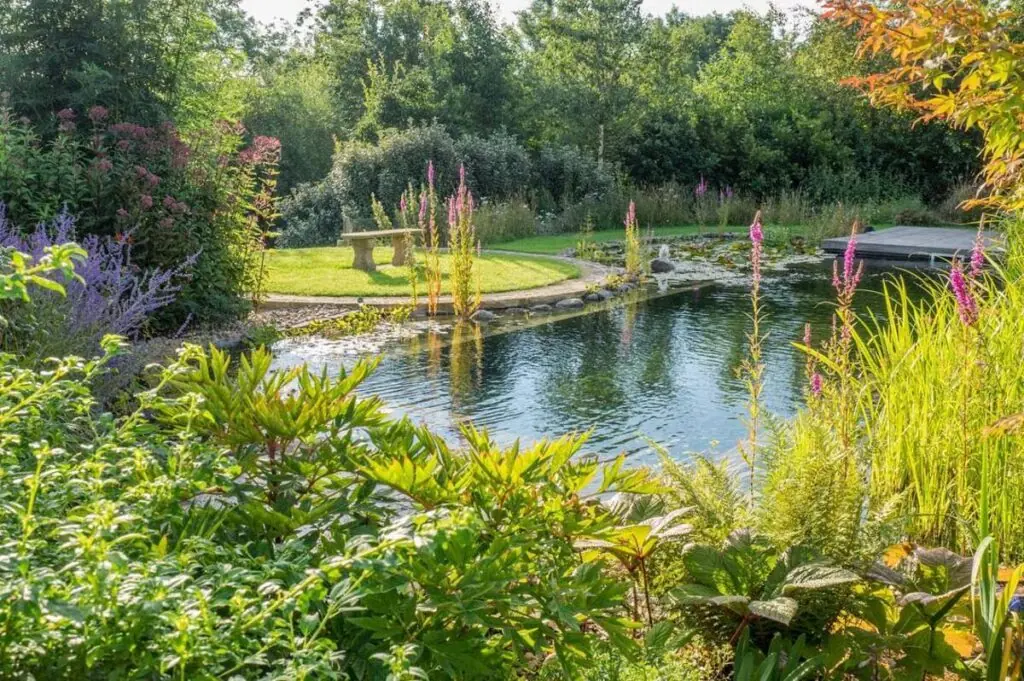
You place a gently curving natural pool at the heart of a lush, layered garden that feels intimate and private. Native plants and irregular stone edges soften the waterline and support clear, biological filtration.
You design winding paths, small clearings, and seating nooks that invite quiet moments and easy access for dips. Subtle lighting and mossy rock features enhance evening ambience without disrupting wildlife.
9) Pool With A Fountain
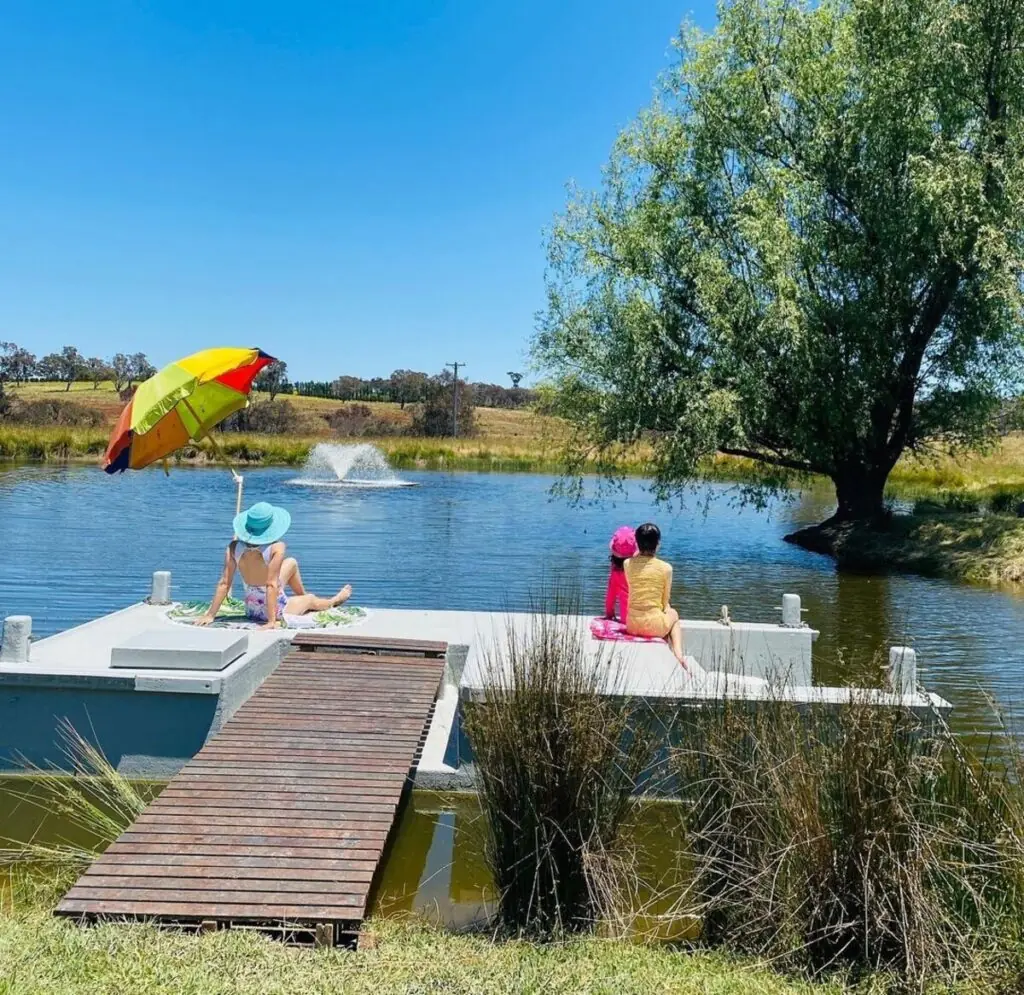
You can add a fountain to a natural swimming pond to introduce motion and gentle sound without chemicals.
A fountain helps circulate water, reducing stagnant zones and supporting the pond’s biological filter.
Place it near the swimming area for visual interest and ensure flow rates match your pond’s size to avoid disturbing plant zones.
10) Contemporary Natural Pool
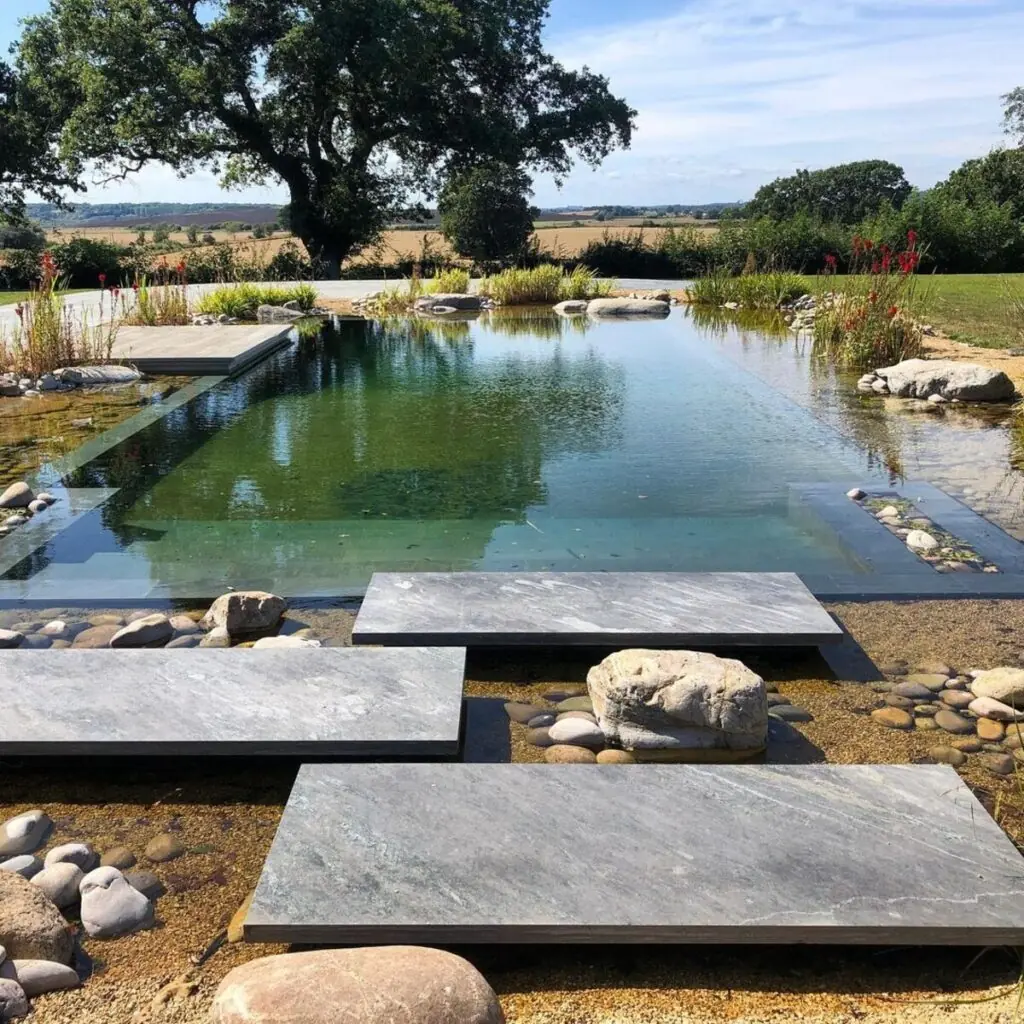
You can blend clean lines and native planting to create a contemporary natural pool that feels both modern and alive. Hard edges, minimal decking, and a rectilinear swim zone give structure while a planted regeneration zone keeps water clear without chemicals.
Position stone or concrete features to contrast with soft planting for visual balance. The result is a swim-ready pond that complements modern architecture and supports local biodiversity.
11) Rustic Swimming Pool
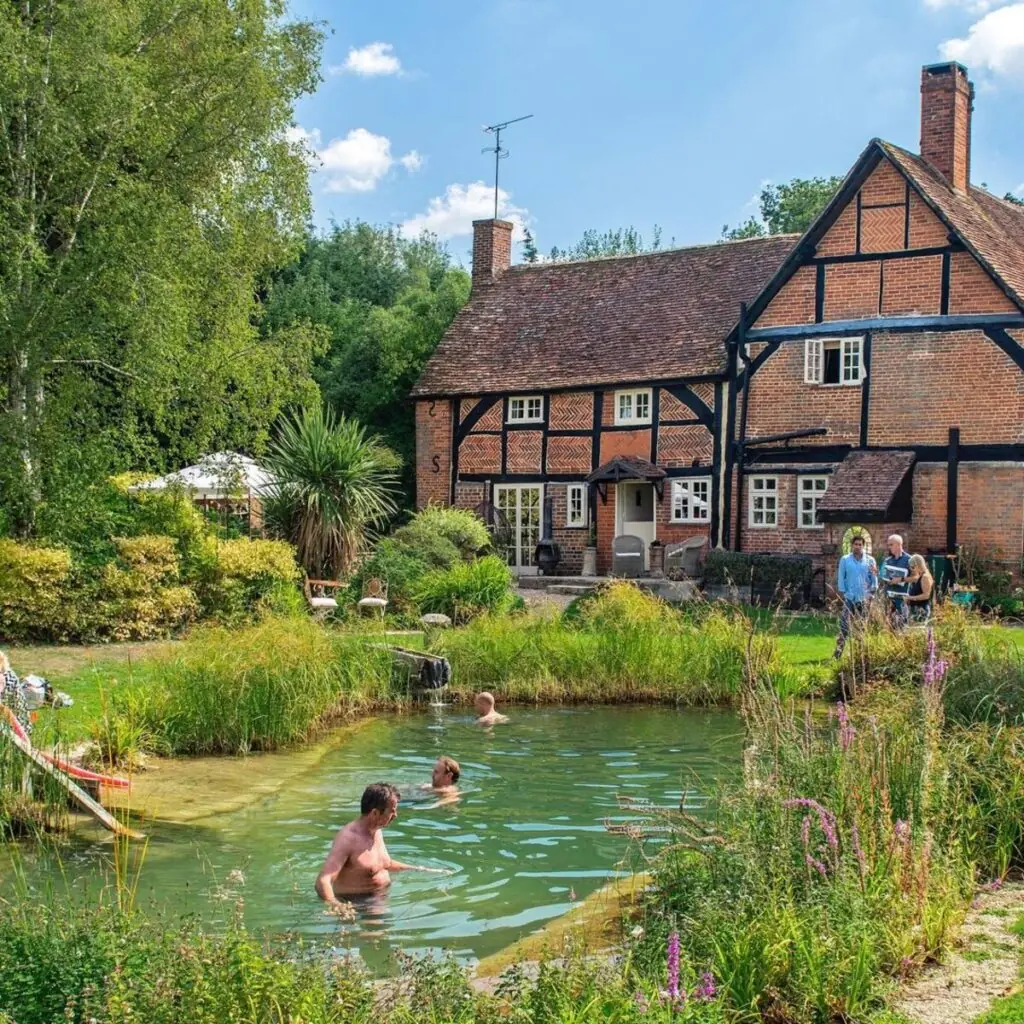
You can create a rustic swimming pool that blends natural materials with simple lines to suit a countryside or cottage garden. Use stone edging, weathered timber decking, and native marginal plants to soften hard edges and attract wildlife.
Keep filtration subtle with planted regeneration zones so water stays clear without heavy chemicals. The result feels timeless, low-key, and firmly connected to its landscape.
12) A Waterfall And A Pond
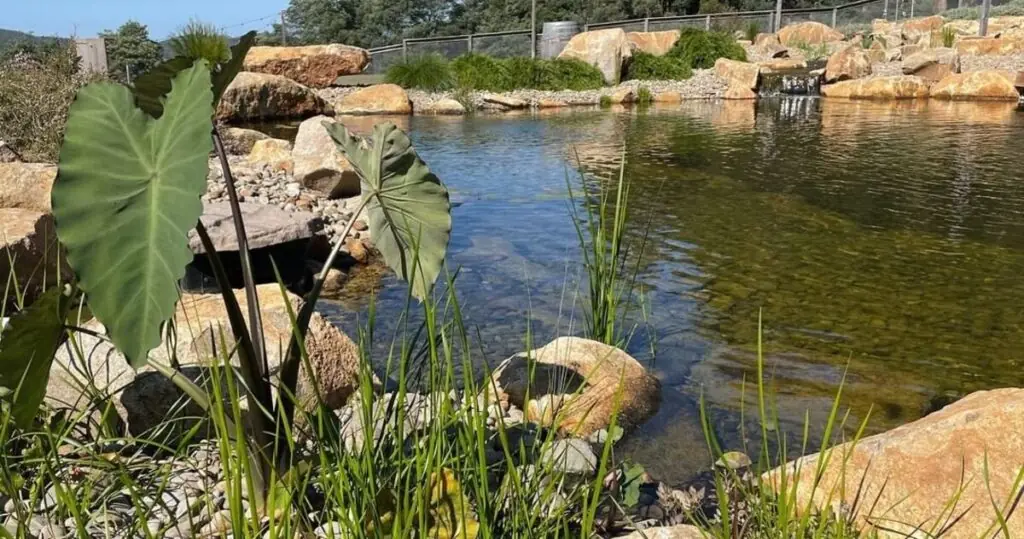
A waterfall adds movement, sound, and natural aeration to your swimming pond. You can place it at the shallow end to encourage circulation and keep water clear.
Design the falls to look natural with rock tiers and planted edges. Position stepping stones or a viewing bench so you can enjoy the sound without disturbing swimmers.
13) Pond With Stepping Stones
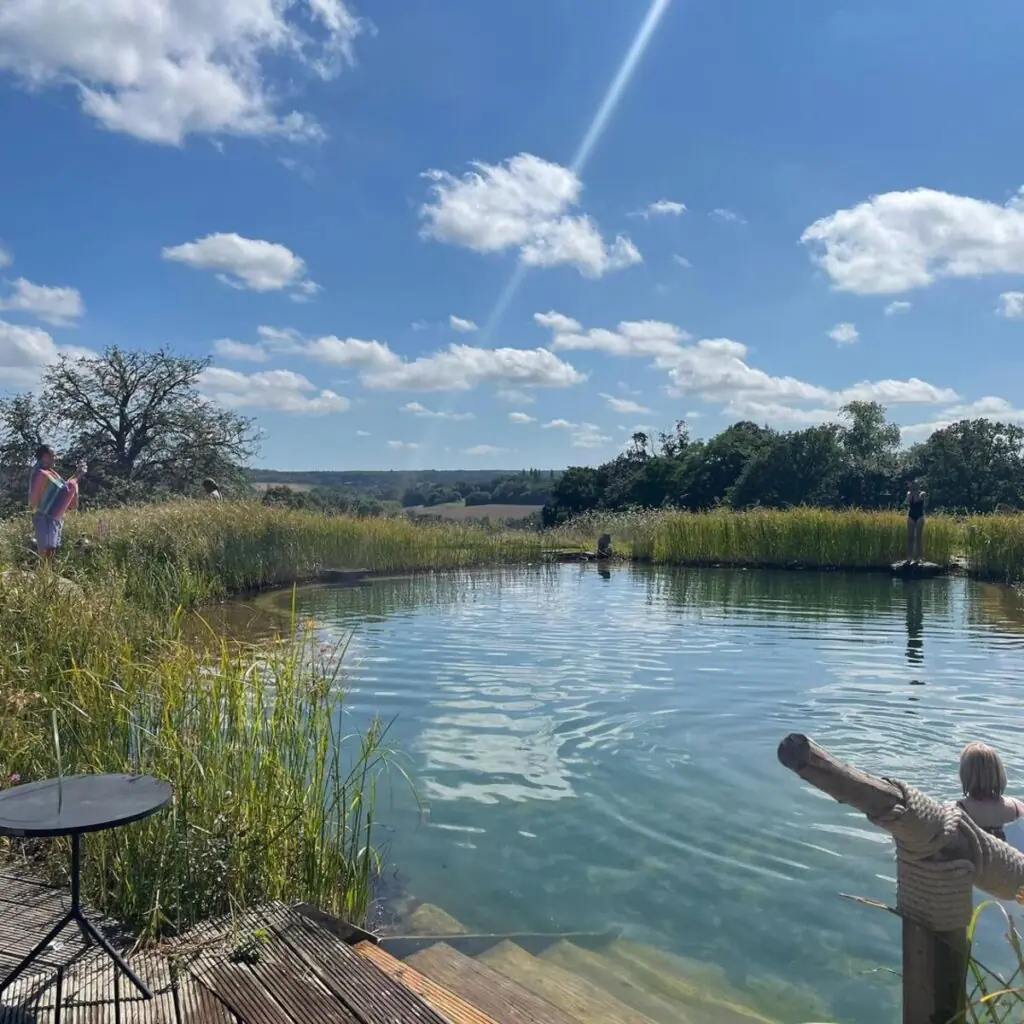
Place stepping stones to create a direct, sculptural route across your pond that invites exploration.
Choose non-slip, stable stones set into shallow shelves so you can move safely and preserve aquatic planting zones.
Use materials that match your landscape natural flagstone or textured concrete work well.
Keep gaps small and test stability during seasonal water changes to ensure long-term safety.
14) A Deck To Make A Connection Between The Patio And The Pond
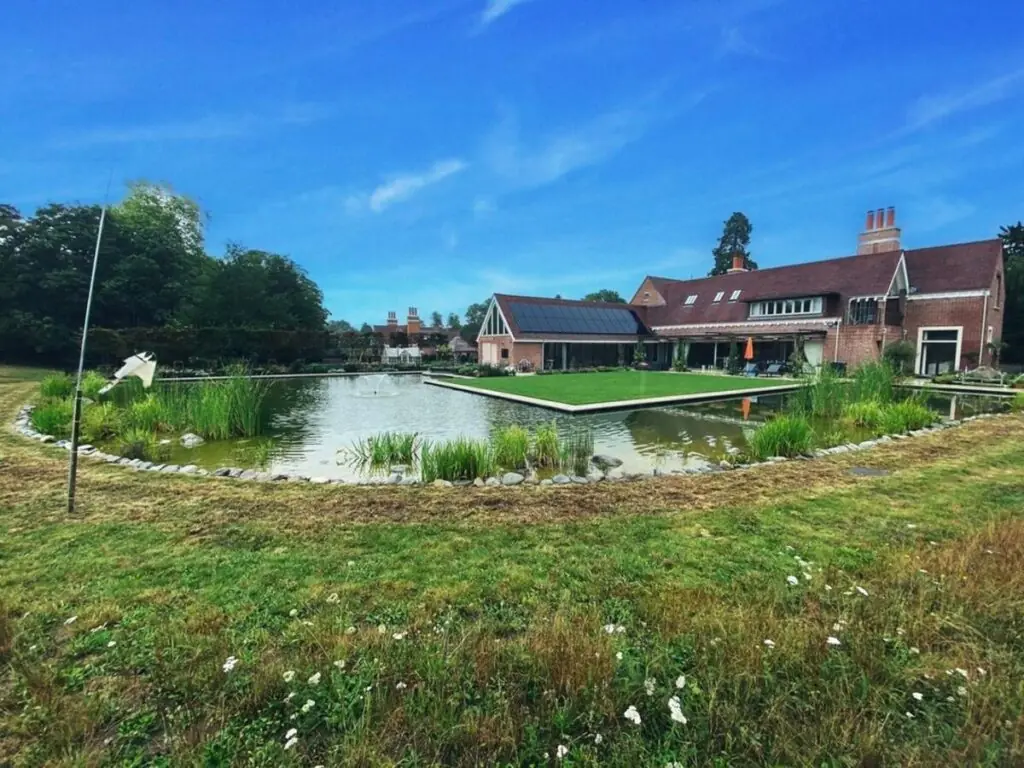
You can bridge patio and pond with a simple deck that creates a smooth transition and a dedicated viewing spot.
Choose rot-resistant materials and a slight gap for drainage to protect both deck and water edge.
Position seating or planters to guide movement and frame pond views.
Keep the deck level or step down in one or two shallow risers to maintain sightlines and safety.
15) DIY Natural Pool
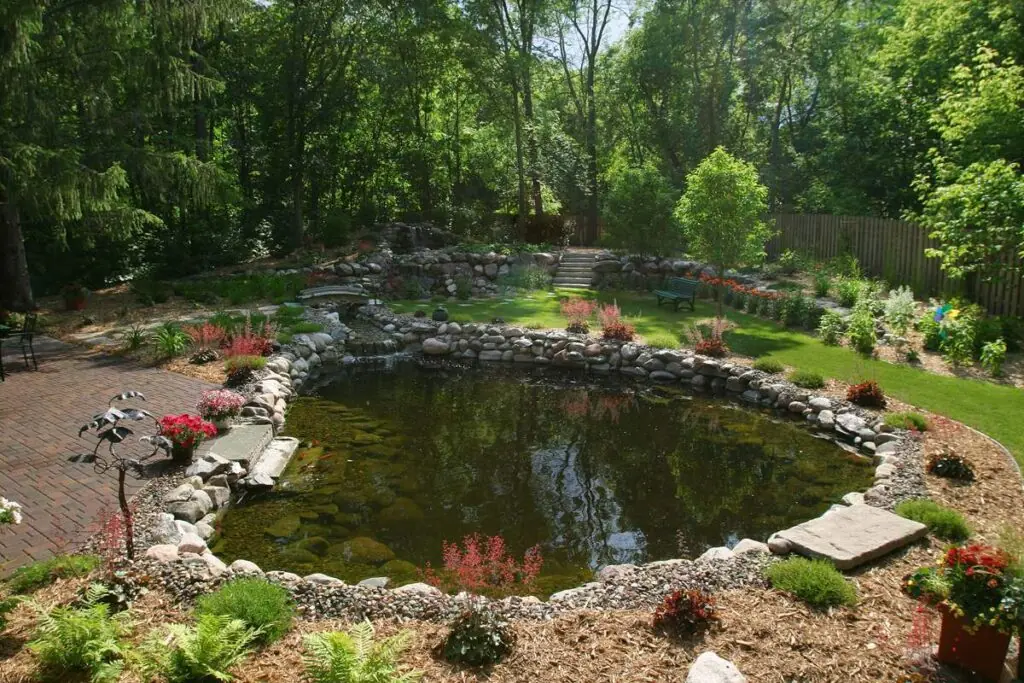
You can build a DIY natural pool that uses plants and biological filtration instead of chemicals. Plan zones for swimming and a planted regeneration area to keep water clear.
Expect to dig, line, and terrace the site, then install a low-energy pump and gravel beds for filtration. With regular maintenance and seasonal pruning, your pool will stay swimmable and support wildlife.
Design and Ecological Benefits
Careful layout, targeted plant choices, and robust filtration work together to make your pond swim-ready and ecologically productive. These elements reduce maintenance, support local species, and keep water clear without relying on chemicals.
Native Plant Selection
Choose native emergent, marginal, and submerged species that match your hardiness zone, sunlight, and water depth. Examples: cattails (Typha) and rushes (Juncus) for shallow margins; water lilies (Nymphaea) for floating cover; and hornwort (Ceratophyllum) or pondweed (Potamogeton) for deeper submerged zones. Native plants resist local pests, require less replacement, and support native insects.
Plant in distinct zones: a shallow regeneration band (0–45 cm) for reed and sedge species, a deeper planting shelf (45–90 cm) for lilies and moisture-loving perennials, and a swimming zone free of roots and dense cover. Use biodegradable pots or planting baskets to control spread. Space plants to allow circulation and emergent growth without shading the main swim area.
Wildlife Habitat Creation
Design structural variety logs, rock ledges, shallow shelves, and vegetated margins to create shelter and breeding sites. Amphibians use shallow, vegetated shelves for egg-laying; dragonflies need emergent stems for perching and larval emergence; birds and beneficial insects use shoreline plantings for food and nesting materials.
Avoid steep concrete walls; instead slope banks to create terrestrial corridors connecting the pond to surrounding gardens. Include basking stones and small, gentle-flow riffles to oxygenate water and provide microhabitats. If you want fish, choose native, noninvasive species and limit stocking to prevent predation pressure on amphibians and insect larvae.
Water Filtration Methods
Combine biological filtration with mechanical pre-filters for reliable clarity. Typical systems use a regeneration zone planted with macrophytes and a gravel/sand filter to host nitrifying bacteria that convert ammonia and nitrite to nitrate. Place a skimmer or debris trap at the surface to capture leaves and floating detritus before it sinks.
Use a pump to move water through the filter at a rate that turns over the pond volume every 2–4 hours, depending on pond size and bather load. Consider adding a constructed wetland or UV clarifier only if seasonal algal blooms persist; rely first on plant biomass, circulation, and careful nutrient control (limit runoff and pet waste). Monitor ammonia, nitrate, and phosphate seasonally to guide maintenance and planting adjustments.
Maintenance and Seasonal Care
You will focus on regular checks, biological balance, and targeted seasonal actions to keep your swimming pond clear and safe. Prioritize circulation, plant balance, and simple interventions timed to seasonal changes.
Algae Management Techniques
Control filamentous and planktonic algae by combining physical removal, biological balance, and targeted filtration. Skim or rake visible mats weekly; remove decaying plant debris promptly to reduce nutrient loads. Install a skimmer and a separate regeneration zone planted with oxygenators to capture and process free nutrients before they reach the swim area.
Use beneficial bacteria and enzyme treatments selectively to accelerate organic breakdown. Add floating or marginal plants waterlilies, hornwort, or iris to shade the surface and compete with algae for nutrients. Maintain a 30–50% planted area in the shallow regeneration zone as a rule of thumb for effective nutrient uptake.
Optimize circulation: run pumps to create gentle turnover and a surface draw that prevents stagnation. Clean mechanical filters monthly and backwash or replace media according to manufacturer guidance. Test for nitrate and phosphate every 4–8 weeks and act if levels rise (remove biomass, increase planting, or boost filtration).
Winterizing Strategies
Prepare your pond before the first hard freeze to protect equipment, plants, and fish. Remove excess leaves and dead plant material in late autumn to cut winter nutrient input. Trim marginal plants to healthy crowns and relocate tender species indoors if temperatures regularly drop below their hardiness.
If your pond contains fish, maintain a slightly higher water level to allow for ice expansion and install a floating de-icer or small aerator to keep an opening in the ice for gas exchange. Reduce feed gradually as water temperatures fall below 10°C (50°F) and stop feeding when fish become inactive.
Protect pumps and UV units by either removing and storing them indoors or ensuring they’re in frost-free housings; drain external hoses and filters. Leave submerged plants and deep-water refuges intact to provide overwintering habitat and stabilize oxygen and temperature for aquatic life.
Frequently Asked Questions:
What is a natural swimming pond?
A natural swimming pond is a chemical-free pool that uses plants, gravel, and biological filtration to keep water clean while creating a swimmable ecosystem.
How do natural swimming ponds stay clean without chlorine?
They rely on regeneration zones, aquatic plants, beneficial bacteria, and pumps to filter water naturally and reduce algae growth.
How much space do you need for a natural swimming pond?
Space depends on design, but most ponds need separate swimming and filtration zones, though compact garden-friendly versions are possible.
Can you build a DIY natural swimming pond?
Yes, with proper excavation, liners, pumps, gravel beds, and carefully planned plant zones, DIY natural ponds are achievable.